- Five leaks of extremely flammable hydrocarbons occurred at Fife Ethylene Plant between February 2018 and September 2019 – including one which lasted four months
- The leaks were discovered after Health & Safety Executive inspectors detected strong smell of flammable gas on a routine inspection – all five leaks were attributed to Corrosion Under Insulation (CUI)
- An investigation by the Health and Safety Executive concluded that the company did not have adequate arrangements for inspection of insulated pipework.
ExxonMobil Chemical Limited has been fined £267,000 after health and safety inspectors found corroded pipes had resulted in five leaks of flammable gas at its Fife Ethylene Plant.
An investigation by Health & Safety Executive (HSE) inspectors found the company’s arrangements for inspection of insulated pipework were not adequate and resulted in five known leaks of extremely flammable hydrocarbons at the natural gas processing plant operated by the company at Mossmorran, near Kirkcaldy.
The plant was an Upper Tier COMAH [Control of Major Accident Hazards] establishment as defined by the 2015 COMAH Regulations, due to the volume of hazardous substances on site and the risk to people and the environment they presented. This means it was subject to the strictest controls because of the potential for catastrophic consequences of health and safety failings.
How the leaks were discovered
On 21 May 2019, Health and Safety Executive (HSE) inspectors visited the site for a routine inspection. They noticed a strong smell of Dimethyl Sulphide (DMS), a highly flammable liquid that irritates eyes and skin and is harmful if swallowed. An operator confirmed that DMS and ethane were leaking from an overhead pipe, and that the company had known about the leak for around four months but had kept operating without taking extra precautions.
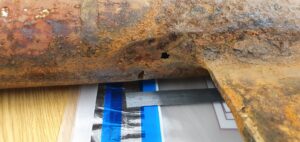
HSE launched an investigation. This revealed that the leak was not a one-off. There had been an earlier leak on the same pipe in February 2018, and another on a different pipe elsewhere on site in December 2018, both caused by Corrosion Under Insulation (CUI). As the investigation progressed, two more leaks were discovered, meaning five leaks in total, all caused by CUI. The investigation broadened to examine how the company managed CUI risk across the site.
The five leaks
23 February 2018: A pinhole leak of DMS and ethane developed on a 2-inch steel pipe (the “DMS line”), which was under high pressure and running at 115 degrees Celsius. The leak went on for around four months before being fixed.
15 December 2018: A leak of ethane gas was spotted by chance on a different pipe (the “ST01 Overheads line”) when a worker noticed a haze coming through the insulation while doing unrelated work. Corroded cladding had let four small holes form. The leak lasted around six weeks and an estimated 82 tonnes of hydrocarbons escaped into the atmosphere.
21 May 2019: The leak that triggered HSE’s routine inspection was found on the same DMS line as before, but at a different point. This time the leak was a mix of 20% DMS and 80% ethane. The company had first detected it on 29 January 2019, meaning it had been leaking for about four and a half months. HSE issued a Prohibition Notice on 24 May 2019 banning access to the area, followed by an Improvement Notice on 28 May 2019 ordering repairs. The company fixed the problem on 13 June 2019 by installing a bypass.
26 June 2019: While HSE’s investigation was still underway, a process technician found another pinhole leak, this time on the inlet line to the acetylene converter. X-ray testing showed the pipe had corroded below its safe minimum thickness. The company shut down part of the plant to make repairs, and the leak lasted around two weeks. Unlike the earlier leaks, this time the company acted swiftly rather than continuing to operate without extra safeguards.
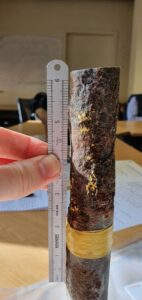
September 2019: While carrying out inspections required by HSE’s Improvement Notice, the company found a further pinhole leak on the ST01 Overheads line, close to the site of the December 2018 leak. This was repaired by purging the line and applying an epoxy wrap.
Why this matters
Every leak released highly flammable hydrocarbons into the atmosphere. In all but one case, this happened while the plant was operating normally, with staff and contractors working on site.
Pipes on sites like this are often insulated to stop them freezing. Corrosion Under Insulation happens when water gets in under that insulation and corrodes the pipe underneath. Left unchecked, it weakens pipes until they fail and leak. The industry accepts that CUI can’t be prevented entirely where insulation is needed, but it must be properly monitored and managed to keep the risk under control.
HSE’s investigation found the company’s inspection system was not fit for purpose. Inspectors carried out visual “scoping” checks on each pipe, and the results were fed into a computer tool alongside data on the pipe and its operating conditions. This produced a risk score from 1 (high risk) to 4 (low risk), and the company would only investigate further if a pipe scored 1 or 2.
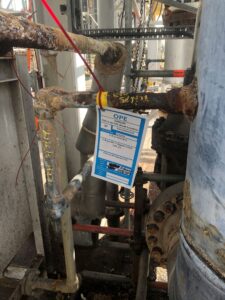
In practice, these visual inspections were often inadequate. Overhead pipes were typically checked from ground level, sometimes several metres away, with limited visibility, and insulation was not always removed to allow a proper look underneath. Despite suffering repeated leaks caused by CUI, the company did not recognise that its inspection process was flawed until HSE took enforcement action.
Exxonmobil Chemical Limited, of Fawley Administration Building, Fawley Refinery, Marsh Lane, Southampton, pleaded guilty to breaching Regulation 6(2) of The Provision and Use of Work Equipment Regulations 1998, and section 33(1)(c) of the Health and Safety at Work etc Act 1974. The company was fined £267,000 at Kirkcaldy Sheriff Court on 25 August 2026.
HSE inspector Lindsey Stein said:
“At a site run by one of the biggest energy companies in the world, subject to the strictest controls, and processing high volumes of hazardous material, what our inspectors found beggars belief.
“The failure of ExxonMobil to properly inspect insulated pipework led to five separate leaks of highly flammable hydrocarbons, and while none of these leaks resulted in a catastrophic event, this was down to good fortune rather than good management. The arrangements in place to detect and prevent corrosion were woefully inadequate, and the consequences could have been far more serious.
“Systematic risk management isn’t just best practice, it’s a legal duty, precisely because these are high-hazard operations where the margin for error is minimal. In its simplest terms, process safety is about keeping hazardous substances where they belong: inside the pipes, not in the atmosphere.
“Once we stepped in, the operator was able to identify and fix problems quickly and effectively. That tells you everything you need to know: the measures needed to prevent these leaks were reasonably practicable all along, and they should have been in place long before HSE was forced to intervene.”
Further information:
- The Health and Safety Executive (HSE) is Britain’s national regulator for workplace health and safety. We are dedicated to protecting people and places, and helping everyone lead safer and healthier lives.
- More information about the legislation referred to in this case is available.
- Further details on the latest HSE news releases is available.
- HSE does not pass sentences, set guidelines or collect any fines imposed. Relevant sentencing guidelines must be followed unless the court is satisfied that it would be contrary to the interests of justice to do so. The sentencing guidelines for health and safety offences in Scotland can be found here.