Press release

Worker killed after wall panels collapsed during cleanroom dismantling

A Hamilton-based company has been fined after a worker died when a series of wall panels collapsed and ejected him from a scissor lift.

Steven Tervit had been carrying out a dismantling operation at a specialist technology centre in Renfrew on 9 November 2022 when the incident happened. The 32-year-old was employed as a labourer by Food Process Engineering Limited and had worked for the company for approximately 15 years.

Mr Tervit had been working at a height of around four metres on a scissor lift, removing wall panels from a cleanroom at the National Manufacturing Institute Scotland (NMIS) at Westway Business Park, Porterfield Road, when the remaining panels fell and struck the platform. Mr Tervit was thrown from the lift onto the concrete floor of the warehouse.

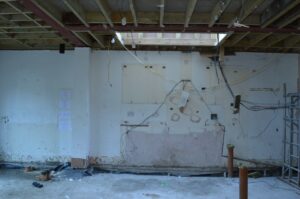
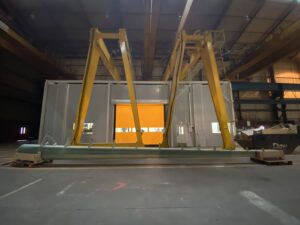
The cleanroom before being dismantled

He was taken to the Queen Elizabeth University Hospital where he was found to have suffered a traumatic brain injury, rib fractures, lung contusions and fractures to his right thigh bone and left shin bone. He died in hospital the following day.

The cleanroom, which had been used to house a welding robot, was a steel-framed structure with walls and roof constructed of polyurethane panels measuring 6.1 metres in height. Food Process Engineering Limited had been subcontracted to remove the panels as part of the wider dismantling operation.

An investigation by the Health and Safety Executive (HSE) found that the company had failed to adequately assess and manage the risks associated with dismantling a structure it had not originally installed.

The wall panels, once the roof had been removed, had insufficient lateral support to maintain their structural stability. HSE found that the company’s risk assessment and method statement did not adequately address the risk of unplanned collapse due to structural instability. Although the company’s own method statement specified that ‘A-frame’ props or supports should be installed where necessary, no such props were present or in use on site at the time of the accident.

The company had carried out visual inspections of the exterior of the cleanroom prior to commencing work and proceeded on the assumption that it had been constructed to industry standard. HSE established that this assumption was unsafe, as the disassembly of a structure built by a third party carried an inherent risk of latent defects that could elevate the risk of structural failure.

The company also failed to communicate its risk assessment and method statement to the employees carrying out the work, meaning workers on site were not adequately informed of the risks involved.

Falls while working at height remain the leading cause of workplace injury and death. New data published by HSE for 2025/26 revealed that 31 people died – representing around a quarter of all work-related deaths for the year.

Food Process Engineering Limited, of Unit 17, Whistleberry Industrial Estate, Hamilton, pleaded guilty to breaching sections 2(1), 2(a) and (c) and 33(1)(a) and (c) of the Health and Safety at Work Act etc 1974. The company was fined £50,000 with a victim surcharge of £3,750 at Paisley Sheriff Court on 6 July 2026.

HSE inspector Amna Doherty said:

“The failings of this company cost a much-loved husband, father and son his life.

“Falls from height remain the leading cause of workplace death and injury.

“There was a lack of planning in terms of the risk and those being tasked with the job were not aware of the dangers posed to them.

“We will not hesitate to take action against those who fail to protect their workers.”


Further information:

  1. The Health and Safety Executive (HSE) is Britain’s national regulator for workplace health and safety. We are dedicated to protecting people and places, and helping everyone lead safer and healthier lives.
  2. More information about the legislation referred to in this case is available.
  3. Further details on the latest HSE news releases is available.
  4. HSE does not pass sentences, set guidelines or collect any fines imposed. Relevant sentencing guidelines must be followed unless the court is satisfied that it would be contrary to the interests of justice to do so.  The sentencing guidelines for health and safety offences in Scotland can be found here.

Emma Bridgewater fined £266,666 after falling shard of glass injures child

Ceramics manufacturer Emma Bridgewater has been handed a £266,666 fine after a young girl was injured by falling broken glass during a Christmas lights switch-on event at its premises in Hanley.

The sentence was imposed after a Health & Safety Executive investigation found the company had failed to properly secure a snow machine which fell from a window above.

The gift shop and window from which the snow machine fell.

On 23 November 2024, the 12-year-old victim attended an annual Christmas lights switch-on event with her family at the Emma Bridgewater gift shop in Hanley. During the event, an artificial snow machine, which was in a window opening above the gift shop, fell out of the building and to the ground below. The machine hit a light on the way, sending a shard of broken glass towards the girl’s head, she suffered a deep cut which required hospital treatment.

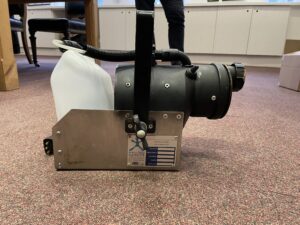
An investigation by the Health and Safety Executive (HSE) found that Emma Bridgewater Limited had not properly assessed the risks associated with the use of the snow machine and had failed to ensure that it was properly secured to prevent it from falling out of the window, despite the manufacturer’s instructions demonstrating clearly how to safely install it.

The snow machine.

The Work at Height Regulations 2005 require employers to ensure that suitable steps are taken to prevent the fall of any material or objects where there is a risk of injury to employees or members of the public.

At Birmingham Magistrates’ Court on 6th July 2026, Emma Bridgewater Limited of Lichfield Street, Hanley, Stoke-on-Trent, pleaded guilty to breaching Regulation 10(1) of the Work at Height Regulations 2005 and Section 3(1) of the Health and Safety at Work etc. Act 1974 and was fined £266,666 and ordered to pay costs of £4931 along with a victim surcharge of £2000.

Health & Safety Executive Inspector Rob Gidman said:

“What should have been a festive event was marred by haphazard planning which left a young girl needing hospital treatment.

“Had the positioning of the snow machine been properly planned and the machine itself been properly secured, this incident could have been avoided entirely – and it’s fortunate the victim did not sustain more serious injuries.

“Christmas gatherings are a happy occasion, but it’s vital organisers thoroughly assess the risks and put in place measures to minimise the risk of harm to the public.”

The HSE investigation was supported by Visiting Officer, Sarah Ough, and the prosecution was brought by enforcement lawyer Samantha Tiger.

Further Information

  1. The Health and Safety Executive (HSE) is Britain’s national regulator for workplace health and safety. We are dedicated to protecting people and places, and helping everyone lead safer and healthier lives.
  2. More information about the legislation referred to in this case is available.
  3. Further details on the latest HSE news releases is available.
  4. Relevant guidance can be found here Working at height: A brief guide.
  5. HSE does not pass sentences, set guidelines or collect any fines imposed. Relevant sentencing guidelines must be followed unless the court is satisfied that it would be contrary to the interests of justice to do so.  The sentencing guidelines for health and safety offences can be found here.
 

Construction company sentenced after a worker fell to his death

A construction company has been fined after one of its employees was killed when he fell through an unglazed window opening.

Antonio Rodrigues, 55, had been working for Lima Construction Limited, the principal contractor on a project to redevelop a former department store on the High Street in New Malden, into a mixture of commercial and residential units.

On 27 July 2022, Mr Rodrigues, who was working as a labourer on the site, fell from an external scaffolding platform through an unglazed window void, landing on an internal concrete ground floor more than three metres below.  Although he was taken to hospital Mr Rodrigues died from his injuries several days later on 1 August.

Police bodycam footage of the openings including the door in the centre which Mr Rodrigues fell through

An investigation by the Health and Safety Executive (HSE) found that in one wall, window voids had been created to install glazed ‘Juliet’ doors. However, when the doors were delivered it was found some had damaged glazing panels so were not installed. Although the company recognised that the four unglazed window voids created a risk to workers on the scaffolding platform – falling from height through the voids – it was only in the hours after Mr Rodrigues fell that protective boarding was installed.


The HSE investigation identified it was reasonably practicable for boarding or additional inside scaffolding guard rails to have been installed over the window voids to prevent falls from height as soon as they had been created.

The door and the concrete ground below it
The door with the boarding added within hours after the fall

The company had also not ensured that legally required weekly scaffolding inspections had been carried out after 5 July 2022, so the opportunity for identification of the risks posed by the unglazed window voids by a competent scaffolding inspector was lost.

Lima Construction Limited, of Apsley Road, New Malden, pleaded guilty to contravening Regulation 13(1) of The Construction (Design and Management) Regulations 2015. It was fined £50,000 and ordered to pay costs of £11,347 at Westminster Magistrates Court on 18 June 2026.

HSE inspector Andrew Verrall-Withers said: 

“This is a case where a company who generally tried to have good standards of health and safety, failed to react effectively to an unusual situation and there were tragic consequences.

“Falls from height are one of the leading causes of workplace fatalities and major injuries in the UK.  Employers and those in control of any work at height activity should ensure a sensible, pragmatic approach when considering precautions for work at height.

“As there was no CCTV and nobody witnessed the incident, we will never know exactly what caused Mr Rodrigues to fall. But if the boards added shortly afterwards had been in place, then there would have been no opening for him to fall through in the first place.”

The HSE’s investigation was carried out by HM inspector Andrew Verrall-Withers, and the prosecution was brought by HSE lawyers Iain Jordan and Tom Ledden-Rocks, and paralegal Anushka Lulith.


Further information:

  1. The Health and Safety Executive (HSE) is Britain’s national regulator for workplace health and safety. We are dedicated to protecting people and places, and helping everyone lead safer and healthier lives.
  1. More information about the legislation referred to in this case is available.
  1. Further details on the latest HSE news releases is available.
  1. Guidance on working at height is available at Working at height – HSE and further guidance on construction can be found at Get started – HSE.
  1. HSE does not pass sentences, set guidelines or collect any fines imposed. Relevant sentencing guidelines must be followed unless the court is satisfied that it would be contrary to the interests of justice to do so. The sentencing guidelines for health and safety offences in England and Wales can be found here.


Uninsured business owner sentenced after man fell through roof

An uninsured business owner from Lancashire has been given a suspended prison sentence after an employee suffered life changing injuries falling through a roof.

Gary Saville, 54, (trading as Bespoke Landscapes and Buildings) of Park Lane in Preesall, Poulton-Le-Fylde, was given an 12-month prison sentence, suspended for 18 months and told to complete 260 hours of unpaid work.

He had employed 31-year-old Jacob Black to replace skylights on a farm outbuilding in Pilling, Preston, on the 17 June 2024, but he fell through a fragile roof to the floor below while carrying out the job.

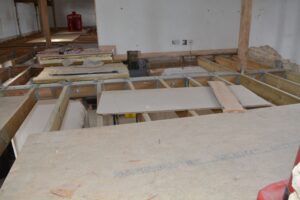
HSE inspectors visited the site weeks after the incident and took this image of where Mr Black had fallen from

Mr Black, also from Preesall, was taken by air ambulance to Preston Hospital and as a result of the incident, required two lung operations, collarbone surgery as well as sustaining multiple bone fractures.

In a victim personal statement, Jacob Black said:

“I have always been an active person and prior to the accident I cycled and used to enjoy walking with the family.

“Now I am unable to walk long distances and it has to be flat as I become very breathless.

“I also have restricted movement due to the communal fractures of the shoulder, which has caused poor movement in my right arm and makes everyday things, such as using a knife and fork and carrying items much more difficult.”

An investigation by the Health and Safety Executive (HSE) found that Saville had instructed Mr Black to walk across the fragile roof surface without any control measures, such as crawling boards and netting, in place to prevent or protect against a fall, ultimately leading to him falling through a fragile roof light.

Falls from height remain a leading cause of workplace death and injury and HSE has detailed guidance eon working at height and it can be read at hse.gov.uk.

Gary Saville of Park Lane, Preesall, Poulton Le Fylde, Lancashire pleaded guilty to breaching Regulation 6(3) of The Work at Height Regulations 2005 and was given a 12-month prison sentence suspended for 18 months and told to complete 260 hours of unpaid work. He was also ordered to pay £700 costs at Warrington Magistrates Court on 16 June 2026.

At an earlier hearing on 10 February 2025, Saville also pleaded guilty to not having Employers’ Liability Compulsory Insurance (ELCI) at the time of the incident. Most employers are required by law to provide ELCI cover to ensure successful civil claims can be met. Further guidance can be found on the HSE website at Employers’ Liability (Compulsory Insurance) Act 1969 – HSE.

Speaking after the hearing, HSE Inspector Paul Taylor said:

“Falls from height remain the leading cause of fatalities and serious injuries in UK workplaces and Mr Black is lucky to be alive.

“No control measures were in place to ensure the work could be carried out safely.

“To make matters worse, the man who employed him to do the job didn’t even have insurance in place should anything have happened.

“Nobody should be put at risk through the failures of those in charge.”

This HSE prosecution was brought by enforcement lawyer Samantha Tiger and paralegal officer Stephen Grabe.


Further information:

  1. The Health and Safety Executive (HSE) is Britain’s national regulator for workplace health and safety. We are dedicated to protecting people and places, and helping everyone lead safer and healthier lives.
  2. More information about the legislation referred to in this case is available.
  3. Further details on the latest HSE news releases is available.
  4. Relevant guidance can be found here – Work at height – HSE.
  5. HSE does not pass sentences, set guidelines or collect any fines imposed. Relevant sentencing guidelines must be followed unless the court is satisfied that it would be contrary to the interests of justice to do so.  The sentencing guidelines for health and safety offences can be found here.
Company fined after roofer fell through unguarded loft hatch

A Hampshire-based company has been fined after a roofer suffered life‑changing injuries when he fell through an unprotected loft hatch while carrying out work on a domestic property in Wimbledon.

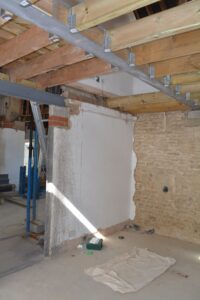
Mark Smith had been working for Willow Services (Southern) Limited on 13 May 2024, where he was re‑roofing the house. The 41-year-old had been stripping out internal insulation within the roof space, when he stepped onto an unguarded loft hatch which had not been identified or protected.

The unguarded loft hatch

He fell approximately 11 feet to the floor below, landing on his back. He had fractured his L1 vertebra and his hip and has been unable to return to work since. His employment was later terminated by the company.

An investigation by the Health and Safety Executive (HSE) found that the company had failed to suitably plan the work at height. The company did not ensure adequate measures were in place to prevent falls and had failed to provide competent supervision of the work.

The work had not been properly planned

The investigation also identified that those overseeing the work did not have the necessary training or experience to safely manage construction‑related activities.

HSE guidance provides practical advice on planning, organising and carrying out roof work safely. It highlights the need to properly assess risks from working at height, identify fragile surfaces, provide suitable access equipment, and ensure falls are prevented wherever possible.

The guidance also stresses the importance of competence and supervision and applies to construction, maintenance, repair, cleaning and demolition activities. Following this guidance can help reduce the risk of fatal and serious injuries when working on roofs. Work at height – HSE.

Falls from height are the leading cause of injury and death in construction

Willow Services (Southern) Ltd, of Westbrooke Close, Waterlooville, Hampshire, pleaded guilty to breaching Regulation 4(1) of the Work at Height Regulations 2005. The company was fined £20,000 and ordered to pay £5,607 in costs at Westminster Magistrates’ Court on 30 April 2026.

HSE Inspector Laurence Goodacre said:

“Falls from height remain the leading cause of fatal incidents in the workplace, particularly within the construction industry.

“This incident was entirely avoidable and resulted from a failure to properly plan the work and provide competent supervision.

“Had the loft hatch been identified and protected at the planning stage, Mr Smith would not have suffered these life‑changing injuries.”

This HSE prosecution was brought by HSE enforcement lawyer Neenu Bains and paralegal officer Atiya Khan


Further information:

  1. The Health and Safety Executive (HSE) is Britain’s national regulator for workplace health and safety. We are dedicated to protecting people and places, and helping everyone lead safer and healthier lives.
  2. More information about the legislation referred to in this case is available.
  3. Further details on the latest HSE news releases is available.
  4. Relevant guidance can be found here – Work at height – HSE.
  5. HSE does not pass sentences, set guidelines or collect any fines imposed. Relevant sentencing guidelines must be followed unless the court is satisfied that it would be contrary to the interests of justice to do so.  The sentencing guidelines for health and safety offences can be found here.
Contractor jailed after ‘kind hearted’ teen fell to death during demolition works

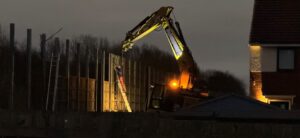
A self‑employed contractor has been jailed after a teenager fell to his death during demolition works on a property in Surrey.

Jason Hill had hired 19-year-old Thomas Neate, known as Tom, to help demolish a garage at a domestic property in preparation for an extension, at an address on Glebe Road in Staines-upon-Thames.

On 16 August 2023, Tom, who was local to the area, was on the garage roof removing tiles and other materials when he fell through an opening and suffered severe head injuries. He was taken to hospital but he died several weeks later on 23 September.

Thomas Neate was just 19 at time of the incident

An investigation by the Health and Safety Executive (HSE) found that Hill, 59, of Ashford in Middlesex, had put no measures in place to prevent a fall from height, despite the clear risk. Work was being carried out directly from the roof with no scaffolding, decking, or other protective systems to prevent a person falling through or from the structure.

Working at height remains one of the leading causes of workplace injury and death. HSE has detailed guidance available on working safely at height and managing construction activities employers should follow to prevent incidents.

In a statement provided to HSE, Tom’s family spoke of their devastation at his untimely death.

“Tom was a kind hearted and hard working young man who was such a huge part of so many people’s lives,” they said.

“His loss has devastated us and knowing it could have been avoided makes that loss even harder to bear. His death should never have happened and while we acknowledge the court’s decision, no sentence can reflect what we have lost.

“We can only hope that this case serves as a warning to others that ignoring health and safety has irreversible consequences.”

During the course of the HSE investigation, other concerns were identified, including unsafe mini-digger use and a failure to stop members of the public entering the site, indicating broader failings in Hill’s approach to managing health and safety.

Thomas fell through the roof of this garage as it was being demolished

The investigation also found no assessment to determine whether asbestos was present. Corrugated concrete sheets being snapped and removed by hand were later found to be made from asbestos cement – a material commonly found in buildings constructed before 2000. There were three other workers on site who were at risk of exposure to fibres as the sheets were handed down to them, as well as the family whose garage was being worked on.

Before any demolition or refurbishment work begins, dutyholders must assess whether asbestos is present and plan how work will be carried out safely. See Asbestos Essentials Task sheets for step-by-step instructions.

Jason Hill, of Ashford, Middlesex, pleaded guilty to breaching Section 3(2) of the Health and Safety at Work etc. Act 1974 at Staines Magistrates Court on 30 January 2026. He was immediately jailed for a period of 12 months. No costs were awarded.

HSE Inspector Jennifer Lester said: “Jason Hill’s failure to put in place basic safety measures has cost a young man his life.

“The fact he has been sent to prison demonstrates just how seriously this has been taken.

“Working at height remains one of the most well‑known and significant causes of death and injury in construction, and simple, recognised precautions would have protected Thomas Neate from harm.

“Even small contractors and individuals working on domestic projects have a legal duty to ensure the safety of workers and members of the public.

“Failing to take these precautions can have devasting consequences, as this tragic incident starkly demonstrates. Our thoughts are with Tom’s family and friends as they mourn their loss”

This HSE prosecution was brought by enforcement lawyer Julian White and paralegal officer Lynne Thomas.


Further information:

  1. The Health and Safety Executive (HSE) is Britain’s national regulator for workplace health and safety. We are dedicated to protecting people and places, and helping everyone lead safer and healthier lives.
  2. More information about the legislation referred to in this case is available.
  3. Further details on the latest HSE news releases is available.
  4. HSE does not pass sentences, set guidelines or collect any fines imposed. Relevant sentencing guidelines must be followed unless the court is satisfied that it would be contrary to the interests of justice to do so.  The sentencing guidelines for health and safety offences can be found here.
  5. The HSE campaign “Asbestos and You” reminds tradespeople about the dangers of asbestos and the importance of working safely with it.

Sole trader sentenced after worker injured in fall from height

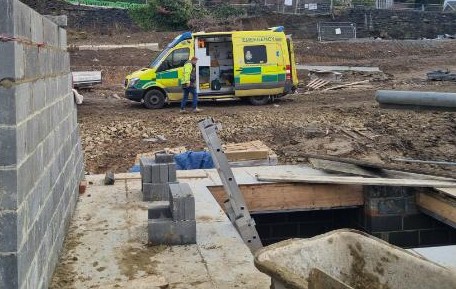
Daniel Jenner, trading as Jenner Roofing and Building Services, has received an eight-month suspended sentence after a worker fell four metres through a rooflight to the concrete floor below.

The hole left in the roof

The incident occurred on 12 August 2023, when a worker was carrying out work on behalf of Jenner Roofing and Building Services, at an industrial estate in High Wycombe, working alone to clean and repair gutters and drains.

While walking next to the unguarded edges of the roof, he approached a fragile roof covering above a service road. He stepped onto a rooflight, fell through it, and sustained serious, life-changing injuries including a fractured skull and cheekbone, a fractured leg and a broken wrist.

Police at the scene of the fall

An investigation by the Health and Safety Executive (HSE) found that Daniel Jenner had failed to implement any work-at-height measures to prevent workers from falling from the unguarded edges of the roof or through the fragile roof itself. There were no measures in place to mitigate for either the distance or the impact of a fall.

Working at height remains one of the leading causes of workplace injury and death. HSE has detailed guidance available on working safely at height and managing construction activities that can be found on our website.

Daniel Jenner, trading as Jenner Roofing and Building Services, pleaded guilty to breaching Regulation 6(3) of the Work at Height Regulations 2005. He received an eight-month suspended sentence, was ordered to complete 280 hours of unpaid work and to pay £500 in costs at a hearing at High Wycombe Magistrates’ Court on Wednesday 21 January 2026.

HSE Lead Inspector, Sophie Neale, said:

“This was a tragic but avoidable incident, where an individual suffered life-changing injuries due to working at height. Had suitable control measures been implemented, such as fall prevention or fall mitigation measures, this incident would not have occurred.

“This prosecution highlights ongoing safety failures in the construction industry, where working at height remains one of the leading causes of workplace injury and death.”

This HSE prosecution was brought by HSE enforcement lawyer, Gemma Zakrzewski and paralegal officer, Helen Hugo.


Further information:

  1. The Health and Safety Executive (HSE) is Britain’s national regulator for workplace health and safety. We are dedicated to protecting people and places, and helping everyone lead safer and healthier lives.
  2. More information about the legislation referred to in this case is available.
  3. Further details on the latest HSE news releases is available.
  4. Relevant guidance can be found here: Work at height – HSE
  5. HSE does not pass sentences, set guidelines or collect any fines imposed. Relevant sentencing guidelines must be followed unless the court is satisfied that it would be contrary to the interests of justice to do so.  The sentencing guidelines for health and safety offences can be found here.
‘James Bond’ builder who threatened HSE inspectors found guilty

A builder who threatened inspectors from Britain’s workplace regulator and told them his name was James Bond has been fined.

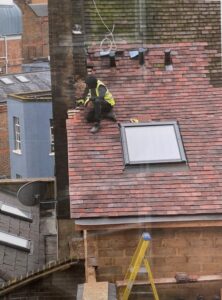
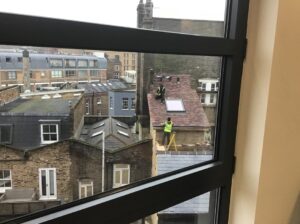
David Robert Lane, 59, was the site manager of an extensive cottage refurbishment in Staffordshire when unsafe work caught the attention of two inspectors from the Health and Safety Executive (HSE). The pair had been carrying out routine inspections in the Rugeley area on 11 February 2025 when they saw two people on the site accessing a roof from the bucket of an excavator.

Clearly identifying the practice to be unsafe, the inspectors decided they had to stop and take action.

Inspectors took this photo of the unsafe working at height work taking place

There were around ten workers on the site and when the inspectors approached, Lane, who would later be identified as the site manager, came over to intervene. He refused to identify himself, except as James Bond, and rebuffed their attempts to inspect the site. He went on to tell the inspectors he was in fact the property owner, that the men on site were unpaid friends and relatives, and that they had no legal right to inspect. He followed that up with threats of violence, at which point the inspectors withdrew.

The two inspectors returned to the site a week later, accompanied by officers from Staffordshire Police. Site manager Lane greeted them with a shout of “It’s PC Plod!” while still refusing to identify himself. He maintained that he was the owner, told all his staff not to speak to HSE, except to confirm that they were his relatives and not at work, and told the inspectors once again that they had no right to inspect and to leave the site.

After making several enquiries, the inspectors were able to identify Lane as the site manager – this resulted in him being served with enforcement action.

Upon receiving notification that he was to be prosecuted for the offence of obstruction, under 2 counts of section 33(1)(h) of the Health and Safety at Work etc Act 1974, he responded with three expletive laden emails, and said “I won’t jump through your hoops”.

HSE defines work-related violence as ‘any incident in which a person is abused, threatened or assaulted in circumstances relating to their work’. This can include verbal abuse or threats, including face to face, online and via telephone and physical attacks. It can include violence from members of the public, customers, clients, patients, service users and students towards a person at work.

David Robert Lane, of Talbot Street, Rugeley, Staffordshire, failed to attend Birmingham Magistrates Court on two occasions, and on the latter was found guilty after being tried in his absence on 9 January. He was fined £3,000, ordered to pay full costs of £6,450 and must pay a victim surcharge of £1,200.

Speaking after the hearing, HSE inspector Gareth Langston said: “This case highlights the difficulties we face in trying to improve the health and safety of workers across Great Britain.

“HSE inspectors have an important job to do, in safeguarding the health, safety and welfare of people at work. This includes investigating incidents and securing justice for innocent workers and the families that are tragically left behind.

“We conduct more than 13,000 inspections every year and it is through this proactive engagement that we are able to advise employers on how they can improve their ways of working, we only take enforcement action when the circumstances require it.

“We accept that not all employers will be pleased to see us, but the vast majority are professional and accept us with good grace.

“HSE will not tolerate the obstruction of its inspectors, and may prosecute offenders in rare cases such as this, where this is necessary.”

This HSE prosecution was brought be enforcement lawyer Edward Parton and paralegal officer Hannah Snelling.


Further information:

  1. The Health and Safety Executive (HSE) is Britain’s national regulator for workplace health and safety. We are dedicated to protecting people and places, and helping everyone lead safer and healthier lives.
  2. More information about the legislation referred to in this case is available.
  3. Further details on the latest HSE news releases is available.
  4. HSE does not pass sentences, set guidelines or collect any fines imposed. Relevant sentencing guidelines must be followed unless the court is satisfied that it would be contrary to the interests of justice to do so.  The sentencing guidelines for health and safety offences can be found here.
Company and director sentenced after worker fell 15 feet

A construction company in Hampshire has been fined £80,000 after a man fell more than 15 feet through a fragile skylight during roof repair work.

The 29-year-old sub-contractor sustained multiple fractures as a result of his fall at The Tanneries Industrial Estate in January 2024.  As a result, he was unable to work for months, and has not regained full use of one leg.

J Smith Construction Services Limited had started the roof repairs at the site in Titchfield in December 2023, but the work had been progressing slowly.  In an attempt to speed up the project, the company planned to work over the weekend of 13-14 January 2024 and took on extra workers to help, including the sub-contractor.

Skylight and area below

The company did not arrange for scaffolding to be erected at the open edges of the roof, nor make adequate arrangements to prevent or mitigate falls through fragile areas of the roof.  As there was nothing to prevent or reduce his fall through the skylight, the man fell from the height of the roof to the solid floor below.

Despite this serious incident, J Smith Construction Services and the remaining sub-contractors returned to complete the work the following day, with no additional safety measures in place.

Working at height remains one of the leading causes of workplace injury and death and HSE has detailed guidance on working safely at height, working safely at height including roof work. Health and safety in roof work

An investigation by the Health and Safety Executive (HSE) found that the company had failed to take appropriate precautions to ensure the safety of the workers on the roof.

J Smith Construction Services Limited of Southampton, pleaded guilty to breaching The Work at Height Regulations 2005, Regulation 6(3).  The company was fined £80,000 and ordered to pay costs of £2,630 at a hearing at Southampton Magistrates Court on 4 December 2025.

Company director, Mr Joseph Smith, who had been present throughout the works, pleaded guilty to Health and Safety at Work etc Act 1974, s.37(1). At the same court hearing, he was given a three-month prison sentence, suspended for 12 months, and ordered to pay costs of £2,630.

After the hearing, a HSE spokesperson said: “These sentences should send a clear message to employers that HSE and the courts take a failure to comply with health and safety legislation extremely seriously.

“Too many workers are injured or killed every year as a result of falls from height during construction work. These incidents can be prevented if reasonably practicable measures such as scaffolding or netting are put in place to protect workers.”

This HSE prosecution was brought by HSE enforcement lawyer Karen Park and paralegal Helen Hugo.


Further information:

  1. The Health and Safety Executive (HSE) is Britain’s national regulator for workplace health and safety. We are dedicated to protecting people and places, and helping everyone lead safer and healthier lives.
  2. More information about the legislation referred to in this case is available.
  3. Further details on the latest HSE news releases is available.
  4. HSE does not pass sentences, set guidelines or collect any fines imposed. Relevant sentencing guidelines must be followed unless the court is satisfied that it would be contrary to the interests of justice to do so.  The sentencing guidelines for health and safety offences in Scotland can be found here.

Roofer sentenced for refusing to co-operate with HSE

A Cornish roofer has been sentenced after failing to comply with requests for information from an inspector for Britain’s workplace regulator.

The Health and Safety Executive (HSE) received a concern after workers had been observed carrying out roof replacement work without any scaffolding being in place. The regulator identified unsafe work on a domestic roof being worked on by Steven Hendry, 40, from Liskeard, leading HSE inspector, Hatti Shipp, to serve a prohibition notice against him.

As a result, further information was requested from Hendry, however, he failed to comply with the request, which was made under Section 20 of the Health and Safety at Work Act. HSE guidance states that individuals and companies must co-operate with inspections and investigations.

Hendry, trading as Apex Roofing & Property Services at the time, was verbally abusive towards the inspector. As well as ignoring the request for further information, he went on to do further work without scaffolding, completely ignoring the prohibition notice. He then chose not to attend court and a warrant was issued for his arrest.

HSE defines work-related violence as ‘any incident in which a person is abused, threatened or assaulted in circumstances relating to their work’. This can include verbal abuse or threats, including face to face, online and via telephone and physical attacks. It can include violence from members of the public, customers, clients, patients, service users and students towards a person at work.

Steven Hendry, t/a Apex Roofing & Property Services of Marthus Court, Liskeard, pleaded guilty to section 20(2) of the Health and Safety at Work etc Act 1974. He was fined £400 and ordered to pay costs of £3,852 at Plymouth Magistrates Court on 25 November 2025. The court also approved an application made by HSE under s.42 of HSWA for Hendry to provide the information requested by them under section 20. He has until 1 March 2026 in which to do this.

HSE Inspector, Hatti Shipp, said: “Part of our role to prevent further risk of injury is to follow-up with companies or individuals who work unsafely, ensuring they are held accountable for improving conditions for workers and demonstrating to the HSE that they have done so.

“In this case, the defendant made it impossible for us to conduct this work and confirm the safety of those he was paying to undertake roof work.

“Not only did Hendry demonstrate a flagrant disregard to HSE and its powers, he was also verbally abusive to me in the process.”

This HSE prosecution was brought by HSE enforcement lawyer Daniel Pool and paralegal officer Gabrielle O’Sullivan.


Further information:

  1. The Health and Safety Executive (HSE) is Britain’s national regulator for workplace health and safety. We are dedicated to protecting people and places, and helping everyone lead safer and healthier lives.
  2. More information about the legislation referred to in this case is available.
  3. Further details on the latest HSE news releases is available.
  4. Working at height remains one of the leading causes of workplace injury and death in the UK, with 35 people losing their lives in 2024/25. Guidance on working safely at height is available.
  5. Relevant guidance on workplace violence and aggression is available.
  6. HSE does not pass sentences, set guidelines or collect any fines imposed. Relevant sentencing guidelines must be followed unless the court is satisfied that it would be contrary to the interests of justice to do so.  The sentencing guidelines for health and safety offences can be found here.