Press release

Leading firearms firm handed six figure fine after worker suffers burns

One of the country’s leading distributors of firearms for sports shooting and law enforcement has been fined £800,000 after a worker suffered burns at its site in Lincolnshire.

The 36-year-old was disposing of waste pyrotechnic material inside a manufacturing facility when it ignited and caused burns to her hands face and legs. An investigation by Britain’s workplace regulator found there was no suitable risk assessment and no safe system of work carried out by GMK Limited when the incident happened at the company’s Faldingworth base on 10 January 2023.

The woman had been working alongside a colleague disposing of waste pyrotechnic composition inside the production building at the site. The pair had been using a metal tray designated for the destruction of excess powders. However, during the process, a quantity of pyrotechnic composition came into contact with the hot tray and ignited unexpectedly, resulting in a flash that caused burns.
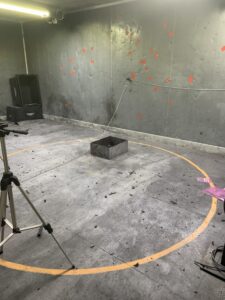
The incident happened during the disposal of waste pyrotechnics

An investigation by the Health and Safety Executive (HSE) established that GMK Limited permitted the woman to carry out a disposal method for waste pyrotechnic composition that had no safe system of work. They had also failed to carry out a risk assessment and the activity was undertaken in an unlicensed part of the building.

The investigation also identified that the company failed to provide the woman with suitable personal protective equipment (PPE), which, if provided and correctly used, may have prevented or significantly reduced the injuries she sustained.

Although GMK Limited had an established and recognised method for the disposal of waste pyrotechnic substances and articles, this approved procedure was not followed on the day of the incident. Instead, the unapproved disposal method carried out within the production building had been informally used for a number of years and had been undertaken on multiple occasions without proper assessment, controls, or oversight.

The industry guidance for the Safe Management of the Disposal of Explosives details what the explosives industry expects at a burning / disposal ground and how it is managed. It was a reasonably practicable to ensure that disposal took place at the designated area using the prescribed methods in the guidance document.

During the investigation HSE also identified that GMK Limited were in breach of their explosives licence in that they were storing pyrotechnics in areas within the production building that were not licensed for that purpose.

GMK Limited, of Fareham, Hampshire, pleaded guilty to breaching Section 2(1) of the Health and Safety at Work etc. Act 1974 and Regulation 7 of the Explosives Regulations 2014. The company was fined £800,000 and ordered to pay £10,306 in costs at Birmingham Magistrates’ Court on 2 October 2026.

After the hearing, HSE inspector Philip Smith said:

“For a leading company such as GMK to fail in the most basic of ways is hugely concerning.

“This young woman’s injuries could have easily been avoided with the implementation of safe working practices and use of the correct PPE.

“I hope the scale of fine handed out sends a message to industry that failing to protect workers will result in HSE taking action.”

The prosecution was brought by HSE advocate Tom Ledden-Rocks, enforcement layers lawyers Laura Lax and James Towey and paralegal officer Sarah Thomas.


Further information.

  1. The Health and Safety Executive (HSE) is Britain’s national regulator for workplace health and safety. We are dedicated to protecting people and places, and helping everyone lead safer and healthier lives.
  2. More information about the legislation referred to in this case is available.
  3. Further details on the latest HSE news releases is available.
  4. HSE does not pass sentences, set guidelines or collect any fines imposed. Relevant sentencing guidelines must be followed unless the court is satisfied that it would be contrary to the interests of justice to do so.  The sentencing guidelines for health and safety offences can be found here
Six-figure fine for company after man’s crush injuries uncovered wider failings

A company in Northumberland that manufactures earth moving attachments, such as excavator buckets, has been fined a six-figure sum after a man was crushed during repair works.

The 25-year-old suffered multiple fractures when he was crushed by an excavator bucket as he carried out repairs to it on 10 November 2023.

When inspectors from the Health and Safety Executive (HSE) carried out an investigation into the incident, they also identified failures in respect of how welding fume was being controlled during welding and burning activities.

The man had been working for Miller UK Ltd at a site in Cramlington when the incident happened. The work involved removing worn pieces of steel from the excavator bucket. As the man was working within the mouth of the bucket, its structural integrity failed and the bucket collapsed onto him. He became trapped inside and it was only when two colleagues attached an overhead crane and lifted the bucket sufficiently that he was able to crawl free.

He sustained eight fractured ribs, two fractured knees, two fractured vertebrae and a bruised left lung.

The HSE investigation also found Miller UK Ltd had failed to undertake a suitable and sufficient risk assessment of the repair work leading to the bucket collapse, and had failed provide a safe system of work and adequate instruction to its employees.

It was during a subsequent inspection by the HSE that inspectors observed workers using plasma cutters and welding equipment without suitable control measures to adequately control the risk of exposure to welding fume, a hazardous substance that can cause cancer.

HSE investigators also identified that the company had failed to conduct a suitable and sufficient assessment of the risks associated with exposure to welding fume in its repair department. The company subsequently failed to implement and monitor measures required to reduce exposure to welding fume to as a level as low as reasonable practicable, including use of local exhaust ventilation.

Miller UK Ltd, of Cramlington, Northumberland, pleaded guilty to breaching Section 2(1) of the Health and Safety at Work etc. Act 1974 and Regulation 7(1) of the Control of Substances Hazardous to Health Regulations 2002. The company was fined a total of £173,334 and ordered to pay £8,674 in costs at North Tyneside Magistrates Court on 2 October 2026.

HSE inspector Matthew Dundas said:

“Our investigation identified that the repair work taking place was not being done safely and it left the man with serious injuries.

“Had the company identified the risk and ensured its employees were adequately instructed and trained, this incident would not have happened.

“This was an unusual case as the investigation was initiated following an incident where a young man was very seriously injured, however the subsequent intervention discovered additional failings, which led to further charges.

“As a result of the investigation, it was identified that other workers were not being adequately protected from the risks of welding fume.

“I hope this case highlights that HSE can and will take action when duty holders fail to discharge their health and safety obligations.”

This HSE prosecution was brought by HSE enforcement lawyer Iain Jordan and paralegal officer Zara Salman.


Further information:

  1. The Health and Safety Executive (HSE) is Britain’s national regulator for workplace health and safety. We are dedicated to protecting people and places, and helping everyone lead safer and healthier lives.
  2. More information about the legislation referred to in this case is available.
  3. Further details on the latest HSE news releases is available.
  4. HSE does not pass sentences, set guidelines or collect any fines imposed. Relevant sentencing guidelines must be followed unless the court is satisfied that it would be contrary to the interests of justice to do so.  The sentencing guidelines for health and safety offences can be found here.

Construction company fined £120,000 after worker dies in fall from height

An Oxfordshire-based construction company has been fined £120,000 after a carpenter died when he fell through an unsafe first floor while carrying out refurbishment work.

W G Carter Limited, of Appleton, was sentenced following the death of 59-year-old Richard “Felix” Roper, who fell from height while working at a domestic property in Gloucestershire.

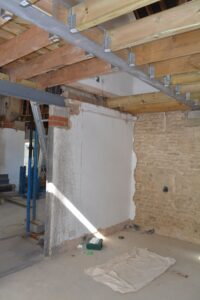
Mr Roper, a father of two, had been carrying out work on the first floor of Manor Barn House, Nether Westcote, on 30 August 2022, where extensive repairs were being undertaken to replace rotten floor joists and floorboards.

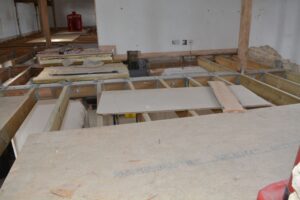
Mr Roper fell through the unsafe first floor while carrying out refurbishment work

He had been tasked with replacing damaged floor joists while other workers removed sections of flooring in the same area. Large parts of the first-floor structure had been stripped back, leaving open gaps between joists. In addition, some joists were either missing altogether or had not been secured.

It was while working in these conditions, Mr Roper fell from the first floor to the concrete ground floor below. He sustained severe head injuries and died in hospital the following day.

A joint investigation by the Health and Safety Executive (HSE) and Gloucestershire Police found that the work at height had not been properly planned, appropriately supervised, or carried out safely.

The investigation identified several serious failings. Workers, including Mr Roper, were able to access areas of the first floor where flooring and structural supports had been removed, despite there being insufficient measures in place to prevent falls. At the same time, other workers were continuing to remove floorboards, creating and increasing the risk of falling from height.

After falling from the first floor he landed on the concrete floor below

Following the incident, HSE served a Prohibition Notice, stopping further work at height until adequate safety measures had been introduced.

Falls from height remain the leading cause of workplace death and injury with the latest statistics from HSE showing that they account for over a quarter of all work related deaths in 2025/26.

HSE guidance states what an employer must do to protect their employees from falls from height including making sure work is properly planned, supervised and carried out by competent people.

The investigation found that W G Carter Limited had failed to adequately plan the work and implement suitable measures to prevent workers from falling. After the incident, the company adopted a safer method of working, installing floor joists from below using appropriate work-at-height equipment and preventing access to the first floor while the work was being undertaken.

On 24 September 2026, at Bristol Magistrates Court, W G Carter Limited, of 81A Eaton Road, Appleton, Oxfordshire, pleaded guilty to breaching Regulation 4(1) of the Work at Height Regulations 2005. The company was fined £120,000 and ordered to pay costs of £5,247.

HSE principal inspector James Lucas said:

“Due to the failings of this company, a man lost his life.

“Every year, workers are killed or suffer life-changing injuries because work at height has not been properly planned or suitable safeguards have not been put in place.

“Had appropriate controls been in place, Felix’s death could have been prevented.”

“Our thoughts remain with Felix’s family. He was a valued colleague and a much-loved father of two who lost his life in circumstances that should never have arisen.”

The prosecution was brought by HSE enforcement lawyer Gemma Zakrzewski, enforcement advocate Rowena Goodwin and paralegal officer Hannah Snelling.


Further information:

  1. The Health and Safety Executive (HSE) is Britain’s national regulator for workplace health and safety. We are dedicated to protecting people and places, and helping everyone lead safer and healthier lives.
  2. More information about the legislation referred to in this case is available.
  3. Further details on the latest HSE news releases is available.
  4. HSE does not pass sentences, set guidelines or collect any fines imposed. Relevant sentencing guidelines must be followed unless the court is satisfied that it would be contrary to the interests of justice to do so.  The sentencing guidelines for health and safety offences can be found here.

Fencing company fined after employee fell from a ladder

A fencing and land services company in Ripon has been fined after an employee suffered spinal fractures when he fell from a ladder during the erection of an acoustic fence.

The 23-year-old man was working for Metcalfe Fencing Contractors Ltd at a site in North Tyneside on the 10 of December 2024. He had been erecting a four metre tall, 265 metre long section of acoustic fencing in between the busy A19, near Holystone, and a housing estate.

The work was planned in such a way that required the use of a ladder on uneven, muddy ground, and an excavator was used to lift the fence panels over the head of the operator situated on the ladder. However, the slings of the excavator became tangled in the ladder during this operation, causing the ladder to tip, and the employee to fall approximately two metres onto the ground.

The man fell from a ladder while erected an acoustic fence

An investigation by the Health and Safety Executive (HSE) found that Metcalfe Fencing Contractors Limited failed to properly plan the lifting operation and the work at height activities.

Falls from height remain the leading cause of workplace death and injury and HSE guidance states that employers must ensure lifting operations and work at height activities are properly planned, and that they are carried out in a way which is, so far as is reasonably practicable, safe. This includes making decisions about whether the work at height can be eliminated entirely. You can read more about our guidance here – Work at height – HSE.

Metcalfe Fencing Contractors Ltd, of The Annexe Heatherlands, Grantley, Ripon, pleaded guilty to breaching Section 2(1) of the Health and Safety at Work etc. Act 1974. The company was fined £22,000 and ordered to pay £5,327 in costs at South Tyneside Magistrates Court on 29 September 2026.

HSE inspector Matthew Dundas said:

“Every year, a significant proportion of accidents, many of them serious and sometimes fatal, occur as a result of poorly planned lifting operations or work at height activities.

“This particular incident was wholly avoidable. Had the company used reasonable practicable measures such as remote release clamps on the lifting equipment, and tag-lines to avoid the need to work on a ladder, this injury would not have occurred.”

This HSE prosecution was brought by HSE enforcement lawyer Iain Jordan and paralegal officer Zara Salman.


Further information:

  1. The Health and Safety Executive (HSE) is Britain’s national regulator for workplace health and safety. We are dedicated to protecting people and places, and helping everyone lead safer and healthier lives.
  2. More information about the legislation referred to in this case is available.
  3. Further details on the latest HSE news releases is available.
  4. HSE guidance on working at height is available.
  5. HSE does not pass sentences, set guidelines or collect any fines imposed. Relevant sentencing guidelines must be followed unless the court is satisfied that it would be contrary to the interests of justice to do so.  The sentencing guidelines for health and safety offences can be found here.

Two major companies sentenced over death of man killed by window falling from luxury penthouse

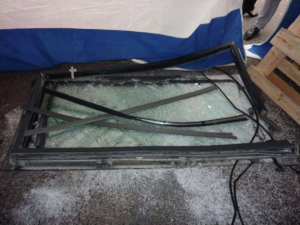
Two companies have been fined a combined £1.3 million after a window unit fell from the 26th floor of a luxury development in London, killing a coach driver on his break as he walked below.

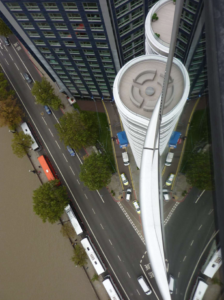
Two of the companies involved in the design of the bespoke windows in the Corniche development on the capital’s Albert Embankment – with one weighing 130kg falling 300 feet to the ground below, killing the 53-year-old father and grandfather instantly.

The incident happened at around 10.30am on 2 October 2018 – Mick had been on a break and was just returning to his coach, which was parked up nearby.

Mick Ferris was killed by the falling window

Mick’s wife Rachel described his death as being ‘so sudden’ and ‘out of the blue

“It has made it so much worse to get used to,” she said.

“Mick was just minding his own business. One minute there, one minute gone.

“The thought this could have happened to anybody is always with me. It could have been a child.

“The fact this could have been prevented, I just can’t explain. If somebody had done something differently – anything – it would have changed our lives.

“I know it wasn’t just one person, but one person could have changed this. One person could have asked ‘can’t we do this better?’.

“What those companies did killed my husband.

“This has changed our lives. It has changed my whole outlook on everything. My life has changed forever.

“We were due to fly to the Maldives the Saturday after Mick died to celebrate our anniversary. We had half-packed suitcases in our house. It was a bucket list place for Mick and he never got to go there. We never got to go there.

“He was also a great dad and grandad – when his kids needed him, he was there.

“He loved driving coaches, having followed in his own Dad’s footsteps as a professional driver.

“Four hundred people attended his funeral – there was even a coach with his name on it. He is missed by so many it is unbelievable.”

St James Group Limited, part of the Berkeley Group, had been the developer of the Corniche, a three tower luxury development near Vauxhall Bridge, as well as the Principal Contractor and Principal Designer.  Lindner Prater Limited was a specialist company engaged by St James to design the penthouse windows.

HSE photo taken at scene – showing window pane on ground

A series of failures

At an early stage of the design process, the windows had been changed from opening inwards to opening outwards, meaning if they detached, they would fall onto a pedestrian area.  However, they were never effectively risk assessed.

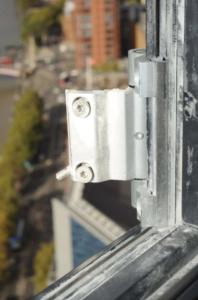
The safety of the windows relied on the performance of a single restrictor, held in by a single screw, and none of the fittings had been confirmed by their manufacturers to be suitable for the bespoke curved penthouse windows.

Close up of window frame and bracket taken by police in Oct 2018

In August 2017, more than a year before the fatal incident, a window left open in windy conditions fell from the same penthouses during construction, nearly hitting two workers. St James Limited led an internal review into the 2017 near miss, but records obtained by the HSE showed key noted areas of concern were not followed up effectively.

It was only after the second incident in 2018 and Mr Ferris’ death, that the windows were redesigned to open inward and the public walking below the penthouses were no longer at risk if a window was left open.

Sentence handed down

After a five week trial, both St James Limited, of Berkeley House, 19 Portsmouth Road, Cobham and Lindner Prater Limited of  45 London Road, Reigate, were found guilty found guilty to contravening Section 3(1) of The Health and Safety at Work Act etc. 1974.

At sentencing on 24 September 2026 at the Inner London Crown Court, St James was fined £1million and ordered to pay costs of £125,000 and Lindner Prater Limited was fined £300,000 and ordered to pay costs of £125,000.

Another taken by HSE showing height of penthouse

HSE lead inspector Andrew Verrall-Withers said:

“Two companies – widely seen as leaders in their fields failed to respond to an obvious risk, and tragically this cost the life of a man simply going about his day.

“Both times a window fell, the wind speeds were not unusually high.”

“Even after a window had fallen in 2017, luckily just missing workers below, sufficient attention was not given to assessing the risk of the windows detaching and falling if left open in windy conditions. Too much reliance was placed on adding a small sign to the windows, in effect hoping the residents would not forget to close windows.”

“The construction industry should pay attention to this tragic case. Principal designers need to pay careful attention to clarifying exactly what services architects, designers, and consultants will provide, and then effectively monitor their performance to ensure related risks are identified and coordinate necessary improvements.

“The investigation assessed the involvement of multiple companies, thousands of documents, and highly complex technical evidence. This was followed by the wait for a Trial.

“We are grateful for Mr Ferris’ family’s understanding throughout and hope this outcome brings them some closure.”

The HSE’s investigation was carried out by HM Inspector Andrew Verrall-Withers and HM Principal Inspector James Goldfinch, and the prosecution brought by Counsel Gordon Menzies and Doug Scott, HSE Senior Enforcement Lawyer James Towey, and paralegal officer Gabrielle O’Sullivan.


Further information:

  1. The Health and Safety Executive (HSE) is Britain’s national regulator for workplace health and safety. We are dedicated to protecting people and places, and helping everyone lead safer and healthier lives.
  2. More information about the legislation referred to in this case is available.
  3. Further details on the latest HSE news releases is available.
  4. HSE does not pass sentences, set guidelines or collect any fines imposed. Relevant sentencing guidelines must be followed unless the court is satisfied that it would be contrary to the interests of justice to do so. The sentencing guidelines for health and safety offences in England and Wales can be found here,

Sister companies fined after exposing workers to ‘multitude’ of risks

Two sister woodworking companies based in Cambridgeshire have been fined after they exposed workers to various risks including wood dust.

Dagless Limited and Nene Milling Company Limited, both based in Wisbech,  were been fined a total of £34,000 following an inspection by the Health and Safety Executive (HSE)

HSE carried out inspections at the two companies in July 2023 and identified a multitude of significant failings in their health and safety management systems, leaving many employees at significant risks to their health, safety and welfare.

These failings included employees being exposed to wood dust and other substances hazardous to health due to very poor control measures. Wood dust is a known respiratory sensitiser that can cause long term health effects including occupational asthma.

There was no risk assessment or work related noise survey in place and employees had not received training for the use of personal protection equipment (PPE), with the majority of employees not wearing hearing protection in areas where the noise was at very high levels.

The companies also failed to ensure vehicle movements on their sites were safety managed, putting their employees at risk of being seriously injured or killed by moving vehicles and there were numerous items of work equipment being used without appropriate guards or safety features in place.

After the visit, HSE inspectors took enforcement action against both companies. They also identified that since 2002 both Dagless Limited and Nene Milling Company Limited have been served a total of 34 enforcement notices relating to breaches of health and safety. Both companies have also been prosecuted for serious health and safety offences in the past, including incidents that have caused serious injuries to a number of their employees.

HSE guidance states that employers must take effective measures to ensure the health, safety and welfare of their employees and other persons. The Management of Health and Safety at Work Regulations 1999 require employers to put in place arrangements to control health and safety risks Managing for health and safety

Dagless Limited and Nene Milling Company Limited, both of Wisbech, entered a guilty plea to charges contrary to Section 2(1) of the Health and Safety at Work etc. Act 1974. The companies were fined a total of £34,000 and ordered to pay total costs of £7,809.30 at a hearing at Norwich Magistrates Court on 18 September 2026.

HSE inspector Paul Unwin said:

“These companies have been subject to significant enforcement by HSE in the past, including various enforcement notices.

“This includes both having previously been prosecuted following incidents where their employee have suffered serious life changing injuries.

“We take a failure to protect the health and safety of employees extremely seriously and we will not hesitate to take action against companies which do not do all that they should.”

This HSE prosecution was brought by HSE enforcement lawyer Julian White and paralegal officer Thomas Smith.


Further information:

  1. The Health and Safety Executive (HSE) is Britain’s national regulator for workplace health and safety. We are dedicated to protecting people and places, and helping everyone lead safer and healthier lives.
  2. More about the legislation referred to in this case can be found at: legislation.gov.uk/
  3. HSE news releases are available at http://press.hse.gov.uk
  4. Guidance on controlling the risks to employees can be found here: Managing for health and safety
  5. HSE does not pass sentences, set guidelines or collect any fines imposed. Relevant sentencing guidelines must be followed unless the court is satisfied that it would be contrary to the interests of justice to do so. The sentencing guidelines for health and safety offences in England can be found at Magistrates’ courts sentencing guidelines – Sentencing

Fire extinguisher recycling company fined after ‘thoughtful and kind man’ killed at work

A waste and recycling company in the West Midlands has been fined after a man described as ‘thoughtful and kind’ was killed while discharging a fire extinguisher.

Craig Pearson, 37, a father-of-four from Dudley, was working for Fire Protection Recycling Limited, at its site in Oldbury when the incident happened on 7 March 2023.

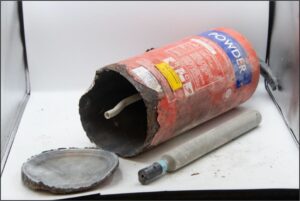
He had been processing powder fire extinguishers which were at the end of their serviceable life. While working on a cartridge type fire extinguisher, it had a sudden release of pressure and exploded, striking him in the head. After the incident, the fire extinguisher was found embedded in the ceiling of the workroom.

Craig Pearson died as a result of his injuries

Craig was treated at the Queen Elizabeth Hospital for his injuries, but despite the efforts of medical staff, sadly died the next day, on 8 March.

He leaves behind his fiancée Rachelle, siblings John and Cheryl, and his four children.

Craig’s fiancé Rachelle said: “Craig was bubbly, Mr funny and adventurous.

“There was never a day where we didn’t laugh. He was thoughtful, kind and always thought about my needs and was helpful to others.

“I often sit and wonder what life would be like if Craig was here now. Would we be married? What would we be doing together?

“I take each day as it comes. I try my best to keep life as normal as possible and do my best to ensure my children are happy.”

An investigation by the Health and Safety Executive (HSE) found that Fire Protection Recycling Limited failed to ensure the health, safety and welfare of its employees while at work and while they were recycling these types of fire extinguishers.

The fire extinguisher that exploded

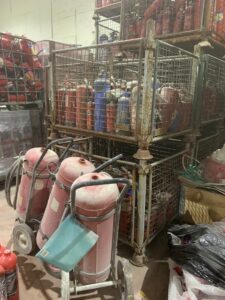
The company had failed to conduct a suitable and sufficient risk assessment, and their systems of work for processing these types of fire extinguishers were not suitable. They did not have proper storage arrangements for old extinguishers waiting for processing, and there wasn’t a suitable restraint system for containing fire extinguishers when they were being discharged, to prevent them ejecting dangerous parts.

HSE states employers must provide plant and systems of work which are so far as is reasonably practicable, safe and without risks to health.

HSE inspectors also found old extinguishers were not being stored properly

HSE inspector Heather Campbell said:

“Our thoughts today are with the family of Craig Pearson, a young dad of four.

“He should have returned home safely to his family at the end of his working day but because of the failings of Fire Protection Recycling Limited, he did not.

“I hope the sentence handed down leaves companies in no doubt that we will not hesitate to take action against those that fail to protect their employees.”

Fire Protection Recycling Limited, of Pearsall Drive, Oldbury, West Midlands, pleaded guilty to breaching Section 2(1) of the Health and Safety at Work etc. Act 1974. The company was fined £40,000 and ordered to pay £17,034.25 in costs at Birmingham Magistrates’ Court on 14 September 2026.

This HSE prosecution was brought by HSE enforcement lawyer Matthew Reynolds and paralegal officer Lynne Thomas.


Further information:

  1. The Health and Safety Executive (HSE) is Britain’s national regulator for workplace health and safety. We are dedicated to protecting people and places, and helping everyone lead safer and healthier lives.
  2. More information about the legislation referred to in this case is available.
  3. Further details on the latest HSE news releases is available.
  4. Relevant guidance can be found here: Safety requirements for pressure testing GS4
  5. HSE does not pass sentences, set guidelines or collect any fines imposed. Relevant sentencing guidelines must be followed unless the court is satisfied that it would be contrary to the interests of justice to do so.  The sentencing guidelines for health and safety offences can be found here.

Cold pressed juice company fined after worker traps arm in machine

A cold pressed juice manufacturer in Northamptonshire has been fined £100,000 after a worker’s arm was crushed after becoming entangled in a food processing machine.

The then 25-year-old was working for Daily Dose Ltd at its factory in Corby on 3 December 2024 when he attempted to clear vegetable pulp by hand from a machine known as a “Mash Pump”.

After lifting a lid on the machine’s hopper, the rotating worm screw within the hopper caught his gloved hand and he was drawn into the machine, trapping his arm and causing multiple injuries, including lacerations and fractures. The victim has been left with lifelong injuries.

An investigation by the Health and Safety Executive (HSE) found that Daily Dose Ltd failed to prevent access to dangerous parts of machinery, namely the rotating parts of the Mash Pump and failed to carry out a suitable and sufficient assessment of risk posed by the machine to its operators.

HSE guidance states employers must take effective measures to prevent access to dangerous parts of machinery. This will normally be by fixed guarding but where routine access is needed, interlocked guards (sometimes with guard locking) may be needed to stop the movement of dangerous parts before a person can reach the danger zone.

Daily Dose Ltd of Ensign House, London, England, pleaded guilty to breaching Regulation 11(1) of The Provision and Use of Work Equipment Regulations 1998. The company was fined £100,000 and ordered to pay £8,776 in costs at Birmingham Crown Court on 16 September 2026.

HSE inspector Adam Johnson said:

“Every year, a significant proportion of accidents, many of them serious and sometimes fatal, occur as a result of poorly guarded work equipment.

“In this case this was a wholly avoidable incident, caused by the failure to guard dangerous parts. Had the company carried out a suitable and sufficient assessment of risk, suitable guarding arrangements and safe systems of work could have been implemented.

“The fine imposed on Daily Dose Ltd should underline to businesses that the courts, and HSE, take a failure to follow the regulations extremely seriously.

“We will not hesitate to take action against companies which do not do all that they should to keep people safe.”

The HSE prosecution was bought by HSE enforcement lawyer Andrew Siddal and paralegal officer Gabrielle O’Sullivan.


Further information:

  1. The Health and Safety Executive (HSE) is Britain’s national regulator for workplace health and safety. We are dedicated to protecting people and places, and helping everyone lead safer and healthier lives.
  2. More information about the legislation referred to in this case is available.
  3. Further details on the latest HSE news releases is available.
  4. Relevant guidance can be found here Safe use of work equipment. Provision and Use of Work Equipment Regulations 1998. Approved Code of Practice and guidance L22
  5. HSE does not pass sentences, set guidelines or collect any fines imposed. Relevant sentencing guidelines must be followed unless the court is satisfied that it would be contrary to the interests of justice to do so.  The sentencing guidelines for health and safety offences can be found here.

Cornwall sawmill and company director fined after failing to act on health and safety notices

A Cornwall-based timber company and its director have been handed a £20,000 fine after failing to comply with a series of enforcement notices issued by health and safety inspectors.

Truro Sawmills Limited and its Managing Director, Alistair Wright, have been fined after failing to comply with improvement notices served by the HSE.

Truro Sawmills Limited supplies timber and manufactures gates, fencing panels and garden furniture, processed at its sawmill in Penhallow, Truro. The company was served with Improvement Notices after HSE inspectors found that employees were not being protected from the ill health risks arising from wood dust, nor the safety risks associated with the use of rider-operated lift trucks in the workplace. If not properly controlled, wood dust can cause asthma, respiratory conditions and cancer.

The HSE investigation found that employees had not been appropriately trained to use rider-operated lift trucks. Staff had also not been face fit tested for respiratory protective equipment (RPE) to protect them from wood dust and were not under suitable health surveillance.

An investigation by the HSE determined that Truro Sawmills Limited had failed to comply with its legal duty under Section 2(1) of the Health and Safety at Work etc. Act 1974 and had contravened the requirements of three Improvement Notices served by HSE to protect its workers.

Alistair Wright, the company’s Managing Director, also pleaded guilty to contravening the requirements of an Improvement Notice. HSE applied for Mr Wright to be disqualified from acting as a company director under the Company Directors Disqualification Act 1986.

Relevant guidance on the use of rider-operated lift trucks and the control of wood dust can be found here:

Lift-truck training – HSE

Wood dust – HSE

Fit testing basics – HSE

Health surveillance – HSE

Truro Sawmills Limited, of Penhallow, Truro, TR4 9NF, pleaded guilty to four counts, including breaching Section 2(1) of the Health and Safety at Work etc. Act 1974 and contravening the requirements imposed by three Improvement Notices, contrary to Section 33(1)(g) of the Act.

Alistair Wright, Managing Director of Truro Sawmills Limited, pleaded guilty to one count of contravening a requirement imposed by an Improvement Notice, contrary to Section 33(1)(g) and Section 37(1) of the Act.

The company was fined £20,000 and ordered to pay £5,000 in costs. Mr Wright was fined £5,000 and ordered to pay £2,500 in costs, at a hearing at Truro Crown Court on 20 August 2026. The court granted HSE’s application to disqualify Mr Wright from acting as a company director for a period of five years.

HSE principal inspector Melissa Lai-Hung said:

“Exposure to wood dust can cause asthma, respiratory conditions and cancer – yet this firm failed to act on legally-binding notices served by health and safety inspectors to protect their workforce.

“We also found workers hadn’t been properly trained to use lift trucks, creating very real dangers for those onsite.

“Firms should be left in no doubt that companies and individuals who do not comply with health and safety legislation will be held accountable.”

This HSE prosecution was brought by HSE enforcement lawyer Robert James and paralegal officer Mike Millman.


Further information:

  1. The Health and Safety Executive (HSE) is Britain’s national regulator for workplace health and safety. We are dedicated to protecting people and places, and helping everyone lead safer and healthier lives.
  2. More information about the legislation referred to in this case is available.
  3. Further details on the latest HSE news releases is available.
  4. Relevant guidance on use of FLTs and control of wood dust can be found here: Lift-truck training – HSE,  Wood dust – HSE, Fit testing basics – HSE and Health surveillance – HSE.
  5. HSE does not pass sentences, set guidelines or collect any fines imposed. Relevant sentencing guidelines must be followed unless the court is satisfied that it would be contrary to the interests of justice to do so.  The sentencing guidelines for health and safety offences can be found here.

Surgeons spend six hours saving worker’s arm after it was severed below elbow in machinery incident

A clinical waste disposal company has been fined £300,000 after one of its workers severed his arm from the elbow down while unblocking machinery in Swindon.

The man – who was 42 at the time – had been working his usual night shift at Tradebe Healthcare National Limited’s site on Elgin Industrial Estate on 4 February 2022. He had been working alongside a colleague when he attempted to clear an obstruction on an autoclave machine. His left arm was trapped and crushed by the door – severing it from the elbow down.

The man had been unblocking this machine when the incident happened

He was rushed to hospital where doctors spent six hours saving his arm. He has since had three major surgeries to restore the use of his hand, though he now suffers from very limited movement.

Part of his treatment has involved skin grafts taken from the thigh of his left leg as well as veins from his left and right legs transplanted into the arm. He still suffers from constant pain and struggles to complete many everyday tasks independently.

Autoclave machines are pressure vessels with lids or doors and are used in a variety of processes whereby products are placed inside and subjected to greater than atmospheric pressure and elevated temperatures. A rotoclave is a type of autoclave that rotates during operation. On this particular site, it was used for high temperature sterilisation of waste.

HSE’s investigation found multiple failings by the company including exposing workers to risk

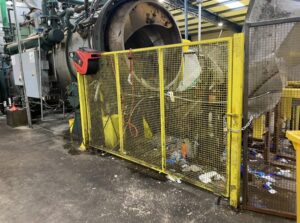
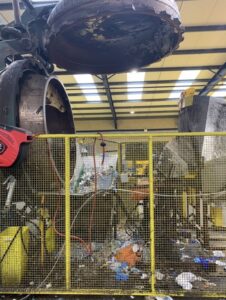
The machine was surrounded by an enclosure which included an access gate at its rear. The man had used this unsecured rear gate to walk into the enclosure to reach in to remove the debris. His colleague was unable to see the employee and due to miscommunication, mistakenly resumed operation of the machine.

An investigation by the Health and Safety Executive (HSE) revealed multiple failings by the company, including:

The investigation also found that training provided to employees was inadequate and that employees were not suitably supervised.

HSE guidance highlights the importance of following safe isolation and lock-off procedures before any maintenance or cleaning work is carried out. Employers must ensure all machinery is properly isolated from power sources, and that systems are regularly monitored and reviewed to prevent inadvertent start-up. Further guidance is available here: The safe isolation of plant and equipment – HSE.

Tradebe Healthcare National Limited of Atlas House Third Avenue, Globe Park, Marlow, Buckinghamshire, pleaded guilty to breaching Section 2(1) of the Health and Safety at Work etc. Act 1974. The company was fined £300,000 and ordered to pay costs of £18,710.

HSE inspector Emma Preston said:

“This was a harrowing incident made more tragic by the fact that events of this kind are all-too foreseeable.

“Accidents which happen when cleaning and maintaining machinery often result in life-changing injuries, which is why companies need to make sure they have robust lock-off procedures, effective guarding, and that all sources of power are fully isolated before work begins.

“The man affected by this incident faces a long road to recovery and we hope today’s outcome provides him a measure of justice.”

This prosecution was brought by HSE enforcement lawyer Chloe Ward and supported by paralegal officer Farhat Basir.


Further information:

  1. The Health and Safety Executive (HSE) is Britain’s national regulator for workplace health and safety. We are dedicated to protecting people and places, and helping everyone lead safer and healthier lives.
  2. More information about the legislation referred to in this case is available.
  3. Further details on the latest HSE news releases is available.
  4. Relevant guidance can be found here – Using work equipment safely – HSE and Safe use of work equipment – HSE.
  5. HSE does not pass sentences, set guidelines or collect any fines imposed. Relevant sentencing guidelines must be followed unless the court is satisfied that it would be contrary to the interests of justice to do so.  The sentencing guidelines for health and safety offences can be found here.