Press release

Manufacturer fined after employee’s fingers severed

A wooden cable drum manufacturer based in South Kirkby has been fined £24,395 after an employee’s fingers were severed in a printing machine.

A 57-year-old woman was working for Askern UK Limited at its site in South Kirkby, Pontefract on 8 March 2024 when she was able to raise the guard and easily override an interlock to run the rollers of a machine which prints logos. The employee was cleaning the rollers with a paper towel when her fingers were drawn into the nip point, leaving two of her fingers partially severed.

An investigation by the Health and Safety Executive (HSE) found that Askern UK Limited failed to prevent access to dangerous parts of machinery, namely the moving rollers of the printing machine. The investigation also found that the company had failed to adequately maintain the machine or provide employees with suitable training for the printer.
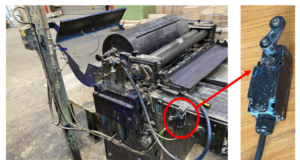
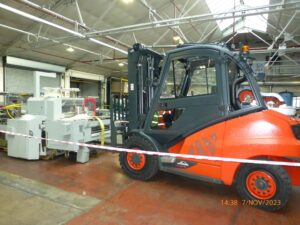
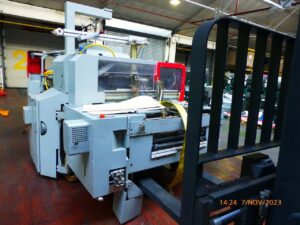
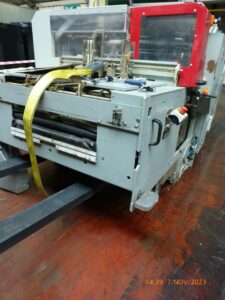
Image from site

HSE guidance states employers must take effective measures to prevent access to dangerous parts of machinery. This includes ensuring protection devices, such as interlocks, are not easily bypassed or disabled. Further guidance on the Provision and Use of Work Equipment Regulations 1998 (PUWER) is available.

Askern UK Limited, of 28 Lidgate Crescent, Langthwaite Business Park, South Kirkby, Pontefract, WF9 3NR, pleaded guilty to breaching Section 2(1) of the Health and Safety at Work etc. Act 1974. The company was fined £24,395, ordered to pay £5000 in costs and a victim surcharge of £2,000 at Leeds Magistrates’ Court on 4 February 2026.

HSE inspector Shauna Halstead said: “This case demonstrated multiple failures by the company in respect of the printing machine.

“An employee was tasked with cleaning the printer without provision of suitable information, instruction or training, particularly in relation to the safety devices intended to protect them.

“A suitable interlock and employee training would have prevented this incident”

This HSE prosecution was brought by HSE enforcement lawyer Samantha Crockett, paralegal officer Benjamin Stobbart, and HSE legal team.

Notes to Editors

  1. The Health and Safety Executive (HSE) is Britain’s national regulator for workplace health and safety. We are dedicated to protecting people and places, and helping everyone lead safer and healthier lives.
  2. More information about the legislation referred to in this case is available.
  3. Further details on the latest HSE news releases are available.
  4. Relevant guidance can be found here Provision and Use of Work Equipment Regulations 1998 (PUWER) – HSE
  5. HSE does not pass sentences, set guidelines or collect any fines imposed. Relevant sentencing guidelines must be followed unless the court is satisfied that it would be contrary to the interests of justice to do so.  The sentencing guidelines for health and safety offences can be found here.
Plant hire company fined £10,000 after employee struck by falling JCB bucket

A plant hire company has been fined after a mechanic suffered life-changing injuries when a JCB bucket fell on him while he was helping to repair a tipper truck.

On the 24 October 2023, the employee of Salford Grab Hire Limited was assisting a colleague in repairing a broken lifting mechanism on a tipper truck body. A JCB was being used to prop up the tipper body in the raised position when the one-tonne bucket became dislodged and fell.

The worker suffered multiple fractures to his hand, shoulder blade, ribs, shin and thigh, as well as a crushed ankle and foot. He also developed a blood clot in his lungs as a result of the incident.

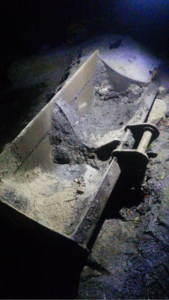
An investigation by the Health and Safety Executive (HSE) found that Salford Grab Hire Limited had not used appropriate equipment to support the tipper body during repairs. The bucket being used to prop up the body did not have a quick hitch or retaining pin, causing it to become dislodged and fall.

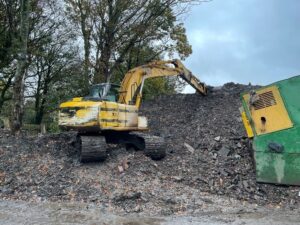
Image from site
Image from site
Image from site

HSE guidance on health and safety in motor vehicle repair and associated industries   states that elevated vehicle load areas, such as those on tipper lorries, should be effectively propped if access is needed below them. Props should only be used on firm, level ground and must be designed to adequately carry the loads placed on them.

Salford Grab Hire Limited of Fairacre Astley Moss, Tyldesley, Manchester pleaded guilty to breaching Section 2(1) of the Health and Safety at Work etc. Act 1974. The company was fined £10,000 and ordered to pay costs of £3,475.90 at Warrington Magistrates’ Court on 27 January 2026.

HSE Inspector Rose Leese-Weller said: “Every year we see serious and sometimes fatal injuries to people working under a poorly propped vehicle body. Employers must not underestimate the risks involved and must ensure that appropriate equipment and systems of work are used when undertaking such work.”

This HSE prosecution was brought by HSE enforcement lawyers Julian White and Nathan Cook, and paralegal officer Rebecca Withell.

Notes to Editors

  1. The Health and Safety Executive (HSE) is Britain’s national regulator for workplace health and safety. We are dedicated to protecting people and places and helping everyone lead safer and healthier lives.
  2. More information about the legislation referred to in this case is available.
  3. Further details on the latest HSE news releases are available.
  4. Relevant guidance can be found here Health and safety in motor vehicle repair and associated industries
  5. HSE does not pass sentences, set guidelines or collect any fines imposed. Relevant sentencing guidelines must be followed unless the court is satisfied that it would be contrary to the interests of justice to do so.  The sentencing guidelines for health and safety offences can be found here.
Hartlepool chemical manufacturer fined £50,000 after two serious incidents within three months

A Hartlepool chemical manufacturer has been fined after two employees were injured in separate incidents at two of its sites within just three months.

On 3 September 2021, an employee at Exwold Technology Limited’s Haverton Hill site in Billingham sustained serious injuries when four fingers on his left hand were severed during machinery start-up. The blades of a rotary valve had not been effectively isolated from the power supply while part of the production line was being prepared between cleaning operations. As the employee checked for air flow, his fingers became caught between the blades and the valve’s internal casing, resulting in the amputation.

Less than three months later, on 24 November 2021, a second incident occurred at the company’s Brenda Road site in Hartlepool. An employee was struck by a forklift truck after the driver’s view was obscured by the load being carried. The driver was unaware that a pedestrian was walking in front of the vehicle at the time of the collision.

An investigation by the Health and Safety Executive (HSE) found that at the Billingham site the company had failed to put suitable procedures in place to effectively isolate dangerous machinery between cleaning operations.

A separate investigation found that at the Hartlepool site the company had failed to effectively manage forklift truck operations and designated pedestrian routes.

HSE provides guidance to help prevent incidents of this kind. For chemical manufacturing sites with machinery related risks, including the safe isolation of equipment during cleaning and maintenance, HSE’s guidance on the safe isolation of plant and equipment  outlines the standards and procedures duty holders should follow to ensure hazardous machinery is securely isolated before work takes place.

For workplace transport risks, including the management of forklift operations and separation of pedestrians and vehicles, HSE’s guide to workplace transport safety sets out clear expectations for safe site design, traffic routes, vehicle visibility and segregation measures to prevent collisions.

Exwold Technology Limited of Brenda Road, Hartlepool, pleaded guilty to two breaches of Section 2(1) of the Health and Safety at Work etc. Act 1974. The company was fined £50,000 and ordered to pay £10,492.19 in costs with a victim surcharge of £190 at Teesside Magistrates’ Court on 29 January 2026.

In court, the judge referenced the genuine improvement the company had made to improve health and safety following the incidents.

HSE Inspector Jonathan Wills said: “Workplace transport and machinery guarding incidents continue to have life-changing consequences for those who are simply  carrying out their day-to-day jobs.

“The safe isolation of dangerous moving parts must be considered for routine maintenance activities such as this.”

“Businesses must also ensure that precautions are in place to protect workers in areas where forklift trucks operate.”

“For two such serious incidents to occur at the same company in such a short space of time is particularly troubling, and Exwold Technology Limited’s work to improve health and safety at their sites is necessary and urgent.”

This HSE prosecution was brought by HSE enforcement lawyer Jonathan Bambro and paralegal officer Rebecca Withell.

Further Information

  1. The Health and Safety Executive (HSE) is Britain’s national regulator for workplace health and safety. We are dedicated to protecting people and places, and helping everyone lead safer and healthier lives.
  2. More information about the legislation referred to in this case is available.
  3. Further details on the latest HSE news releases are available.
  4. Relevant guidance can be found at The safe isolation of plant and equipment – HSE and A guide to workplace transport safety – HSE
  5. HSE does not pass sentences, set guidelines or collect any fines imposed. Relevant sentencing guidelines must be followed unless the court is satisfied that it would be contrary to the interests of justice to do so.  The sentencing guidelines for health and safety offences can be found here

Building materials manufacturer fined over £600,000 after worker suffers life-changing injuries at Tarmac plant

A national manufacturer of building materials has been fined £633,300 after an employee’s legs were crushed between one-tonne metal frames moving on a production line.

Richard Ogunleye, a father of three from South Woodham Ferrers in Essex, was working for Tarmac Building Products Limited at its manufacturing plant in Linford, Essex, on 22 July 2022 when he entered a fenced area to manually clean and inspect frames. The frames, which carry large blocks through the manufacturing process, move around the factory on a trackway.

Richard entered the fenced area through an interlocked gate which, when opened, was supposed to prevent frames from moving on that section of the track. As he was working on the stationary frame, another frame moved along the trackway into the section and struck him. Richard’s legs were crushed and pinned between the two frames.

He was trapped as the frames continued to move along the track, pushing him towards machinery on the next section. Richard’s right leg was broken and the other severely bruised as the frames moved over axles on the track. His colleague saw the incident from a distance and ran to help, pressing the emergency stop button in time to prevent further injury.

Richard spent two weeks in hospital, where a metal rod and screws were used to repair the injuries to his right leg. He was unable to return to work for over a year and underwent extensive physiotherapy.

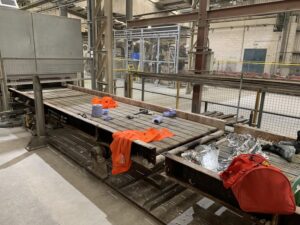
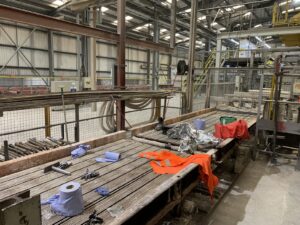
An investigation by the Health and Safety Executive (HSE) found that Tarmac Building Products Limited failed to prevent access to dangerous parts of machinery, namely the moving frames on the track, or prevent the frames from moving when employees entered the danger zone. The interlocked gate which employees used to enter the frame cleaning area did not stop the power on the preceding sections of track and would therefore not prevent a frame from moving into this area when employees were working.

Images from site

The HSE investigation also revealed that the company had failed to act following several near misses which had occurred on this section of the track in similar circumstances. The investigation also found that a risk assessment had been carried out by the company several years before the incident which identified “additional control measures required to reduce risk to an acceptable level”, but these were not put in place until after Richard was injured.

HSE guidance on safe use of work equipment states that employers must take effective measures to prevent access to dangerous parts of machinery.

Employers should also be investigating accidents and incidents of near misses as part of their monitoring process to identify why the existing risk control measures failed and what improvements or additional measures are needed.

Tarmac Building Products Limited, of Interchange 10 Railway Drive, Wolverhampton, WV1 1LH, pleaded guilty to failing to discharge their duty under Section 2(1) of the Health and Safety at Work etc. Act 1974. The company was fined £633,300, ordered to pay £5,583 in costs and a victim surcharge of £2,000 at Chelmsford Magistrates’ Court on 29 January 2026.

HSE Inspector Connor Stowers said:

“This was a serious and entirely avoidable incident, which has had profound consequences for Mr. Ogunleye, and were it not for the quick action of a fellow worker, the injuries he sustained could have been worse.

“Employers need to ensure that dangerous machinery is guarded effectively, and this goes beyond the initial installation. Employers should frequently monitor how effective their measures are and make changes as needed. Monitoring arrangements should include properly investigating near misses and previous incidents.

“In this case, had the previous near misses on the block production line at Tarmac Linford been fully investigated and sufficient action taken, this life-changing injury would never have occurred.”

This HSE prosecution was brought by HSE enforcement lawyer Julian White and paralegal officer Farhat Basir.

Further Information

  1. The Health and Safety Executive (HSE) is Britain’s national regulator for workplace health and safety. We are dedicated to protecting people and places, and helping everyone lead safer and healthier lives.
  2. More information about the legislation referred to in this case is available.
  3. Further details on the latest HSE news releases is available.
  4. Relevant guidance on machinery guarding can be found here https://www.hse.gov.uk/pubns/books/l22.htm (Provision and Use of Work Equipment Regulations 1998: Approved Code of Practice and guidance). Further guidance on monitoring for safety and investigating workplace accidents can be found here: https://www.hse.gov.uk/pubns/books/hsg65.htm (Managing for health and safety); https://www.hse.gov.uk/pubns/books/hsg245.htm (Investigating accidents and incidents: A workbook for employers, unions, safety representatives and safety professionals).
  5. HSE does not pass sentences, set guidelines or collect any fines imposed. Relevant sentencing guidelines must be followed unless the court is satisfied that it would be contrary to the interests of justice to do so.  The sentencing guidelines for health and safety offences can be found here

Stone company fined £50,000 after worker fatally struck by falling granite slabs

Blyth Marble Limited has been fined after a worker was killed when granite slabs fell from a lorry loader at the company’s premises in Larkhall.

Hamilton Sheriff Court heard that on 4 September 2024, Steven White, 61, was offloading granite slabs from a lorry loader at Blyth Marble Limited’s premises at 1 Carlisle Road, Larkhall. Mr White was working on top of the flatbed section of the lorry when two granite slabs, with a combined weight of over 900 kilograms, fell and struck him, causing fatal injuries.

An investigation by the Health and Safety Executive (HSE) found that vertical safety posts, which provide a physical barrier to prevent slabs from toppling, had been removed during the offloading operation. While it was accepted custom and practice for the posts to remain fitted during offloading it was not specified in the company’s Safe System of Work.

The investigation also found that while lifting two slabs at once was regular practice, the company’s Safe System of Work failed to distinguish between single slab lifting and multiple slab lifting and lacked specific instruction for handling multiple slabs. Additionally, Mr White was working alone on the lorry loader, whereas the Safe System of Work specified that two people should be involved in offloading operations.

Image from site

Further information on the safe handling of stone slabs and lifting operations can be found at Handling and storage of large sheet stone slabs – HSE and Lifting Operations and Lifting Equipment Regulations (LOLER) – HSE.

Blyth Marble Limited, of Carlton Industrial Estate, Carlton In Lindrick, Worksop, Nottinghamshire, pleaded guilty to breaching Section 2(1) of the Health and Safety at Work etc. Act 1974. The company was fined £50,000 with a victim surcharge of £3,750 at Hamilton Sheriff Court on 28 January 2026.

Speaking after the hearing, HSE Principal Inspector Martin McMahon said:

“This was a tragic incident which could have been prevented had the company made sure the   appropriate safety measures were in place and followed during offloading operations.

“Employers must ensure that safe systems of work are not only in place but are sufficiently detailed to address all foreseeable risks, including the requirement for safety equipment to remain in position and for adequate personnel to be present during hazardous operations.

Our thoughts remain with Steven White’s loved ones, and we hope today’s verdict offers them a measure of closure.”

Further Information

1.    The Health and Safety Executive (HSE) is Britain’s national regulator for workplace health and safety. We are dedicated to protecting people and places, and helping everyone lead safer and healthier lives.

2.    More information about the legislation referred to in this case is available.

3.    Further details on the latest HSE news releases is available.

4.    Relevant guidance can be found here Handling and storage of large sheet stone slabs – HSE and Lifting Operations and Lifting Equipment Regulations (LOLER) – HSE.

5.    HSE does not pass sentences, set guidelines or collect any fines imposed.


Maintenance company fined £400,000 after worker dies from toxic glue exposure

A housing association maintenance company has been fined £400,000 after an employee died from inhaling toxic vapours from flooring adhesive.

Darren Nevill, 38, was working for Connect Property Services Limited laying a vinyl bathroom floor at a domestic property in Hoddesdon, Hertfordshire on 9 December 2020.

His employer purchased an adhesive containing Dichloromethane (DCM), a highly volatile solvent. Small volumes will give off large amounts of colourless, low odour vapour, even at room temperature. He used this regularly during his employment.

On the day of his death, the hose to the pressurised glue canister became damaged, releasing a large amount of adhesive into the poorly ventilated bathroom. Mr Nevill lost consciousness and collapsed. Emergency services had to force entry to the bathroom to reach him.

An investigation by the Health and Safety Executive (HSE) found that Connect Property Services Limited, of Ealing Gateway, 26-30 Uxbridge Road, London, had failed to take appropriate precautions to ensure substances hazardous to health are not used when safer alternatives are available.

HSE guidance on Dichloromethane (DCM) states to avoid the use of DCM-based products whenever reasonably practicable, by using suitable and safer alternative products or methods. DCM-based products should only be used in well-ventilated areas, to prevent the build-up of vapour. Examples of poorly ventilated areas can include bathrooms, cellars, stairwells and sheeted enclosures.

The company pleaded guilty to breaching Section 2(1) of the Health and Safety at Work etc Act 1974. At Stevenage Magistrates Court on 26 January 2026, Connect Property Services Limited was fined £400,000 and ordered to pay costs of £9676.81 with a surcharge of £190.

Prosecutor Jon Mack told the court “HSE scientists calculated that the statutory 15-minute exposure limit for DCM would have been reached within 2-13 seconds, and the final concentration in the bathroom at the time of Mr Nevill’s death would have been 84.5 times the exposure limit. Mr Nevill was found to have three times the fatal concentration of DCM.”

Speaking after the hearing, HSE inspector Rauf Ahmed said: “Our thoughts today are with the family of Mr Nevill, who was just setting out on his career in construction. He should have returned home safely to his family at the end of his working day but, because of the failings of Connect Property Services Limited, he did not.”

The HSE prosecution was brought by HSE enforcement lawyer Neenu Bains and paralegal officer Helen Jacob.

Further Information

1.    The Health and Safety Executive (HSE) is Britain’s national regulator for workplace health and safety. We are dedicated to protecting people and places, and helping everyone lead safer and healthier lives.

2.    More information about the legislation referred to in this case is available.

3.    Further details on the latest HSE news releases is available.

4.    Relevant guidance can be found here Dichloromethane (DCM) – COSHH – HSE

5.    HSE does not pass sentences, set guidelines or collect any fines imposed. Relevant sentencing guidelines must be followed unless the court is satisfied that it would be contrary to the interests of justice to do so.  The sentencing guidelines for health and safety offences can be found here.
Packaging company fined after worker suffers life-changing head injuries

A manufacturer of paper packaging has been fined after a worker suffered a severe skull fracture and permanent injuries when a 4.5-ton machine fell on him.

Matthew King was working for Multi Packaging Solutions UK Limited at its East Kilbride site on 31 October 2023 when he was struck on the head whilst working underneath the machine.

The 39-year-old sustained a severe skull fracture, bruising to his head and nerve damage to the left side of his face. He has been left with permanent double vision, loss of peripheral vision, facial palsy and hearing loss. He is unable to drive and has required multiple surgeries and ongoing mental health support.

Mr King was part of a team relocating the machine from a warehouse to a storage area approximately 160 metres away. The machine, which weighed approximately 4.5 tons and measured 1.56 by 4.15 metres, had no lifting or anchoring points.

Image from scene

Workers had improvised a system involving lifting the machine with a forklift, placing skates underneath, and pulling it forward. The machine had already slid off the forks on at least two occasions before the incident.

At the time of the accident, Mr King was positioned underneath the suspended machine to secure a wheel on its underside when it slid from the forks and struck him on the head.

Image from scene

An investigation by the Health and Safety Executive (HSE) found that the lifting operation had not been properly planned by a competent person. The characteristics of the load, including its weight, size, centre of gravity and lifting points, had not been adequately assessed, and no safe system of work had been put in place.

Moving a machine of this size and weight was not a regular task at the site and there was no established system of work for it.

HSE guidance on planning and organising lifting operations  states that it is important to properly resource, plan and organise lifting operations so they are carried out in a safe manner.

Multi Packaging Solutions UK Limited of Phoenix Centre, 1 Westrock Millennium Way West, Nottingham, NG8 6AW pleaded guilty to breaching Regulation 8(1)(a) and (c) of the Lifting Operations and Lifting Equipment Regulations 1998. The company was fined £433,333 and ordered to pay a victim surcharge of £32,500 at Hamilton Sheriff Court on 20 January 2026.

Image from scene

HSE inspector, Ingrid Grueso, said: “This incident was entirely preventable. The company failed to properly plan the lifting operation or implement a safe system of work.

“Mr King has been left with life-changing injuries including permanent damage to his eyesight, hearing and facial movement. He has had to sell his car as he can no longer drive safely and now relies on his wife to transport him and their three children.

“Employers must ensure that lifting operations are properly planned by a competent person and carried out safely. This is especially important for non-routine tasks involving heavy or awkward loads.”

Further Information

  1. The Health and Safety Executive (HSE) is Britain’s national regulator for workplace health and safety. We are dedicated to protecting people and places, and helping everyone lead safer and healthier lives.
  2. More information about the legislation referred to in this case is available.
  3. Further details on the latest HSE news releases is available.
  4. Relevant guidance can be found here Planning and organising lifting operations – HSE
  5. HSE does not pass sentences, set guidelines or collect any fines imposed.


“Wonderful, kind and generous man” killed in forklift truck incident


The family of a much-loved man have spoken of his ‘horrific’ death at work following the prosecution of his employer this week.

Chris Keegan was killed on 20 November 2023 while working for Hessle Plant Ltd as a delivery driver at its main depot in Castleford, West Yorkshire. Chris’ widow Dianne said: “Chris was a wonderful, kind and generous man, who would do anything he could for anyone. He especially did anything he could for me.

“My heart is broken, and I will never get over losing my husband in such a horrific way. He never deserved to die in such tragic circumstances.”

Leeds Magistrates’ Court heard that Mr Keegan had been tasked with returning the forklift truck to a customer’s site in Sheffield following repair work to its transmission.

As he reversed the vehicle onto the trailer shortly after 6am, it fell from the side of the trailer bed. Mr Keegan was thrown from the seat and became trapped between the chassis of the forklift and a neighbouring trailer.

Mr Keegans wife and two of his stepdaughters arrived at the depot as the emergency services fought to save Chris’ life, but tragically his injuries proved fatal, and he passed away at the scene.

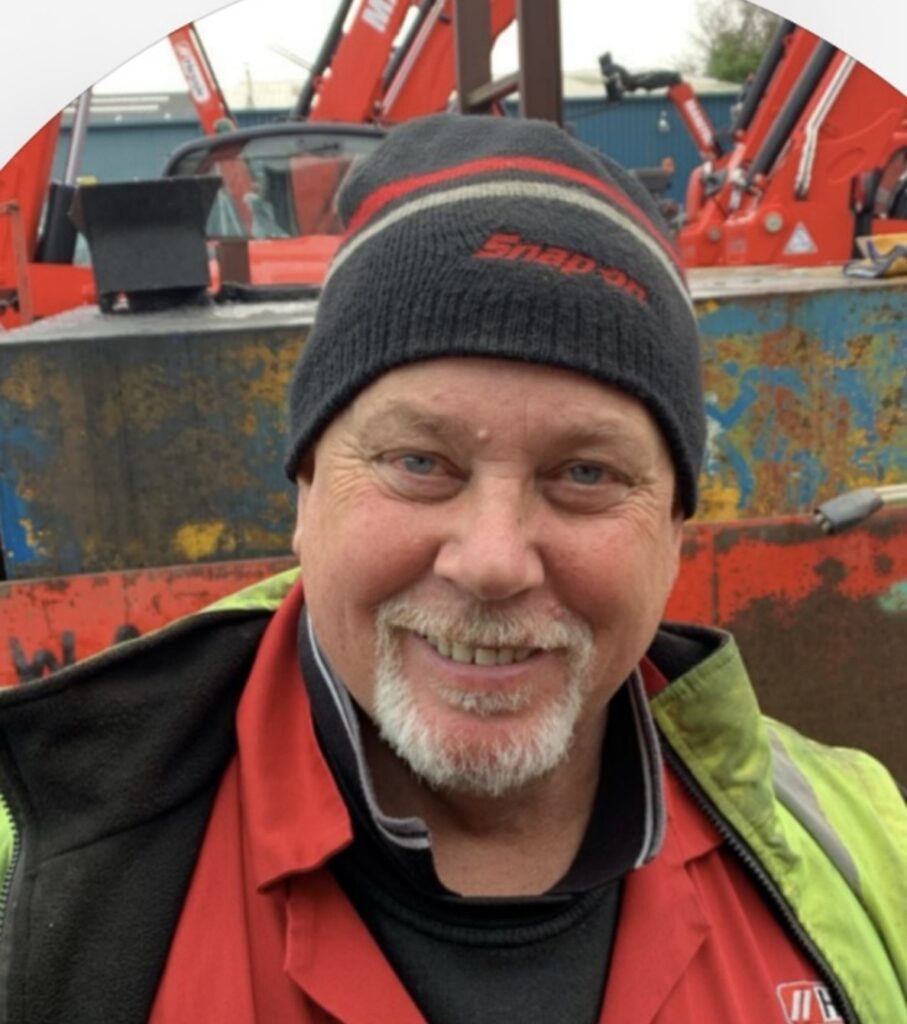
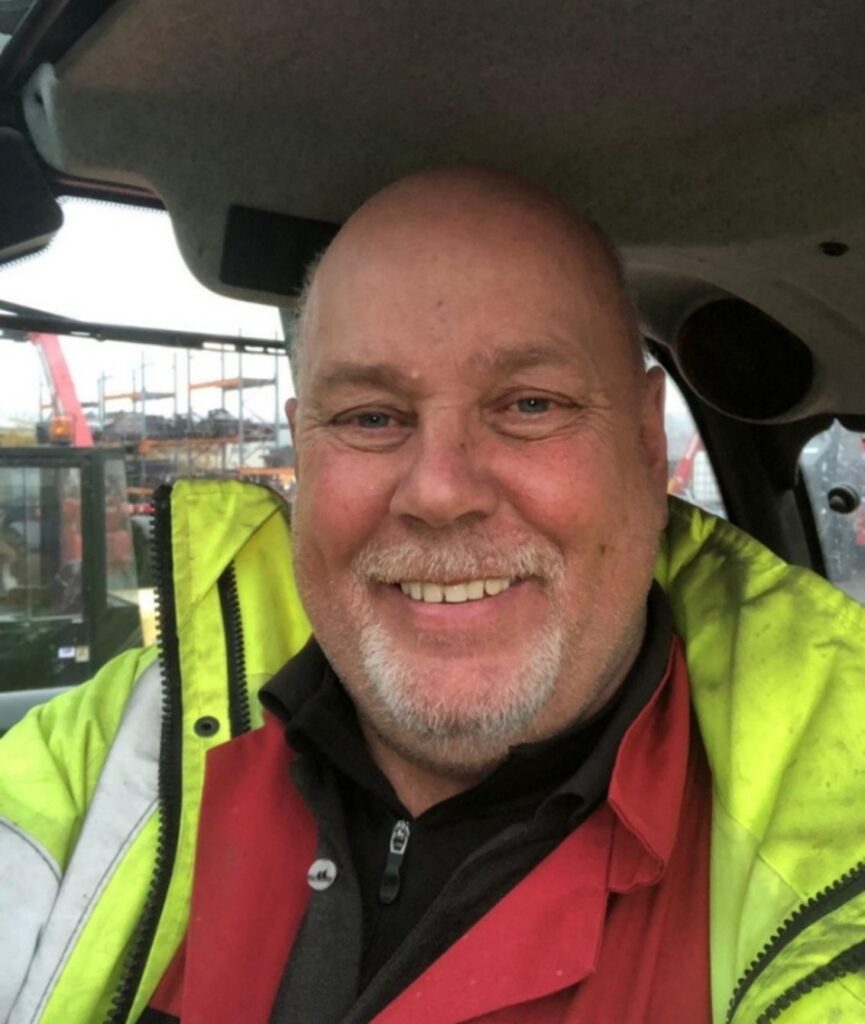
Chris Keegan
Chris Keegan

An investigation by the Health and Safety Executive (HSE) found that the forklift had not been subject to a full inspection to ensure it was safe to operate. Examination of the forklift by HSE after the accident found several other defects which should have been identified and rectified before it was operated.

The investigation found that whilst Hessle Plant Ltd would undertake a full pre-delivery inspection on forklift trucks being delivered to new customers, at the time of the accident the company did not do this for machines being returned to existing customers.

HSE also found that many of the company’s employees would rarely wear seatbelts when operating forklift trucks, and there was no system in place for monitoring and enforcing seatbelt use on site.

HSE guidance states that employers should ensure that work equipment – such as a forklift truck – has been properly maintained and inspected if necessary to ensure it remains in a safe condition to operate. HSE guidance also states that where seatbelts are fitted to a counterbalance forklift truck, they should be used. Further guidance for rider-operated lift trucks can be found at HSE’s website.

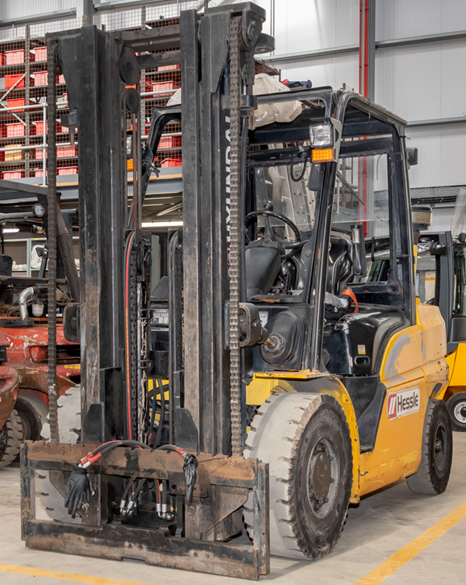
Forklift Truck involved in accident

Hessle Plant Ltd, of Carrwood Road Industrial Estate, Glasshoughton, Castleford, pleaded guilty to breaching Section 2(1) of the Health and Safety at Work etc. Act 1974. The company was fined £433,550 and ordered to pay £8,146.80 in costs and a £2,000 victim surcharge as Leeds Magistrates’ Court on 26 November.

Speaking after the hearing HSE inspector, David Beaton, said: “This was a tragic and preventable death. Mr Keegan was placed at undue risk by operating a machine with underlying maintenance defects, which he would have been unaware of when attempting to reverse the forklift in the dark onto a trailer with an exposed edge.

“Had Mr Keegan been wearing the seatbelt provided, the accident he suffered would likely not have proven fatal.

“Every year there are fatal accidents caused by machinery which has not been properly maintained or inspected, and forklift truck drivers not wearing seatbelts. This case should underline to all businesses, which hire out or operate forklift trucks, the importance of keeping machinery in efficient working order and ensuring the use of seatbelts by forklift drivers is appropriately supervised.”

This HSE prosecution was brought by HSE enforcement lawyer Iain Jordan and paralegal officer Stephen Grabe.

Further Information

  1. The Health and Safety Executive (HSE) is Britain’s national regulator for workplace health and safety. We are dedicated to protecting people and places, and helping everyone lead safer and healthier lives.
  2. More information about the legislation referred to in this case is available.
  3. Further details on the latest HSE news releases is available.
  4. Relevant guidance can be found here Rider-operated lift trucks – HSE
  5. HSE does not pass sentences, set guidelines or collect any fines imposed. Relevant sentencing guidelines must be followed unless the court is satisfied that it would be contrary to the interests of justice to do so.  The sentencing guidelines for health and safety offences can be found here.
 

Shell UK fined £560,000 following major hydrocarbon release

A large offshore oil and gas company has been sentenced and fined £560,000 after failing to properly maintain pipework for seven years.

Pipework on Shell UK’s Brent Charlie platform in the North Sea deteriorated to such an extent that contained hydrocarbon fluids escaped, forming a potentially catastrophic explosive and flammable mixture that could have ignited.

In addition to the release, ventilation fans designed to prevent, control or mitigate the effects of escaped hydrocarbon gas did not function properly as they were also not suitably maintained. This led to a large release of mixed phase crude oil and gas from the corroded pipework. The probability of ignition was assessed to be less than 1%. 

Aberdeen Sheriff Court heard on Tuesday 25 November 2025 how, on 19 May 2017, there was an uncontrolled hydrocarbon release incident from a Return Oil Line (ROL) pipework inside concrete leg Column 4 of the Brent Charlie offshore installation. The release involved 200kg of gas and 1,550kg of crude oil – the largest uncontrolled hydrocarbon release on the UK Continental Shelf reported to HSE in 2017.

The release placed over 170 platform personnel at risk from a potentially catastrophic fire and explosion had the escaping hydrocarbon gas ignited inside the concrete leg.

HSE noted that the platform manager, and the various emergency teams, deserve praise for their decision making and actions taken that assisted with preventing the incident from escalating. Their sound judgement and decision making ensured the situation was eventually brought under control.

An HSE investigation found that deficiencies in Shell’s safety management system led to the release. The ROL pipework in Column 4 was not properly maintained for several years. The pipework was installed for short-term use and was due to be removed in 2010 but remained in place for seven years, during which time it suffered corrosion damage. It failed on 19 May 2017 and a large volume of gas was uncontrollably released into the leg. Ventilation extract and supply fans designed to prevent and mitigate this major accident hazard were also inadequately maintained, which exacerbated the risk to the 176 people on the platform.

HSE were involved in the production of the Energy Institute’s Guidance for corrosion management in oil and gas production and processing, as well as several other topic-specific documents. Extensive guidance and resources for the oil and gas industry are available on HSE’s website here Offshore oil and gas – HSE.

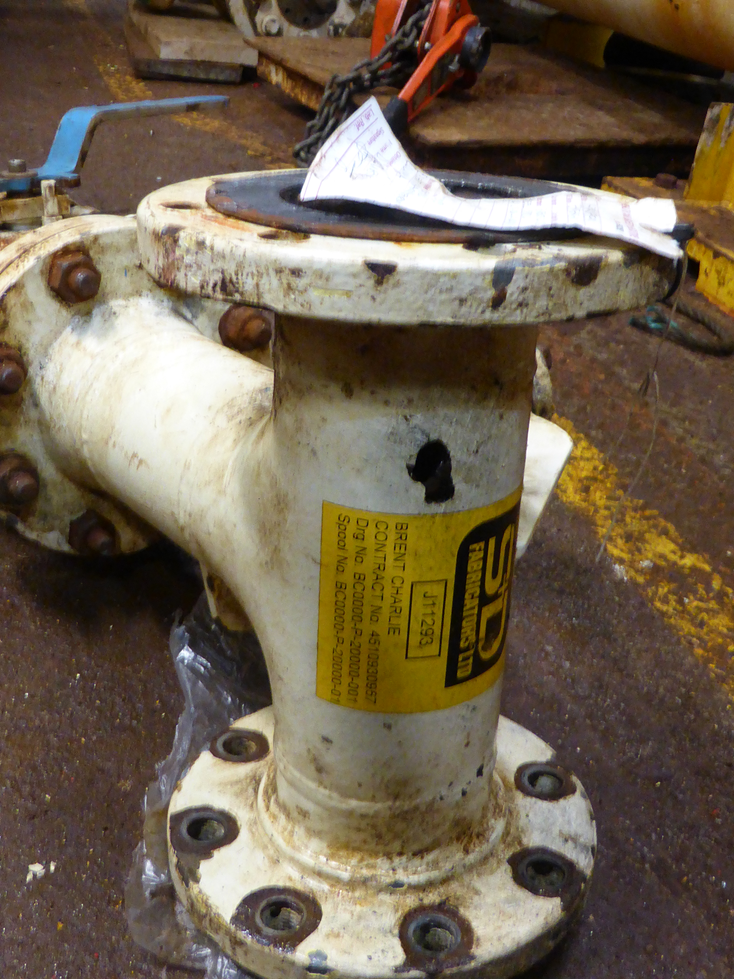
Spool with the corrosion failure identified.

Shell UK Limited pleaded guilty to two charges under the Offshore Installations (Prevention of Fire and Explosion, and Emergency Response) Regulations 1995 (PFEER). Sheriff Ian Duguid, in his sentencing remarks, observed that Shell UK “ought to have recognised that the temporary carbon steel spool was not suitable for such a line and should have been replaced.” After considering mitigating factors, Shell was fined £560,000.

Speaking after the hearing, HSE Offshore Health and Safety Inspector Dozie Azubike said: “At more than 1,750kg, Shell Brent Charlie’s hydrocarbon release was the largest reported to HSE in 2017. This release occurred in a confined space with limited access – it is simply fortunate that no one was in the leg at the time, or they could have been asphyxiated from the hydrocarbon-rich atmosphere, quite apart from any fire and explosion risk.

“Although the offshore industry has managed to reduce its overall number of hydrocarbon releases, in most years there are still several which, if ignited, would result in potentially catastrophic consequences.

“This case highlights the importance of oil and gas dutyholders reviewing their current management of change processes for temporary spools and their subsequent removal, strengthening inspection regimes to identify potential internal corrosion within pipework, and ensuring that inspection frequency of safety-critical equipment considers full analysis of the equipment’s maintenance history.”

Further Information:

  1. The Health and Safety Executive (HSE) is Britain’s national regulator for workplace health and safety. We are dedicated to protecting people and places, and helping everyone lead safer and healthier lives.
  2. More information about the legislation referred to in this case is available.
  3. Further details on the latest HSE news releases is available.
  4. Relevant guidance can be found here Offshore oil and gas – HSE
  5. HSE does not pass sentences, set guidelines or collect any fines imposed. Relevant sentencing guidelines must be followed unless the court is satisfied that it would be contrary to the interests of justice to do so. The sentencing guidelines for health and safety offences can be found here.


Manufacturing company fined £600k after fatal workplace incident

A global manufacturing company has been fined £600,000 after an employee suffered fatal injuries following an incident at the premises in Airedale Mills, Gargrave, Craven.

On 21st September 2020 Tony Snowden, 56, was fatally injured when a pallet that was stacked on top of another pallet fell trapping him between the pallet and a ledge on a wall behind him.

The loaded pallet in total weighed 592kg and other employees in the area had to ‘unload’ the pallet as it was too heavy for them to lift in order to remove it from Mr Snowden. Sadly, when the pallet was removed Mr Snowden had died from his injuries.

A HSE investigation found the company failed to conduct risk assessments considering load, height, weight and stability. The company stored three-legged pallets without racking systems, stacking them on top of each other at floor level. The investigation concluded these pallets should never have been stacked vertically.

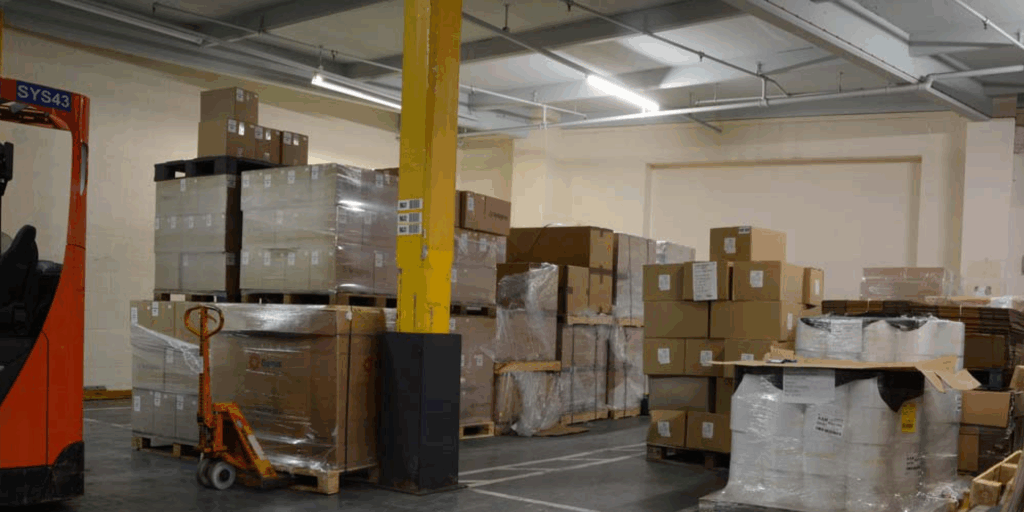
Image of warehouse
RMS area – where the incident happened

Although the company had a “Procedure for Pallet Handling Policy” not all employees working in the RMS area had been trained on it. No evidence was found that Mr Snowden had been trained on the procedure.

Systagenix Wound Management Manufacturing Limited t/a Scapa Healthcare Limited of 997 Manchester Road, Ashton Under Lyne, pleaded guilty to a single charge of breaching section 2(1) of the Health and Safety at Work etc. Act 1974.

The court was told that the main failings of the company were:

The company was fined £600,000 and ordered to pay £15,000 in costs at Leeds Magistrates’ Court on 12 November 2025.

Further information is available in HSE’s Guidance ‘Pallet Safety’ – PM15 Pallet safety – HSE.

Following the hearing, HSE Inspector Kirsty Storer-Cottrell said:

“This tragic incident could have been easily prevented had a suitable and sufficient risk assessment taken place and the actions identified implemented. Training, monitoring and supervision along with risk control measures, including not double stacking these pallets, would have prevented a fatality happening.”

This prosecution was brought by HSE Enforcement Lawyer Jonathan Bambro and Paralegal Officer Rebecca Withell.

Further information:

  1. The Health and Safety Executive (HSE) is Britain’s national regulator for workplace health and safety. We prevent work-related death, injury and ill health through regulatory actions that range from influencing behaviours across whole industry sectors through to targeted interventions on individual businesses. These activities are supported by globally recognised scientific expertise. hse.gov.uk
  2. More about the legislation referred to in this case can be found at: legislation.gov.uk/
  3. HSE news releases are available at: http://press.hse.gov.uk
  4. HSE guidance and information on Pallet safety is available here: Pallet safety – HSE