Press release

Shipping company fined £146,700 after worker seriously injured by forklift truck

A shipping company based in Aberdeen has been fined after an employee suffered serious and life-changing injuries when he was struck by a forklift truck at the company’s yard.

A 43-year-old man was working at Streamline Shipping Agencies Limited’s premises at Palmerston Quay, Aberdeen, when he was struck by a reversing forklift truck driven by a colleague on 26 September 2024. The worker was on foot, unclipping the curtain side of an articulated trailer, when the rear nearside wheel of the forklift made contact with his right leg, pulling him to the ground.

The worker suffered multiple fractures to his right foot and lower leg, as well as a de-gloving injury, undergoing two surgical procedures and skin grafts. He has also required counselling because of the incident and has yet to return to work.

An image of the incident location taken shortly before the Improvement Notice was served. The image illustrates the issues relating to pedestrian and vehicle movement within the area.

An investigation by the Health and Safety Executive (HSE) found that Streamline Shipping Agencies Limited failed to ensure its workplace was organised in such a way that pedestrians and vehicles could circulate safely. While the company had a traffic management plan in place, it lacked the necessary detail to ensure that loading and unloading – which routinely took place concurrently in the same area – could be carried out safely without putting employees on foot at risk from moving vehicles.

HSE concluded it was reasonably foreseeable that an employee on foot faced a risk of being struck by a moving vehicle when both the pedestrian and driver were concentrating on their respective tasks near each other.

Following the investigation, an Improvement Notice was served on the company. In response, Streamline made a series of improvements to its traffic management arrangements to the satisfaction of HSE.

By law, employers must ensure traffic routes can be used without putting workers at risk. Guidance on managing vehicle movements in the workplace is available on the HSE website.

Streamline Shipping Agencies Limited, of Streamline Terminal, Blaikies Quay, Aberdeen, AB11 5PU, pleaded guilty to breaching Regulation 17(1) of the Workplace (Health, Safety and Welfare) Regulations 1992 and Section 33(1)(c) of the Health and Safety at Work etc. Act 1974.

The company was fined £146,700 and ordered to pay a Victim Surcharge of £11,000 at Aberdeen Sheriff Court on 22 May 2026.

HSE Inspector Nicky Smith said:

“This was a serious and wholly avoidable incident that has had a profound and lasting impact on this worker’s life.

“Employers have a legal duty to ensure that pedestrians and vehicles can move safely within their workplaces, particularly in busy areas where loading and unloading takes place.

“Having a traffic management plan is not enough if it does not contain the detail needed to protect workers on the ground.

“We will not hesitate to hold companies to account when they fall short of their  obligations.”

Further Information

  1. The Health and Safety Executive (HSE) is Britain’s national regulator for workplace health and safety. We are dedicated to protecting people and places, and helping everyone lead safer and healthier lives.
  2. More information about the legislation referred to in this case is available.
  3. Further details on the latest HSE news releases is available.
  4. Relevant guidance can be found here: Transport safety in waste and recycling – HSE
  5. HSE does not pass sentences, set guidelines or collect any fines imposed. Relevant sentencing guidelines must be followed unless the court is satisfied that it would be contrary to the interests of justice to do so.  The sentencing guidelines for health and safety offences in Scotland can be found here.

Waste and recycling company fined after worker death

A waste and recycling company in Cumbria has been fined £60,000 after an employee was hit and killed by a reversing telehandler in Barrow-in-Furness.

Stuart Garnet, 44, was working at H. Wicks (Lindal) Limited’s waste and recycling facility when he was struck by a reversing telehandler on 12 May 2022. He subsequently died of his injuries.

An investigation by the Health and Safety Executive (HSE) found that H. Wicks (Lindal) Limited failed to ensure the site was organised in such a way that pedestrians and vehicles could circulate in a safe manner.

By law, employers must ensure traffic routes can be used without putting workers at risk. Guidance on managing vehicle movements in the workplace is available on the HSE website.

H. Wicks (Lindal) Limited, of Scarth Road, Sowerby Woods Business Park, Barrow-in-Furness, Cumbria, pleaded guilty to breaching Section 2(1) of the Health and Safety at Work etc. Act 1974.

The company was fined £60,000 and ordered to pay costs of £6,624.75 at Warrington Magistrates’ Court on 26 May 2026. A statutory surcharge of £2,000 was also imposed.

HSE Principal Inspector Caroline Shorrock said:

“Stuart Garnet’s death was an avoidable tragedy, and our thoughts are with his friends and family.

“Every year, a significant number of workplace accidents, many of them serious and sometimes fatal, occur because of poor separation of pedestrians and vehicles.

“Had the company implemented suitable separation measures, this fatal injury would not have occurred. The fine imposed on H. Wicks (Lindal) Limited should serve as a clear reminder to everyone in the waste and recycling industry that HSE will hold to account those who fail to keep their workers safe.”

This HSE prosecution was brought by HSE enforcement lawyer Matthew Reynolds and paralegal officer Henrietta Ruthven.

Further Information

  1. The Health and Safety Executive (HSE) is Britain’s national regulator for workplace health and safety. We are dedicated to protecting people and places, and helping everyone lead safer and healthier lives.
  2. More information about the legislation referred to in this case is available.
  3. Further details on the latest HSE news releases is available.
  4. Relevant guidance can be found here: Transport safety in waste and recycling – HSE
  5. HSE does not pass sentences, set guidelines or collect any fines imposed. Relevant sentencing guidelines must be followed unless the court is satisfied that it would be contrary to the interests of justice to do so.  The sentencing guidelines for health and safety offences in Scotland can be found here

Glasgow company fined £129,000 after worker lost fingers in machinery incident

A biomass company in Glasgow has been fined a six-figure sum after a worker lost parts of three fingers in machinery at the Daldowie Fuel Plant.

The incident happened at SMW Limited’s site in Uddingston, near Glasgow, in 2023.

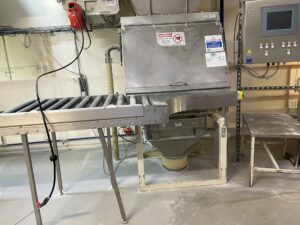
A shift operator with 17 years’ experience at the plant, suffered his injuries on 8 June 2023 while attempting to clear a blockage on a surge hopper – a large vessel through which processed material passes at the end of the production line.

The 57-year-old employee had been clearing a blockage in a rotary lock valve which contained rotating blades that turn at 25rpm. As he attempted to clear the blockage, he removed a metal clip and rubber gaiter to gain access to the valve. Communication with the control room, which operated the valve remotely, was carried out by hand-held radio. There was no line of sight between the two areas, and the radios were subject to interference.

A miscommunication over the radio led the employee to believe that the rotary lock valve had been turned off. Believing it was safe to do so, he inserted his right hand into the hopper, where it came into contact with the moving blades. The index, middle and ring fingers of his right hand were all partially severed, and he has not returned to work since the incident.

The surge hopper onsite

An investigation by the Health and Safety Executive (HSE) found that while the company had a specific safe system of work in place for clearing blockages on surge hopper rotary lock valves – which the man had been trained on as recently as April 2023 – they had failed to ensure that access to the dangerous parts of the machinery was prevented.

HSE provides detailed guidance on safeguarding machinery and preventing access to dangerous parts, including under the Provision and Use of Work Equipment Regulations 1998 (PUWER). PUWER places duties on people and companies who own, operate or have control over work equipment. PUWER also places responsibilities on businesses and organisations whose employees use work equipment, whether owned by them or not. Further information on PUWER is available at the HSE website

SMW Limited pleaded guilty to breaching The Provision and Use of Work Equipment Regulations 1998, Regulations 11(1) and (2) and the Health and Safety at Work etc. Act 1974, Section 33(1)(c) at Hamilton Sheriff Court on 20 May 2026. The company was fined £120,000 and ordered to pay a Victim Surcharge of £9,000.

HSE inspector Nicola Kerr said:

“This man’s injuries had had a profound impact on his life, and were completely preventable.

“Where workers are required to interact with machinery containing dangerous moving parts, employers must ensure that adequate physical safeguards are in place to prevent access to those parts.

“Relying solely on radio communication to control isolation – particularly where there is no line of sight and interference is possible – is simply not good enough.

“A fixed guard would have been a reasonably practicable measure that could have prevented this incident entirely.”

Further information

  1. The Health and Safety Executive (HSE) is Britain’s national regulator for workplace health and safety. We are dedicated to protecting people and places, and helping everyone lead safer and healthier lives.
  2. More information about the legislation referred to in this case is available.
  3. Further details on the latest HSE news releases is available.
  4. Relevant guidance can be found here Provision and Use of Work Equipment Regulations 1998 (PUWER) – overview – HSE.
  5. HSE does not pass sentences, set guidelines or collect any fines imposed. Relevant sentencing guidelines must be followed unless the court is satisfied that it would be contrary to the interests of justice to do so.  The sentencing guidelines for health and safety offences in Scotland can be found here.

Egg farm fined after worker trapped in running conveyor machinery

A poultry and egg production company has been convicted after a worker suffered serious nerve damage when his clothing became entangled in conveyor belt machinery at a farm near Banff.

On 15 October 2024, a 36-year-old man was working at Mains of Auchenbadie Farm during a routine cleaning operation.

During his shift, the employee heard an unusual noise coming from an egg collection conveyor. Without stopping the machinery, as he had been trained to do, he climbed into the confined space between the two manure conveyor belts to investigate. His clothing was caught in the in-running nip between the pressure roller and the underside of the upper manure conveyor belt. His colleague used an emergency stop button to halt the machinery and the emergency services were called to free him.

The employee was taken to hospital where he was found to have suffered nerve damage in both arms. It took three months for full function to be restored to his right arm. He returned to work in February 2025 and remains employed by the company.

An HSE investigation found that, while Duncan Farms Limited had risk assessments in place covering entanglement hazards and had instructed employees to wear close-fitting clothing, no fixed or interlocking guarding had been installed at the drive end of the manure conveyors to prevent access to the dangerous nip points when the conveyor was operating. There were no measures in place that would have prevented a person accessing the in-running nips, or which would have automatically stopped the belt before they could be reached.

Employers have a legal duty under the Provision and Use of Work Equipment Regulations 1998 (PUWER) to take effective measures to prevent access to dangerous parts of machinery. Fixed or interlocking guarding is the most effective means of achieving this and should be the primary control measure – not reliance on clothing guidance or training alone. Further guidance on safeguarding machinery can be found on our website at introduction to machinery safety .

Duncan Farms Limited, of 1 Muirden Farm, Turriff, AB53 4NH, pleaded guilty to breaching Regulations 11(1) and (2) of the Provision and Use of Work Equipment Regulations 1998 and Section 33(1)(c) of the Health and Safety at Work etc. Act 1974. The company was fined £53,000 at Aberdeen Sheriff Court on 7 May 2026.

Jurate Gruzaite, HM inspector of Health and Safety, said:

“This incident could have had devastating consequences.

“Workers must never be placed in a position where they can access dangerous moving parts of machinery while it is in operation. Guarding is not optional it is a fundamental requirement of the law. Had appropriate fixed guards been in place at the drive end of these conveyors, this injury would not have happened.

“I would urge all employers who use conveyor systems to review their guarding arrangements without delay.”

Further Information

  1. The Health and Safety Executive (HSE) is Britain’s national regulator for workplace health and safety. We are dedicated to protecting people and places, and helping everyone lead safer and healthier lives.
  2. More information about the legislation referred to in this case is available.
  3. Further details on the latest HSE news releases is available.
  4. Relevant guidance can be found here Introduction to machinery safety – HSE
  5. HSE does not pass sentences, set guidelines or collect any fines imposed. Relevant sentencing guidelines must be followed unless the court is satisfied that it would be contrary to the interests of justice to do so.  The sentencing guidelines for health and safety offences in Scotland can be found here.

District Council fined £50,000 after worker seriously injured in lawnmower incident

A Nottinghamshire district council has been fined £50,000 following a serious incident in which a ride-on mower overturned at a churchyard, causing an male employee to fall more than two metres onto a public road and footpath below.

The Health and Safety Executive (HSE) investigated the incident at St Peter & St Paul’s Church in North Wheatley, Nottinghamshire, where an employee of Bassetlaw District Council was carrying out routine maintenance in the closed graveyard.

Photograph on the day of the incident showing the location of the ride on mower following the accident

While operating a ride-on mower, the employee lost control of the machine as it slid down a steep bank towards a retaining wall. Both the machine and the operative rolled over the wall, falling approximately 2.3 metres to the pavement and road below. The employee sustained injuries including cracked ribs.

The HSE investigation identified a series of significant failings by the council:

Photograph taken from the Church Yard, set back from the slope, looking down onto the junction of Church Hill and Church Street

A Guidance Document for the Landscape Industry published by the British Association of Landscape Industries (BALI) sets out clearly the measures employers should take to assess and control risks when working on or near slopes and banks. The Judge found that Bassetlaw District Council had failed to meet these industry standards and was therefore highly culpable, having fallen far short of what was expected.

Bassetlaw District Council, of Queen’s Buildings, Potter Street, Worksop, Nottinghamshire, S80 2AH, pleaded guilty to breaching Section 2(1) and Section 3(1) of the Health and Safety at Work etc. Act 1974. The council was fined £50,000, ordered to pay £5,138.85 in costs and a victim surcharge of £2,000 at Nottingham Magistrates’ Court on Monday 30 March 2026.

Church Hill

HSE Inspector Muir Finlay said: “This was a serious incident which could have been much worse.

“The fine imposed on the District Council should underline to all employers that work on banks and slopes should only be undertaken when a suitable and sufficient assessment of the risks has been carried out and appropriate controls or training provided.

“HSE will not hesitate to take action against those that do not do all that they should to keep people safe and healthy at work.”

The HSE prosecution was brought by enforcement lawyer Andrew Siddall and paralegal officer Benjamin Stobbart.

Further Information

  1. The Health and Safety Executive (HSE) is Britain’s national regulator for workplace health and safety. We are dedicated to protecting people & places and helping everyone lead safer and healthier lives.
  2. More information about the legislation referred to in this case is available.
  3. Further details on the latest HSE news releases are available.
  4. Guidance can be found here: A Guidance Document for the Landscape Industry
  5. HSE does not pass sentences, set guidelines or collect any fines imposed. Relevant sentencing guidelines must be followed unless the court is satisfied that it would be contrary to the interests of justice to do so. The sentencing guidelines for health and safety offences in England can be found here and those for Scotland here.

Rotherham metal fabrication company sentenced after young apprentice injured during apprenticeship training

A Rotherham-based metal fabrication company has been sentenced after pleading guilty to health and safety failings that led to a young apprentice being injured by dangerous parts of a metal cutting guillotine during training.

On Friday 8 November 2024, a 17-year-old apprentice at MTL Advanced Ltd was cutting sheet metal in preparation for welding practice as part of their apprenticeship training. The guillotine was located within a dedicated Apprentice Training Workshop, where first-year apprentices learn and practise metal fabrication techniques before moving into the company’s main manufacturing areas in their second and third years.

The apprentice made several successful cuts, but on the final cut their thumb came into contact with the machine’s clamps, causing a crush injury.

Image from site

The HSE launched an investigation and identified, from documents provided by the company before an on-site visit, that a large gap in the bed of the guillotine was allowing access to dangerous parts of the machinery. Critically, the company had failed to identify this risk even after the incident had taken place.

A Prohibition Notice was served remotely by HSE to control the ongoing risk. Following its service, HSE Inspectors attended the site and identified further issues with the guillotine requiring immediate remedy.

HSE provides extensive guidance on managing risks in the workplace, including preventing access to dangerous parts of machinery and employing young persons in training. Guidance notes that young people are likely to be new to the workplace and so are at more risk of injury in the first six months of a job, as they may be less aware of risks.

A wider inspection of the Apprentice Training Workshop revealed additional health and safety failings, including access to live electrical parts, further instances of unguarded dangerous machinery, and deficiencies in the system of inspection for workshop equipment.

MTL Advanced Ltd, of Britannia House, Junction Street, Darwen, Lancashire, BB3 2RB, pleaded guilty to breaching Regulation 11(1) of the Provision and Use of Work Equipment Regulations 1998. The company was fined £140,000 and ordered to pay full costs of £5,013, with a Victim Surcharge of £2,000, at Sheffield Magistrates’ Court.

Speaking after the hearing, HM Principal Inspector of Health and Safety Chris Tilley said: “Young people and apprentices are at the beginning of their career and so  when it comes to workplace risks,  employers must  take particular care to assess those risks and fulfil their duty to keep them safe. Had this machinery been effectively guarded, this injury would never have happened.”

This prosecution was brought by HSE enforcement lawyer Chloe Ward and Paralegal Officer Hannah Snelling.

Further Information

  1. The Health and Safety Executive(HSE) is Britain’s national regulator for workplace health and safety. We are dedicated to protecting people and places, and helping everyone lead safer and healthier lives.
  2. More information about the legislationreferred to in this case is available.
  3. Further details on the latest HSE news releasesis available.
  4. Relevant guidance can be found here Managing risks and risk assessment at work: Overview – HSE
  5. HSE does not pass sentences, set guidelines or collect any fines imposed. Relevant sentencing guidelines must be followed unless the court is satisfied that it would be contrary to the interests of justice to do so.  The sentencing guidelines for health and safety offences can be found here.

Construction firm fined after death of teenage labourer

A construction firm has been fined £40,200 after a teenage labourer died falling down a ventilation shaft on a London building site.

Renols Lleshi, 19, was helping to dismantle scaffolding on the 12th floor roof garden of a block of flats being built at the Ark Soane Academy site, Mill Hill Road, London W3 on 5 July 2023. As he stepped onto a ventilation shaft the covering gave way, and he fell six floors to his death.

Renols father said “My family and I are devastated by the loss of Renols. To know that his death was caused by an accident which was entirely avoidable only makes our loss even harder to cope with.

Renols Lleshi

“We are grateful to the Health & Safety Executive for their efforts to investigate the accident and prosecute one of those responsible for Renols’s death.  However, nothing anybody can do can bring our loved one back or lessen our grief in any way.”

A Health and Safety Executive (HSE) investigation found that the ventilation shaft had been covered only by a sheet of plasterboard and roofing foam. Routine inspections of the building did not include the roof garden area, meaning the inadequate covering went undetected and no warning was given to the scaffolding team.

HSE guidance on working at height states that employers should carry out as much work as possible from the ground and ensure workers can safely access and leave areas where work at height is required. Equipment used for working at height must be suitable, stable and strong enough for the task and properly maintained.

Employers and those in control of work at height must ensure activities are properly planned, supervised and carried out by competent people, including the use of appropriate equipment.

Jerram Falkus Construction Limited pleaded guilty to breaching Regulation 4(1) of the Work at Height Regulations 2005. The company was fined £42,200, a surcharge of £2000 and ordered to pay £5000 in costs at City of London Magistrates Court on 18 March 2026.

HSE Inspector Natalie Prince said: “Falls from height are one of the biggest causes of workplace fatalities and major injuries. This was a wholly avoidable incident that led to the death of a young man.

My thoughts are with Renols family and friends.”

This prosecution was brought by HSE Enforcement Lawyer Arfaq Nabi and Senior Paralegal Manager Stephen Grabe.

Further Information 

  1. The Health and Safety Executive (HSE) is Britain’s national regulator for workplace health and safety. We are dedicated to protecting people and places, and helping everyone lead safer and healthier lives.
  2. More information about the legislation referred to in this case is available.
  3. Further details on the latest HSE news releases are available.
  4. Relevant guidance can be found here: Work at height – HSE
  5. HSE does not pass sentences, set guidelines or collect any fines imposed. Relevant sentencing guidelines must be followed unless the court is satisfied that it would be contrary to the interests of justice to do so. The sentencing guidelines for health and safety offences can be found here.

Bakery company fined after employee suffers hip fracture in fall

– Employee fractured their hip after falling from a large plastic pallet box while disposing of food waste into a skip 

– The company failed to carry out a suitable risk assessment for loading skips and did not provide appropriate equipment for safe working at height 

– HSE guidance is available 

A Bolton bakery company has been fined £16,667 after an employee fractured their hip falling from a large plastic pallet box while working at height. 

The incident occurred on 15 April 2024 at Greenhalgh’s Craft Bakery Limited’s site in Lostock, Bolton. The employee had been standing on a pallet box to dispose of food waste into the top of a skip when they fell.  

A Health and Safety Executive (HSE) investigation found that Greenhalgh’s Craft Bakery Limited had failed to carry out a suitable and sufficient risk assessment for loading skips and had not provided appropriate equipment to ensure safe access. The investigation also found that inadequate supervision and monitoring had allowed unsafe working at height practices to become commonplace. 

Greenhalgh’s Craft Bakery Limited, of Crescent Road, Bolton, pleaded guilty to breaching Section 2(1) of the Health and Safety at Work etc. Act 1974. The company was fined £16,667 and ordered to pay costs of £4,333.66, plus a victim surcharge of £2,000, at Tameside Magistrates’ Court on 13 March 2026. 

Working at height remains one of the leading causes of workplace injury and death. HSE guidance on working at height explains how to plan and carry out work at height safely, including the importance of selecting appropriate equipment and ensuring suitable supervision. 

HSE Inspector Leanne Ratcliffe said: “Every employer has a duty to conduct a risk assessment. Employers should identify work-at-height activities and ensure that safe access is available and used. They should also ensure systems are in place for supervision and monitoring so that unsafe practices are identified and prevented.” 

This prosecution was brought by HSE enforcement lawyer Arfaq Nabi and paralegal officer Hannah Snelling. 

Further Information

  1. The Health and Safety Executive (HSE) is Britain’s national regulator for workplace health and safety. We are dedicated to protecting people and places and helping everyone lead safer and healthier lives.  
  2. More information about the legislation referred to in this case is available. 
  3. Further details on the latest HSE news releases is available.  
  4. Relevant guidance can be found here Managing risks and risk assessment at work: Overview – HSE 
  5. HSE does not pass sentences, set guidelines, or collect any fines imposed. Relevant sentencing guidelines must be followed unless the court is satisfied that it would be contrary to the interests of justice to do so.  The sentencing guidelines for health and safety offences can be found here.   

Two companies and site manager prosecuted following large-scale asbestos disturbance

– Demolition work at a Staffordshire site was halted after asbestos was discovered

– An unlicensed company and individual were appointed to manage the clear-up instead of a licensed contractor

– HSE investigation found that the demolition was not properly planned or managed

Two Midlands companies and a site manager have been sentenced after a largescale asbestos disturbance and illegal clearance operation was carried out at a Cannock demolition site, putting workers and members of the public at risk of exposure to the deadly carcinogen.

Following concerns about unsafe demolition work, an HSE inspector visited a site at Greenheath Road, Cannock on 7 September 2023. The inspector found that demolition had been halted after asbestos was discovered on site. A subsequent refurbishment and demolition asbestos survey identified 218m² of asbestos-containing materials and debris.

Greenheath Road

The investigation established that Sohan Group Limited, the client for the project, had commissioned an asbestos management survey before work began, which identified some asbestos-containing materials within the building. This survey was shared with the demolition contractor, Maize Metals Limited, who nonetheless proceeded with the demolition work despite being aware of the asbestos present.

Sohan Group Limited had not appointed a principal contractor to manage the construction project, as required under the Construction (Design and Management) Regulations 2015. Following the refurbishment and demolition survey, the company obtained a quote for removal by a licensed asbestos removal contractor but instead appointed Disa Properties Limited, represented by Ali Raza Baig, to carry out the asbestos clear-up. Neither the company nor Mr Baig held the necessary licence or competence to work with asbestos. Mr Baig failed to engage a licensed contractor and failed to ensure appropriate measures were in place to prevent exposure to, and spread of, harmful asbestos fibres.

HSE guidance on managing and working with asbestos states that, under the Control of Asbestos Regulations 2012, employers must commission a refurbishment and demolition asbestos survey before starting any work likely to disturb the fabric of a building constructed before 2000. Any asbestos-containing materials identified must either be left undisturbed or removed by a competent, and in many cases HSE-licensed, contractor under controlled conditions.

At Birmingham Magistrates’ Court on 6 March 2026:

– Sohan Group Limited, of Sneyd Lane, Essington, Wolverhampton WV11 2DU, pleaded guilty to breaching Regulation 5(4) of the Construction (Design and Management) Regulations 2015 and was fined £74,900 and ordered to pay costs of £3,658.14 and a statutory surcharge of £2,000.

– Maize Metals Limited, of Pikehelve Street, Hill Top, West Bromwich B70 0TU, pleaded guilty to breaching Regulation 15(2) of the Construction (Design and Management) Regulations 2015 and was fined £13,400 and ordered to pay costs of £1,359.51 and a statutory surcharge of £2,000.

– Ali Raza Baig, of Alton Close, Amington, Staffordshire, pleaded guilty to breaching Regulation 15(2) of the Construction (Design and Management) Regulations 2015 by virtue of Section 37 of the Health and Safety at Work etc. Act 1974. He was sentenced to 26 weeks’ imprisonment, suspended for two years, and made subject to an electronically monitored curfew between 19:00 and 07:00 for three months. A director disqualification order was made under Section 2(1) of the Company Directors Disqualification Act 1986 for five years from 6 March 2026. Mr Baig was warned that breach of the order is a criminal offence carrying a maximum sentence of two years’ imprisonment. He was ordered to pay costs of £5,899 and a statutory surcharge of £154.

HSE Inspector Rob Gidman said: “Asbestos is a Class 1 carcinogen which is known to kill around 20 tradespeople each week due to past exposure. By failing to ensure the demolition was properly planned and managed, considering the presence of asbestos on site, these companies and Mr Baig put workers and members of the public at risk of being exposed to a substance known to cause fatal lung disease.

“This case should serve as a reminder to those engaged in demolition and refurbishment work that they have responsibilities when it comes to managing the risks associated with asbestos.”

See HSE’s campaign “Asbestos and You” and download the free Quick Guide for trades for common examples of asbestos, where you may find it and what to do when you come across it.

This prosecution was brought by HSE enforcement lawyer, Gemma Zakrzewski, paralegal officer, Stephen Grabe and enforcement advocate, Tom Ledden-Rocks. 

Further Information

  1. The Health and Safety Executive (HSE) is Britain’s national regulator for workplace health and safety. We are dedicated to protecting people and places, and helping everyone lead safer and healthier lives.
  2. More information about the legislation referred to in this case is available.
  3. Further details on the latest HSE news releases are available.
  4. Relevant guidance can be found here: Asbestos – HSE
  5. HSE’s has two campaigns “Asbestos and You” and “Asbestos Your Duty” reminding tradespeople about the dangers of asbestos and the importance of working safely with it, also to reach those responsible for the maintenance and repair of non-domestic buildings.
  6. HSE does not pass sentences, set guidelines or collect any fines imposed. Relevant sentencing guidelines must be followed unless the court is satisfied that it would be contrary to the interests of justice to do so.  The sentencing guidelines for health and safety offences can be found here.

Father of three electrocuted at Devon biogas site as two companies ignored safety warnings

– Carl Parsons, 34, was killed and Luke Madavan was seriously injured when a cherry picker struck an 11,000-volt overhead powerline

– Two companies have been fined following the death of Carl Parsons and life-changing injuries to a colleague at a Devon biogas site.

– HSE investigation found that Willand O&M had been advised to relocate the overhead powerline nine months before the incident but failed to act

Two companies have been fined after an employee was killed and a colleague left with life-altering injuries when a cherrypicker collided with an overhead powerline.

Willand O&M Ltd and New Wave Marine Ltd were sentenced at Exeter Crown Court on 3 March 2026 following an incident on 1 June 2020 at the Willand Biogas site, Hide Market Road, Cullompton, in Devon. Carl Parsons, 34, was electrocuted and colleague Luke Madavan, AGE, was left with life-changing injuries

Described by his family as funny, loving, kind and a fantastic father, Carl Parsons was a loving husband, son, brother and uncle, well-loved by everyone who knew him. He left behind a wife and three children.

The court heard that New Wave Marine had been contracted by Willand O&M to lift the lid of a biodigester and stir a crust blockage that had accumulated inside the tank. During this work, a cherry picker operated by New Wave Marine struck an overhead powerline. The electrical current passed through the metal basket, fatally electrocuting Carl Parsons and causing a serious electric shock to Luke Madavan.

An HSE investigation found that Willand O&M had been advised by their principal contractor and Western Power Distribution to relocate the overhead powerline. Doing so would have eliminated the risk of contact during both the build and foreseeable future maintenance. Willand O&M failed to act on this advice and put no adequate control measures in place, such as height restrictors on cherry pickers or restricted work areas. Supervision, monitoring and site induction were also found to be poor.

New Wave Marine’s risk assessment was found to be neither suitable nor sufficient. The company also lacked formal training provision and adequate supervision for the work being carried out.

HSE has guidance on working safely near overhead electricity power lines and recognised industry guidance is also available via Look Out Look Up. The guidance advises to plan and manage work near electric overhead power lines so that risks from accidental contact or close proximity to the lines are adequately controlled.

Willand O&M Ltd of Cleave Farm, Station Road, Willand, Cullompton, Devon, pleaded guilty to an offence under Regulation 3(1)(a) of the Electricity at Work Regulations 1989 by virtue of Regulation 14, having failed to ensure that persons carrying out work at the site were not working on or near a live conductor without reasonable and suitable precautions in place to prevent injury. The company was fined £51,000 and ordered to pay prosecution costs of £28,467.

New Wave Marine Ltd pleaded guilty to offences under Regulation 3(1) of the Management of Health and Safety at Work Regulations 1999 and Regulation 4(1) of the Work at Height Regulations 2005. The company was fined £30,000 with prosecution costs of £8,000.

HSE Inspector Nicole Buchanan said: “Working underneath overhead powerlines is inherently unsafe and these risks should be eliminated wherever possible. There is a risk that workers operating equipment could either make direct contact with the electrical source or be exposed to electricity arcing over several metres and travelling through the basket. The electricity network will provide guidance and assist in moving lines or burying them underground to prevent incidents. Companies should always seek competent health and safety advice and ensure their staff are adequately trained.

“The death of Mr Carl Parsons and the injuries to Mr Madavan were entirely avoidable and I hope that this case will serve as a lesson to others who try to avoid costs by working near overhead powerlines. I express my deepest sympathy to those who witnessed the incident, to Carl’s family, his wife, and especially to his three children, and to Mr Madavan; and I thank them for their cooperation throughout the investigation.”

The prosecution was brought by HSE enforcement lawyer Alan Hughes, HSE advocate Sam Jones, and paralegal Helen Jacobs.

Further Information

  1. The Health and Safety Executive (HSE) is Britain’s national regulator for workplace health and safety. We are dedicated to protecting people and places, and helping everyone lead safer and healthier lives.
  2. More information about the legislation referred to in this case is available.
  3. Further details on the latest HSE news releases are available.
  4. Relevant guidance can be found here  Overhead power lines – HSE
  5. HSE does not pass sentences, set guidelines or collect any fines imposed. Relevant sentencing guidelines must be followed unless the court is satisfied that it would be contrary to the interests of justice to do so. The sentencing guidelines for health and safety offences can be found here.