Shell UK fined £560,000 following major hydrocarbon release
A large offshore oil and gas company has been sentenced and fined £560,000 after failing to properly maintain pipework for seven years.
Pipework on Shell UK’s Brent Charlie platform in the North Sea deteriorated to such an extent that contained hydrocarbon fluids escaped, forming a potentially catastrophic explosive and flammable mixture that could have ignited.
In addition to the release, ventilation fans designed to prevent, control or mitigate the effects of escaped hydrocarbon gas did not function properly as they were also not suitably maintained. This led to a large release of mixed phase crude oil and gas from the corroded pipework. The probability of ignition was assessed to be less than 1%.
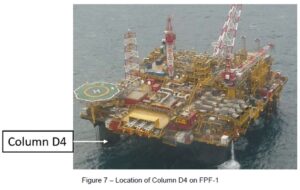
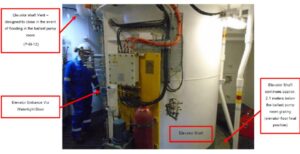
Aberdeen Sheriff Court heard on Tuesday 25 November 2025 how, on 19 May 2017, there was an uncontrolled hydrocarbon release incident from a Return Oil Line (ROL) pipework inside concrete leg Column 4 of the Brent Charlie offshore installation. The release involved 200kg of gas and 1,550kg of crude oil – the largest uncontrolled hydrocarbon release on the UK Continental Shelf reported to HSE in 2017.
The release placed over 170 platform personnel at risk from a potentially catastrophic fire and explosion had the escaping hydrocarbon gas ignited inside the concrete leg.
HSE noted that the platform manager, and the various emergency teams, deserve praise for their decision making and actions taken that assisted with preventing the incident from escalating. Their sound judgement and decision making ensured the situation was eventually brought under control.
An HSE investigation found that deficiencies in Shell’s safety management system led to the release. The ROL pipework in Column 4 was not properly maintained for several years. The pipework was installed for short-term use and was due to be removed in 2010 but remained in place for seven years, during which time it suffered corrosion damage. It failed on 19 May 2017 and a large volume of gas was uncontrollably released into the leg. Ventilation extract and supply fans designed to prevent and mitigate this major accident hazard were also inadequately maintained, which exacerbated the risk to the 176 people on the platform.
HSE were involved in the production of the Energy Institute’s Guidance for corrosion management in oil and gas production and processing, as well as several other topic-specific documents. Extensive guidance and resources for the oil and gas industry are available on HSE’s website here Offshore oil and gas – HSE.
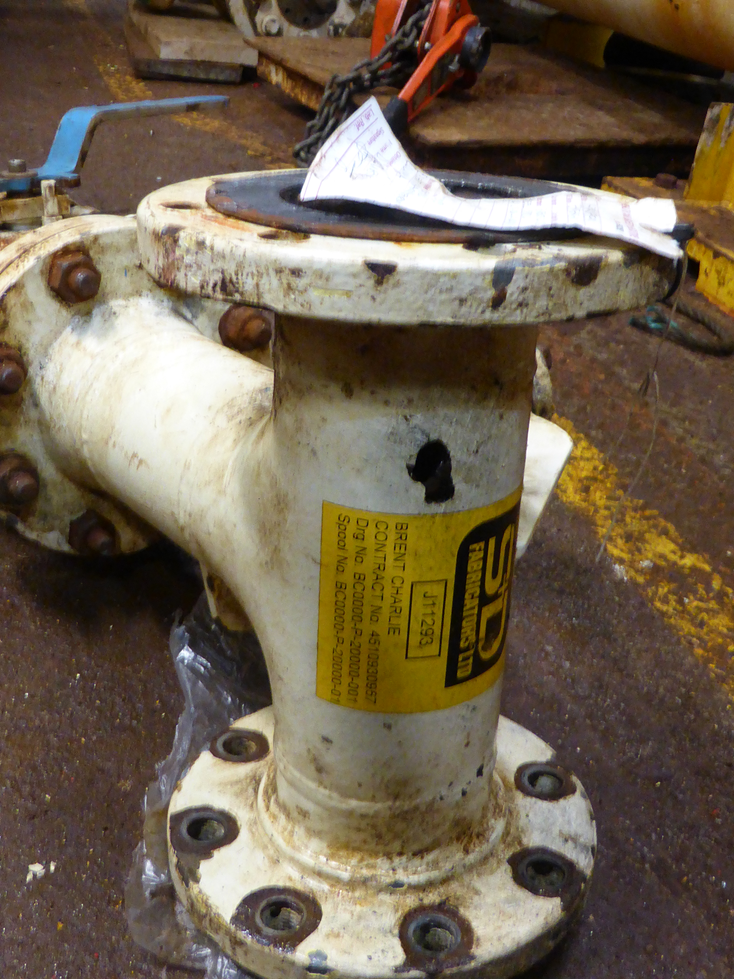
Shell UK Limited pleaded guilty to two charges under the Offshore Installations (Prevention of Fire and Explosion, and Emergency Response) Regulations 1995 (PFEER). Sheriff Ian Duguid, in his sentencing remarks, observed that Shell UK “ought to have recognised that the temporary carbon steel spool was not suitable for such a line and should have been replaced.” After considering mitigating factors, Shell was fined £560,000.
Speaking after the hearing, HSE Offshore Health and Safety Inspector Dozie Azubike said: “At more than 1,750kg, Shell Brent Charlie’s hydrocarbon release was the largest reported to HSE in 2017. This release occurred in a confined space with limited access – it is simply fortunate that no one was in the leg at the time, or they could have been asphyxiated from the hydrocarbon-rich atmosphere, quite apart from any fire and explosion risk.
“Although the offshore industry has managed to reduce its overall number of hydrocarbon releases, in most years there are still several which, if ignited, would result in potentially catastrophic consequences.
“This case highlights the importance of oil and gas dutyholders reviewing their current management of change processes for temporary spools and their subsequent removal, strengthening inspection regimes to identify potential internal corrosion within pipework, and ensuring that inspection frequency of safety-critical equipment considers full analysis of the equipment’s maintenance history.”
Further Information:
- The Health and Safety Executive (HSE) is Britain’s national regulator for workplace health and safety. We are dedicated to protecting people and places, and helping everyone lead safer and healthier lives.
- More information about the legislation referred to in this case is available.
- Further details on the latest HSE news releases is available.
- Relevant guidance can be found here Offshore oil and gas – HSE
- HSE does not pass sentences, set guidelines or collect any fines imposed. Relevant sentencing guidelines must be followed unless the court is satisfied that it would be contrary to the interests of justice to do so. The sentencing guidelines for health and safety offences can be found here.