Press release

Two firms fined after racking collapse killed two workers

Two companies have been fined following an incident which resulted in the deaths of two workers in West Yorkshire.

Lee Horton, 58, and Daron Pickstock, 43, were killed when an industrial racking system collapsed as it was being tested at Castefields Industrial Estate in Bingley on 29 October 2020.

The racking was being tested at a site belonging to Space Productiv Ltd, of which Mr Horton, from Ilkley, was the managing director. Mr Pickstock, who was from Chorley, was self-employed and working for a company called Collins Site Services.

The racking system was being loaded with test weights, some of which weighed up to two tonnes, when the structure began to collapse. The two men had been working from a mobile elevating work platform (MEWP) next to the racking structure as it was being loaded.

However, as the structure collapsed, it struck the MEWP, causing it to overturn while both men were inside. Mr Horton and Mr Pickstock sustained fatal injuries and died shortly afterwards.

An investigation by the Health and Safety Executive (HSE) found that both companies failed to adequately assess the risks arising from the work being undertaken and failed to put in place a safe system of work to ensure the health and safety of those involved.

HSE found that the planned and implemented systems of work were unsafe. Workers were positioned within the collapse zone of the racking during testing, placing them at serious risk should the structure fail.

Space Productiv Ltd pleaded guilty to breaching Sections 2(1) and 3(1) of the Health and Safety at Work etc. Act 1974. The company was fined £97,500 and ordered to pay £17,377 in costs at Leeds Crown Court on 11 February 2026.

Collins Site Services Ltd pleaded guilty to breaching Section 3(1) of the Health and Safety at Work etc. Act 1974. The company was fined £60,000 and ordered to pay £10,292 in costs at Leeds Crown Court on 11 February 2026.

Family tributes

Lee Horton

Emma Horton, daughter of Lee Horton, said:

“Lee was more than just a father to Josh and I; he was our best friend, therapist, career advisor and confidant. We feel incredibly fortunate to have had such a special and unique bond with him, but that only makes the void he’s left behind feel all the more immense.

“There are no words that can fully capture the magnitude of our loss.

“His humour, warmth and generosity are deeply missed by all who knew him.”

Daron Pickstock

Jack Stileman, son of Daron Pickstock, said:

“My dad was a hard worker and content in his life. He didn’t like unnecessary drama or unkindness, and he was grateful for what he had.

“My future children do not get the chance to have a grandfather. I feel heartbroken for them that the circumstances surrounding my dad’s death happened at work and could very possibly have been avoided.

“My dad liked the best quality of things. He taught me how to fix things and adapt things to make them work. He was constantly mending something, and I miss that guidance on what I could do better when we spent time together.

“We shared a love of music and the benefits it can have in your life. We talked openly about life and now that’s gone. No one can replace my dad.”

HSE Inspector Mark Slater said:

“All work activities where there is a risk to health and safety should be properly planned and risk assessed, and safe systems of work must be followed.

“Where risks cannot be eliminated, it is vital that workers are kept out of danger zones to reduce the risk of serious injury or death.

“In this case, inadequate planning and unsafe systems of work exposed workers to an unacceptable level of risk. This was a wholly avoidable incident.”

The prosecution was brought by HSE enforcement lawyer Daniel Poole and paralegal officer Sarah Zara Salman.


Notes to editors

  1. The Health and Safety Executive (HSE) is Britain’s national regulator for workplace health and safety. We are dedicated to protecting people and places, and helping everyone lead safer and healthier lives.
  2. More information about the legislation referred to in this case is available.
  3. Further details on the latest HSE news releases is available.
  4. Relevant guidance can be found here Managing for health and safety
  5. HSE does not pass sentences, set guidelines or collect any fines imposed. Relevant sentencing guidelines must be followed unless the court is satisfied that it would be contrary to the interests of justice to do so.  The sentencing guidelines for health and safety offences can be found here.

Man jailed after dangerous and illegal gas work put pensioner at risk

A man who fraudulently claimed to be Gas Safe Registered (GSR) has been jailed after his dangerous work put the life of a 90-year-old homeowner at risk.

Israel Jackson, 56, of Sandbach Place, London, was sent by a contracted company to install a new boiler at the elderly man’s home in Croydon in May 2022 after he lied about being qualified to carry out the work. The sole trader has now been jailed for 12 months.

Carrying out gas work without registration is illegal and potentially dangerous, as unqualified work can lead to gas leaks, fires, explosions, and carbon monoxide poisoning.

It is not the first time Jackson has been prosecuted for illegal gas work after the Health and Safety Executive (HSE) did so in 2015.

Although he has never been registered, Jackson installed a new boiler at the man’s home and even issued a fraudulent gas safety certificate with a GSR licence number. The pensioner’s relatives raised concerns when they noticed the hot water wasn’t working and there was a smell of gas.

Jackson returned to carry out repairs on more than one occasion – even after a British Gas engineer had issued an ‘immediately dangerous notice’. This included on the day after that action was taken, with Jackson even demanding his taxi fare be paid to come back to the house. While there, he completely ignored the dangerous notice and put the boiler back into use.

It was only in June the following year that another engineer – this time from BT Heating and Property – issued another immediately dangerous notice, before completely replacing the boiler.

GSR inspectors attended the property and found that Jackson was not registered when he installed the boiler in May 2022 and provided the fraudulent certificate. The matter was investigated by HSE, whose inspectors found that he had continued to carry out gas fitting work since his previous conviction and had never registered with GSR.

Jackson had been sent to install the boiler by a company called U-Works Services Ltd. He had told them he was qualified to carry out gas work but the company made no attempt to verify he was GSR registered before sending him out to carry out the work on their behalf. The company was served with an immediate prohibition notice by HSE.

The Gas Safety (Installation and Use) Regulations 1998 require those undertaking gas work to be Gas Safe registered and to hold the relevant qualifications to demonstrate their competence.

Members of the public are reminded that all gas work must be carried out by a Gas Safe registered engineer. Anyone can check whether an engineer is registered by visiting www.gassaferegister.co.uk or calling 0800 408 5500.

Jackson pleaded guilty to contravening Regulation 3(3) and 3(7) of the Gas Safety (Installation and Use) Regulations 1998.  He was jailed for 12 months at Croydon Crown Court on 4 February 2026.

HSE Inspector Lucy Ellison-Dunn said: “Israel Jackson did not think that the law applied to him.

“Despite a previous conviction for the same offence, he continued to carry out gas work and in this case, putting the life of a vulnerable man at risk.

“He fraudulently told people he was a registered gas engineer, despite not having the competence to install the boiler and pipework correctly.

“Customers rightly expect that employers will carry out the proper checks on those they contract to complete work.  It is quick and easy to do this with the Gas Safe Register.

“I would ask all members of the public to verify an engineer’s registration online.”

The investigation was carried out by HM Inspectors Gordon Carson and Lucy Ellison-Dunn and the prosecution brought by HSE lawyer Rebecca Schwartz and paralegal Melissa Wardle.


Further information:

  1. The Health and Safety Executive (HSE) is Britain’s national regulator for workplace health and safety. We are dedicated to protecting people and places, and helping everyone lead safer and healthier lives.
  2. More information about the legislation referred to in this case is available.
  3. Further details on the latest HSE news releases is available.
  4. Guidance on domestic gas health and safety is available.
  5. HSE does not pass sentences, set guidelines or collect any fines imposed. Relevant sentencing guidelines must be followed unless the court is satisfied that it would be contrary to the interests of justice to do so.  The sentencing guidelines for health and safety offences in England and Wales can be found here and for those in Scotland here.

Contractor jailed after ‘kind hearted’ teen fell to death during demolition works

A self‑employed contractor has been jailed after a teenager fell to his death during demolition works on a property in Surrey.

Jason Hill had hired 19-year-old Thomas Neate, known as Tom, to help demolish a garage at a domestic property in preparation for an extension, at an address on Glebe Road in Staines-upon-Thames.

On 16 August 2023, Tom, who was local to the area, was on the garage roof removing tiles and other materials when he fell through an opening and suffered severe head injuries. He was taken to hospital but he died several weeks later on 23 September.

Thomas Neate was just 19 at time of the incident

An investigation by the Health and Safety Executive (HSE) found that Hill, 59, of Ashford in Middlesex, had put no measures in place to prevent a fall from height, despite the clear risk. Work was being carried out directly from the roof with no scaffolding, decking, or other protective systems to prevent a person falling through or from the structure.

Working at height remains one of the leading causes of workplace injury and death. HSE has detailed guidance available on working safely at height and managing construction activities employers should follow to prevent incidents.

In a statement provided to HSE, Tom’s family spoke of their devastation at his untimely death.

“Tom was a kind hearted and hard working young man who was such a huge part of so many people’s lives,” they said.

“His loss has devastated us and knowing it could have been avoided makes that loss even harder to bear. His death should never have happened and while we acknowledge the court’s decision, no sentence can reflect what we have lost.

“We can only hope that this case serves as a warning to others that ignoring health and safety has irreversible consequences.”

During the course of the HSE investigation, other concerns were identified, including unsafe mini-digger use and a failure to stop members of the public entering the site, indicating broader failings in Hill’s approach to managing health and safety.

Thomas fell through the roof of this garage as it was being demolished

The investigation also found no assessment to determine whether asbestos was present. Corrugated concrete sheets being snapped and removed by hand were later found to be made from asbestos cement – a material commonly found in buildings constructed before 2000. There were three other workers on site who were at risk of exposure to fibres as the sheets were handed down to them, as well as the family whose garage was being worked on.

Before any demolition or refurbishment work begins, dutyholders must assess whether asbestos is present and plan how work will be carried out safely. See Asbestos Essentials Task sheets for step-by-step instructions.

Jason Hill, of Ashford, Middlesex, pleaded guilty to breaching Section 3(2) of the Health and Safety at Work etc. Act 1974 at Staines Magistrates Court on 30 January 2026. He was immediately jailed for a period of 12 months. No costs were awarded.

HSE Inspector Jennifer Lester said: “Jason Hill’s failure to put in place basic safety measures has cost a young man his life.

“The fact he has been sent to prison demonstrates just how seriously this has been taken.

“Working at height remains one of the most well‑known and significant causes of death and injury in construction, and simple, recognised precautions would have protected Thomas Neate from harm.

“Even small contractors and individuals working on domestic projects have a legal duty to ensure the safety of workers and members of the public.

“Failing to take these precautions can have devasting consequences, as this tragic incident starkly demonstrates. Our thoughts are with Tom’s family and friends as they mourn their loss”

This HSE prosecution was brought by enforcement lawyer Julian White and paralegal officer Lynne Thomas.


Further information:

  1. The Health and Safety Executive (HSE) is Britain’s national regulator for workplace health and safety. We are dedicated to protecting people and places, and helping everyone lead safer and healthier lives.
  2. More information about the legislation referred to in this case is available.
  3. Further details on the latest HSE news releases is available.
  4. HSE does not pass sentences, set guidelines or collect any fines imposed. Relevant sentencing guidelines must be followed unless the court is satisfied that it would be contrary to the interests of justice to do so.  The sentencing guidelines for health and safety offences can be found here.

  5. The HSE campaign “Asbestos and You” reminds tradespeople about the dangers of asbestos and the importance of working safely with it.

Man sentenced after illegal gas work put family at risk

A man has been sentenced after his illegal gas work put the lives of an Ulverston family at risk.

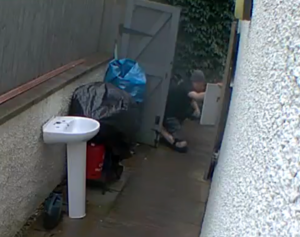
Lee Lancaster carrying out illegal gas work

Lee Lancaster, 38, installed a gas combi boiler and gas pipework at a family home in in February 2024. After completing the work, one of the occupiers smelled gas near their meter box. They contacted Cadent, who identified three different gas leaks.  As a result, the gas supply to the house was shut off for six weeks, leaving the family of four without heating or hot water.

The Health and Safety Executive (HSE) was alerted to the incident by Gas Safe following their inspection, which classified the work carried out as Immediately Dangerous. A subsequent investigation by HSE discovered that Mr Lancaster did not hold any qualifications in relation to gas work and was not competent to undertake such work safely.  It also identified that he was not on the Gas Safe Register; the official list of gas engineers who are qualified to work legally on gas installations.

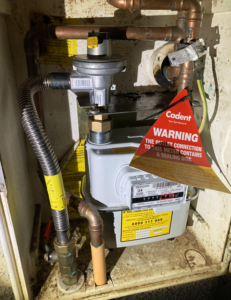
The meter box following the gas supply being capped

The Gas Safety (Installation and Use) Regulations 1998 require those undertaking gas work to be Gas Safe registered and to hold the relevant qualifications to demonstrate their competence.

Members of the public are reminded that all gas work must be carried out by a Gas Safe registered engineer. Anyone can check whether an engineer is registered by visiting www.gassaferegister.co.uk or calling 0800 408 5500.

Carrying out gas work without registration is illegal and potentially dangerous, as unqualified work can lead to gas leaks, fires, explosions, and carbon monoxide poisoning.

Lee Lancaster, of New Market Street, Ulverston, pleaded guilty to breaching Regulations 3(1) and 3(3) of the Gas Safety (Installation and Use) Regulations 1998. He was sentenced to a 12-month community order where he must undertake 200 hours of unpaid work and was ordered to pay £2,000 costs at a hearing at Barrow-in-Furness Magistrates’ Court on 23 January 2026.

After the hearing, HSE Inspector Matthew Shepherd said:

“The risks from uncontrolled gas leaks are well known and can be fatal.

“Mr Lancaster knew he was unqualified and not Gas Safe registered yet still took on this work, putting a family in very real danger.

“We will not hesitate to take action against anyone undertaking gas work where they are not competent or registered to do so.”

This HSE prosecution was brought by HSE enforcement lawyer Chloe Ward and paralegal officer Lynne Thomas.


Further information:

  1. The Health and Safety Executive (HSE) is Britain’s national regulator for workplace health and safety. We are dedicated to protecting people and places, and helping everyone lead safer and healthier lives.
  2. More information about the legislation referred to in this case is available.
  3. Further details on the latest HSE news releases is available.
  4. Relevant guidance can be found here: www.gassaferegister.co.uk
  5. HSE does not pass sentences, set guidelines or collect any fines imposed. Relevant sentencing guidelines must be followed unless the court is satisfied that it would be contrary to the interests of justice to do so.  The sentencing guidelines for health and safety offences can be found here.
Company fined after 3-year-old nearly drowned at children’s holiday camp

A company that runs holiday camps for children across the country has been fined £6,000 after a three-year-old girl nearly drowned during a swimming pool free-play session.

The incident occurred on 26 July 2023 at Bishopsgate School in Egham, Surrey, where Oxford Active Ltd was running a holiday camp. The three-year-old girl was found face down in the swimming pool underneath a large float and was not breathing. Staff intervened and were able to resuscitate her.

The float involved

The girl was part of a group of 19 children aged between three and five who were taking part in a free-play swimming session. Most of the children were non-swimmers, including the three-year-old. Staff had fitted her with two sets of armbands and provided her with a foam noodle before she entered the pool. A number of floats were present in the pool, including a large rocket-shaped float, beneath which the child became trapped. When she was found unconscious, she was no longer wearing the armbands or using the noodle.

An investigation by the Health and Safety Executive (HSE) found that Oxford Active Ltd’s documentation relating to pool safety and supervision was insufficiently detailed and lacked clarity. The investigation also found that the content of this documentation was not communicated effectively to staff, meaning appropriate control measures were not properly understood or implemented.

HSE guidance on swimming pool management highlights the importance of effective supervision arrangements, particularly where young or non-swimming children are involved. This includes ensuring suitable adult-to-child ratios, clear rules on the use of floats and inflatable equipment, robust risk assessments for free-play sessions, and effective emergency procedures so incidents can be identified and responded to immediately.

Oxford Active Ltd, of Oxford, pleaded guilty to breaching Section 3(1) of the Health and Safety at Work etc. Act 1974. The company was fined £6,000 and ordered to pay £12,000 in costs at a hearing at Chichester Crown Court.

After the hearing, HSE Inspector Russell Beckett said:

“It is vital that children are able to learn to swim in a safe environment and that parents can trust their children will be properly looked after while doing so.

“Fortunately, the three-year-old child recovered well, but this incident could very easily have had a tragic outcome.”

This HSE prosecution was brought be enforcement lawyer, Neenu Bains and paralegal officer, Farhat Basir.

Further information:

  1. The Health and Safety Executive (HSE) is Britain’s national regulator for workplace health and safety. We are dedicated to protecting people and places, and helping everyone lead safer and healthier lives.
  2. More information about the legislation referred to in this case is available.
  3. Further details on the latest HSE news releases is available.
  4. Relevant guidance can be found here: Swimming pool management: Leisure activities
  5. HSE does not pass sentences, set guidelines or collect any fines imposed. Relevant sentencing guidelines must be followed unless the court is satisfied that it would be contrary to the interests of justice to do so.  The sentencing guidelines for health and safety offences can be found here.
Major chemical firm hit with £400,000 fine after dangerous steam release

A global chemicals company has been fined £400,000 after a worker narrowly escaped serious injury in a high-pressure steam release incident at its site in Huddersfield.

Syngenta Ltd was sentenced after the 59-year-old contractor – working under its control and direction – had been carrying out unsafe maintenance work. The man had been working as a mechanical fitter on 6 November 2023 when the incident took place, resulting in the company reporting it to the Health and Safety Executive (HSE) as a dangerous occurrence. The incident involved a release of high-pressure steam as he went about his job.

The company operates a large agrichemicals production site where some of the production plants rely on high pressure steam to manufacture products. The HSE investigation found that the incident occurred during the planned replacement of a faulty steam trap on small-bore pipework.

Steam traps are devices that automatically remove condensate (water) and air from the high-pressure steam system. There was a sudden failure of the valve used to isolate the work location from the steam, and this resulted in the uncontrolled high-pressure release.

The HSE investigation also revealed several failures with the system of work in operation. These included:

Syngenta Ltd pleaded guilty to having failed to ensure that the isolation valve and flange bolts were maintained in an efficient state, in efficient working order and in good repair – as required by Regulation 5(1) of the Provision and Use of Work Equipment Regulations 1998 (PUWER) – HSE.

In addition, there was an issue with the company’s documented risk assessment procedure in place before such maintenance work was undertaken. It was routine for Syngenta to carry out maintenance work on small-bore pipework of the high-pressure steam distribution system, using a single method of isolation.

HSE’s published guidance about on this subject (The safe isolation of plant and equipment – HSE, HSG253) emphasizes that using a method of double isolation is safer. The risk assessment documents in place failed to appreciate the increased risk involved in relying on a single method of isolation when there was known corrosion of the work equipment. Syngenta Ltd also pleaded guilty to having failed to make a suitable and sufficient assessment of the risk involved in carrying out the specific maintenance work described as required by Regulation 3(1) of the The Management of Health and Safety at Work Regulations 1999.

Syngenta Ltd, whose head office is at Bracknell, Berkshire pleaded guilty to the two offences at Leeds Magistrates’ Court on 28 January 2026 and was fined £400,000 and ordered to pay costs of £8,288.

HSE Inspector David Welsh said: “If a safe system of work had been in place at the site when the maintenance was being carried out, this dangerous incident would not have happened.

“The company did not appreciate the extent of the risk posed because of the way the maintenance work was being done, and the relatively simple control measures that could have been applied to make it safer.

“Syngenta not only failed produce an appropriate risk assessment, but also failed  to maintain work equipment in a safe condition – which taken together meant that this was a dangerous accident waiting to happen.”

This HSE prosecution was brought by enforcement lawyer Iain Jordan and paralegal officer Zara Salman.


Further information:

  1. The Health and Safety Executive (HSE) is Britain’s national regulator for workplace health and safety. We are dedicated to protecting people and places, and helping everyone lead safer and healthier lives.
  2. More information about the legislation referred to in this case is available.
  3. Further details on the latest HSE news releases is available.
  4. Relevant guidance can be found here: The safe isolation of plant and equipment – HSE
  5. HSE does not pass sentences, set guidelines or collect any fines imposed. Relevant sentencing guidelines must be followed unless the court is satisfied that it would be contrary to the interests of justice to do so.  The sentencing guidelines for health and safety offences can be found here.

Sole trader sentenced after worker injured in fall from height

Daniel Jenner, trading as Jenner Roofing and Building Services, has received an eight-month suspended sentence after a worker fell four metres through a rooflight to the concrete floor below.

The hole left in the roof

The incident occurred on 12 August 2023, when a worker was carrying out work on behalf of Jenner Roofing and Building Services, at an industrial estate in High Wycombe, working alone to clean and repair gutters and drains.

While walking next to the unguarded edges of the roof, he approached a fragile roof covering above a service road. He stepped onto a rooflight, fell through it, and sustained serious, life-changing injuries including a fractured skull and cheekbone, a fractured leg and a broken wrist.

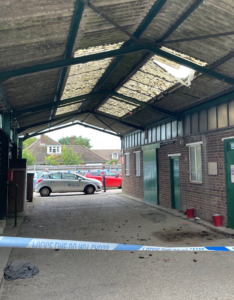
Police at the scene of the fall

An investigation by the Health and Safety Executive (HSE) found that Daniel Jenner had failed to implement any work-at-height measures to prevent workers from falling from the unguarded edges of the roof or through the fragile roof itself. There were no measures in place to mitigate for either the distance or the impact of a fall.

Working at height remains one of the leading causes of workplace injury and death. HSE has detailed guidance available on working safely at height and managing construction activities that can be found on our website.

Daniel Jenner, trading as Jenner Roofing and Building Services, pleaded guilty to breaching Regulation 6(3) of the Work at Height Regulations 2005. He received an eight-month suspended sentence, was ordered to complete 280 hours of unpaid work and to pay £500 in costs at a hearing at High Wycombe Magistrates’ Court on Wednesday 21 January 2026.

HSE Lead Inspector, Sophie Neale, said:

“This was a tragic but avoidable incident, where an individual suffered life-changing injuries due to working at height. Had suitable control measures been implemented, such as fall prevention or fall mitigation measures, this incident would not have occurred.

“This prosecution highlights ongoing safety failures in the construction industry, where working at height remains one of the leading causes of workplace injury and death.”

This HSE prosecution was brought by HSE enforcement lawyer, Gemma Zakrzewski and paralegal officer, Helen Hugo.


Further information:

  1. The Health and Safety Executive (HSE) is Britain’s national regulator for workplace health and safety. We are dedicated to protecting people and places, and helping everyone lead safer and healthier lives.
  2. More information about the legislation referred to in this case is available.
  3. Further details on the latest HSE news releases is available.
  4. Relevant guidance can be found here: Work at height – HSE
  5. HSE does not pass sentences, set guidelines or collect any fines imposed. Relevant sentencing guidelines must be followed unless the court is satisfied that it would be contrary to the interests of justice to do so.  The sentencing guidelines for health and safety offences can be found here.

Company fined after operative receives fatal head injury at work

A South Yorkshire wire company has been sentenced following serious health and safety breaches that resulted in the death of one its workers.

David Lockwood, 45, sustained fatal injuries at Stanley Wire Limited’s site on Talbot Road in Penistone on 18 November 2021.

Sheffield Magistrates’ Court heard how Mr Lockwood died after becoming entangled in an unguarded wire drawing and recoiling machine. The machine, known as a ‘Gravity Block’, had exposed moving parts which the worker was able to access.

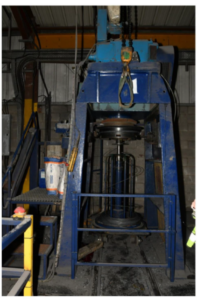
The machine, known as a ‘Gravity Block’

An investigation by the Health and Safety Executive (HSE) found that the company had failed to take effective measures to prevent employees from accessing dangerous moving parts of the wire drawing machine. The investigation identified that the company should have carried out a suitable and sufficient risk assessment for the machine, and subsequently developed a safe system of work and clearly communicated this to its workforce.

HSE also found that fixed closed guards, interlocks or pressure mats should have been installed to prevent operatives from entering the Gravity Block while it was rotating. The company could have appointed a designated competent person on site and provided formal training to operatives, rather than relying on verbal instruction.

Recognised industry-standard safety measures could and should have been implemented on a number of machines, instead of allowing substandard conditions to persist over a prolonged period.

HSE has detailed guidance on the safe use of work equipment and machinery guarding, including the requirements under the Provision and Use of Work Equipment Regulations (PUWER), which is available at: Provision and Use of Work Equipment Regulations 1998 (PUWER) – HSE

Stanley Wire Limited, of Stanley Mills, Talbot Road, Penistone, South Yorkshire, after pleading guilty at an early hearing of breaching Section 2(1) of the Health and Safety at Work etc Act 1974. The company was fined £140,000 and ordered to pay £6,652 in costs at Sheffield Magistrates’ Court on 22 January.

After the hearing, HSE Inspector Charlotte Bligh said:

“Following the incident, eight Prohibition Notices were served on the company. The remedial action taken demonstrated that appropriate measures, such as effective guarding, were readily available and could have been put in place had the risks associated with the activity been properly considered.

“Companies are reminded that HSE will not hesitate to take appropriate enforcement action against those that fall below the required health and safety standards.”

This HSE prosecution was brought by HSE enforcement lawyer, Matthew Reynolds and paralegal officer, Benjamin Stobbart.


Further information:

  1. The Health and Safety Executive (HSE) is Britain’s national regulator for workplace health and safety. We are dedicated to protecting people and places, and helping everyone lead safer and healthier lives.
  2. More information about the legislation referred to in this case is available.
  3. Further details on the latest HSE news releases is available.
  4. Relevant guidance can be found here: Provision and Use of Work Equipment Regulations 1998 (PUWER) – HSE
  5. HSE does not pass sentences, set guidelines or collect any fines imposed.

‘James Bond’ builder who threatened HSE inspectors found guilty

A builder who threatened inspectors from Britain’s workplace regulator and told them his name was James Bond has been fined.

David Robert Lane, 59, was the site manager of an extensive cottage refurbishment in Staffordshire when unsafe work caught the attention of two inspectors from the Health and Safety Executive (HSE). The pair had been carrying out routine inspections in the Rugeley area on 11 February 2025 when they saw two people on the site accessing a roof from the bucket of an excavator.

Clearly identifying the practice to be unsafe, the inspectors decided they had to stop and take action.

Inspectors took this photo of the unsafe working at height work taking place

There were around ten workers on the site and when the inspectors approached, Lane, who would later be identified as the site manager, came over to intervene. He refused to identify himself, except as James Bond, and rebuffed their attempts to inspect the site. He went on to tell the inspectors he was in fact the property owner, that the men on site were unpaid friends and relatives, and that they had no legal right to inspect. He followed that up with threats of violence, at which point the inspectors withdrew.

The two inspectors returned to the site a week later, accompanied by officers from Staffordshire Police. Site manager Lane greeted them with a shout of “It’s PC Plod!” while still refusing to identify himself. He maintained that he was the owner, told all his staff not to speak to HSE, except to confirm that they were his relatives and not at work, and told the inspectors once again that they had no right to inspect and to leave the site.

After making several enquiries, the inspectors were able to identify Lane as the site manager – this resulted in him being served with enforcement action.

Upon receiving notification that he was to be prosecuted for the offence of obstruction, under 2 counts of section 33(1)(h) of the Health and Safety at Work etc Act 1974, he responded with three expletive laden emails, and said “I won’t jump through your hoops”.

HSE defines work-related violence as ‘any incident in which a person is abused, threatened or assaulted in circumstances relating to their work’. This can include verbal abuse or threats, including face to face, online and via telephone and physical attacks. It can include violence from members of the public, customers, clients, patients, service users and students towards a person at work.

David Robert Lane, of Talbot Street, Rugeley, Staffordshire, failed to attend Birmingham Magistrates Court on two occasions, and on the latter was found guilty after being tried in his absence on 9 January. He was fined £3,000, ordered to pay full costs of £6,450 and must pay a victim surcharge of £1,200.

Speaking after the hearing, HSE inspector Gareth Langston said: “This case highlights the difficulties we face in trying to improve the health and safety of workers across Great Britain.

“HSE inspectors have an important job to do, in safeguarding the health, safety and welfare of people at work. This includes investigating incidents and securing justice for innocent workers and the families that are tragically left behind.

“We conduct more than 13,000 inspections every year and it is through this proactive engagement that we are able to advise employers on how they can improve their ways of working, we only take enforcement action when the circumstances require it.

“We accept that not all employers will be pleased to see us, but the vast majority are professional and accept us with good grace.

“HSE will not tolerate the obstruction of its inspectors, and may prosecute offenders in rare cases such as this, where this is necessary.”

This HSE prosecution was brought be enforcement lawyer Edward Parton and paralegal officer Hannah Snelling.


Further information:

  1. The Health and Safety Executive (HSE) is Britain’s national regulator for workplace health and safety. We are dedicated to protecting people and places, and helping everyone lead safer and healthier lives.
  2. More information about the legislation referred to in this case is available.
  3. Further details on the latest HSE news releases is available.
  4. HSE does not pass sentences, set guidelines or collect any fines imposed. Relevant sentencing guidelines must be followed unless the court is satisfied that it would be contrary to the interests of justice to do so.  The sentencing guidelines for health and safety offences can be found here.
Derbyshire Police prosecuted for failing to protect officers

Derbyshire Police has been fined £60,000 after several of its officers were injured when a riot training exercise went wrong.

Four serving police officers suffered burns after petrol bombs were thrown at them during the simulated exercise at a training facility in Rotherham on 2 February 2021.

An investigation into the incident by the Health and Safety Executive (HSE) found that the officers had been exposed to significant and avoidable risks during the exercise.

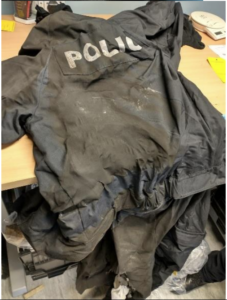
A burnt item of PPE being worn by officers at the time

Officers wearing flame-retardant personal protective equipment (PPE) had been required to face petrol bombs thrown by other officers as part of a training drill intended to replicate a public disorder situation.

However, it resulted in four of the 13 officers taking part sustaining burns to their lower bodies, three of whom required hospital treatment. All four have since returned to work, but the incident resulted in permanent scarring, and psychological harm which will have a lasting effect.

The HSE investigation found that Derbyshire Constabulary had failed to properly plan and risk assess the exercise. Key failings included:

Derbyshire Constabulary of Butterley Hall, Ripley, Derby, pleaded guilty to breaching Section 2(1) of The Health and Safety at Work etc. Act 1974. They were fined £60,000 and ordered to pay £9,470 in costs at Sheffield Magistrates Court on 19 January 2026

After the hearing, HSE Inspector Jennifer Elsegood, said: “Being a serving police officer is a job that carries with it levels of risk, however while preparing officers for dangerous situations is important, it must never come at the expense of their safety.

“High‑risk training activities must be planned and controlled with the same care and professionalism expected in any other workplace.

“The risks created by the training should have been identified as part of the Constabulary’s risk assessments and appropriately controlled.

“We hope this case reinforces the importance of thorough risk assessment, robust equipment assurance, and safeguarding those who put themselves forward to protect the public.”

This HSE prosecution was brought by senior enforcement lawyer Robert James and paralegal officer Rebecca Withell.


Further information:

  1. The Health and Safety Executive (HSE) is Britain’s national regulator for workplace health and safety. We are dedicated to protecting people and places, and helping everyone lead safer and healthier lives.
  2. More information about the legislation referred to in this case is available.
  3. Further details on the latest HSE news releases is available.
  4. HSE does not pass sentences, set guidelines or collect any fines imposed. Relevant sentencing guidelines must be followed unless the court is satisfied that it would be contrary to the interests of justice to do so.  The sentencing guidelines for health and safety offences can be found here.