Press release

Wood supplier hit with £40,000 for failing to protect workers from dust

A wood supplier has been fined £40,000 for failing to protect its workers from exposure to wood dust.

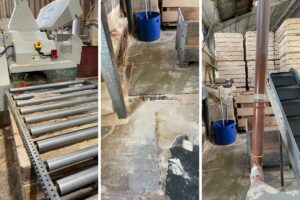
Fakenham-based Nat Pal Limited was visited by the Health and Safety Executive (HSE) in April 2023. Dust was found scattered across the floor, and the inspection identified failings in the company’s control measures to prevent exposure of their employees to wood dust and enforcement action was taken.
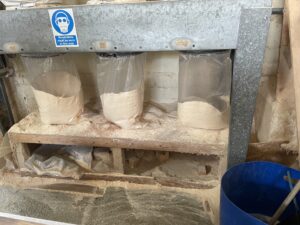
Dust was found scattered across the floor

The HSE investigation also identified ongoing failings in the company’s control measures and found that it had failed to take appropriate precautions despite previous enforcement on the same issues dating back to 2015.

Breathing in wood dust excessively can cause asthma and nasal cancer. Guidance on working in the woodworking industry is available and an inspection-led campaign to protect workers continues.

That guidance states that employers must take effective measures to prevent exposure of their employees to wood dust. This will normally be by:

The HSE inspection identified failings in the company’s control measures to prevent exposure of their employees to wood dust and enforcement action was taken.

Nat Pal Limited of Cummings Road, Tattersett Business Park, Fakenham, pleaded guilty to a charge contrary to Section 2 (1) of the Health and Safety at Work etc Act, 1974, in that it failed to ensure, so far as was reasonably practicable, the health, safety and welfare at work of its employees, as it failed to manage the risks created by operating a wood-working business. The company was fined £40,000 and ordered to pay costs of £4,072 at a hearing at Norwich Magistrates’ Court on 16 May 2025.

After the hearing, HSE inspector Natalie Prince said “The fine imposed on Nat Pal Limited should underline that HSE take a failure to protect the health of employees extremely seriously.

“To make matters worse, this company had been visited previously and had failed to take steps to protect its workers.

“We will not hesitate to take action against companies which fail to do all they can.”

This HSE prosecution was brought by HSE enforcement lawyer Rebecca Schwartz and paralegal officer Imogen Isaac.


Further information:

  1. The Health and Safety Executive (HSE) is Britain’s national regulator for workplace health and safety. We are dedicated to protecting people and places, and helping everyone lead safer and healthier lives.
  2. More information about the legislation referred to in this case is available.
  3. Further details on the latest HSE news releases is available.
  4. HSE guidance on working in the woodworking industryis available.
  5. HSE does not pass sentences, set guidelines or collect any fines imposed. Relevant sentencing guidelines must be followed unless the court is satisfied that it would be contrary to the interests of justice to do so.  The sentencing guidelines for health and safety offences can be found here.
Fine for manufacturing firm after man loses finger in machinery

A manufacturing company has been fined £20,000 after a worker lost part of his finger in machinery at its site in St Helens.

The man was injured at Film & Foil Solutions Ltd, which makes flexible film used in the food industry, on 4 December 2023.

He was using a machine that converts and folds plastic film at the company’s site on Haydock Industrial Estate. He tried to stop the material becoming tangled by using his hand to stop the poorly guarded rotating shaft. However, in doing so, his right index finger made contact with a rotating part of the machine and became entangled.

He was taken to hospital and due to the seriousness of the injuries, surgery was carried out the following day to amputate part of the finger on his dominant right hand. In a statement provided to HSE, the employee, who doesn’t wish to be named, described the impact of the injuries.

He said: “I was unable to carry out normal daily tasks such as tying my shoelaces.

“My right hand is my dominant hand and I find it extremely difficult to write with that hand now.

“I am now self-conscious when I go outside.

“My family have also been affected by the injury as I am unable to do normal things I used to be able to do before.

“As a result of the injury I feel my job prospects have been affected, both now and in the future.”

An investigation by the Health and Safety Executive (HSE) found that Film & Foil Solutions Ltd failed to protect its employees, including ensuring the machinery being used to produce it had suitable guarding. The company had failed to carry out a suitable and sufficient risk assessment, resulting in a failure to provide suitable guarding arrangements on the machine and had failed to put in place an adequate safe system of work. It also revealed inconsistencies and inadequacies in the provision of information, instruction and training for those required to use the machine.

HSE guidance states employers must take effective measures to prevent access to dangerous parts of machinery or to stop the movement of any dangerous parts of it before any part of a person enters a danger zone. This will normally be by fixed guarding, but where routine access is needed, other measures may be needed to stop the movement of dangerous parts, for example by having interlocked guards, pressure mats and electro-sensitive protective equipment (ESPE). Further detailed guidance on safe working with machinery is available.

Film & Foil Solutions Ltd, of North Florida Road, Haydock Industrial

Estate, Haydock, St. Helens, Merseyside, pleaded guilty to breaching Regulation 11(1) of The Provision and Use of Work Equipment Regulations 1998. The company was fined £20,000 and ordered to pay £2,932 in costs at Sefton Magistrates’ Court on 15 May 2025.

HSE inspector Sam Eves said “This incident could so easily have been avoided had the company taken simple steps to guard dangerous parts of machinery and implement safe working practices.

“Companies and individuals should be aware that HSE will not hesitate to take appropriate enforcement action against those that fall below the required standards.”

This HSE prosecution was brought by HSE Enforcement Lawyer Matthew Reynolds and supported by Paralegal Officer Imogen Isaac.


Further information:

  1. The Health and Safety Executive (HSE) is Britain’s national regulator for workplace health and safety. We are dedicated to protecting people and places, and helping everyone lead safer and healthier lives.
  2. More information about the legislation referred to in this case is available.
  3. Further details on the latest HSE news releases is available.
  4. detailed guidance on safe working with machinery is available.
  5. HSE does not pass sentences, set guidelines or collect any fines imposed. Relevant sentencing guidelines must be followed unless the court is satisfied that it would be contrary to the interests of justice to do so.  The sentencing guidelines for health and safety offences can be found here.
British Airways fined more than £3million following worker injuries at Heathrow

British Airways has been fined more than £3million after two employees fell from height and sustained serious injuries.

The airline was prosecuted by the Health and Safety Executive (HSE) following two separate incidents at Terminal 5 at Heathrow Airport.

On 25 August 2022, a 54 -year-old employee had been unloading baggage containers from an aircraft when he slipped off a televator and landed 1.5 metres onto the ground below. He suffered serious back and head injuries, including a fractured vertebrae, as a result.

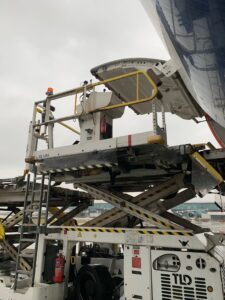
Image showing elevator involved in the second incident.

The HSE investigation found there were gaps between the televator’s guardrails and the aircraft fuselage, the size of which depended on the type of aircraft, creating the fall from height hazard. The gaps increased in size after the front of the televators’ platforms at Terminal 5 were extended – but additional measures to prevent falls from height had not been implemented.

At the time of the incident, British Airways had started a programme to retrofit extendable guardrails to televators in response to previous HSE visits. This was completed following the incident.

In the second incident a British Airways worker sustained head injuries, including a fractured jaw and bleeding on the brain, on 8 March 2023, while unloading baggage containers from an aircraft following its arrival from Seattle. The 43-year-old fell from an elevator and landed three metres onto the ground below.

Both employees were taken to hospital for treatment and had to take several months off work.

The HSE investigation into this incident identified a risk of employees falling from height from the front of the elevator platforms when they were being used during loading and unloading of some aircraft types. Flaps on either side of the platform would be left folded down leaving a gap between the platform and aircraft fuselage.

It also found that the elevator’s operator platform had not been fully extended towards the aircraft, creating a gap which employees could fall through.

Falls from height remain one of the leading causes of workplace injury and death. HSE has detailed guidance on working safely at height while the Civil Aviation Authority has guidance with input from HSE on ground handling activities, including aircraft loading, on its website.

British Airways PLC, of Waterside, Speedbird Way, Harmondsworth, Greater London, pleaded guilty to two charges under Regulation 6(3) of the Work at Height Regulations 2005.

The company was fined £1.33million in relation to the August 2022 incident, and £1.875million in relation to the March 2023 incident. The company was also ordered to pay £20,935 in costs at Southwark Crown Court on 15 May 2025.

HSE enforcement lawyer Rebecca Schwartz, who brought the prosecution, said:

“Falls from height present a real risk of death or serious, life-changing injury. Both employees are fortunate to be alive today.

“The risks of working at height and the necessary control measures are well established – in these cases adequate guardrails would have significantly reduced the risk of harm. This was a reasonably foreseeable risk that British Airways should have been aware of and therefore it should have done more to protect its employees.”

Moving baggage between an aircraft and the luggage carousel in the terminal building is dynamic and time-pressured. It therefore comes with a range of risks to baggage handlers. Several HSE inspections have taken place at Heathrow Airport, identifying risks with manual handling and maintenance of equipment as well as falls from height. Airlines and ground handling companies have needed to take action as a result of these visits. HSE guidance is available here.

This HSE prosecution was supported by HSE paralegal officer Melissa Wardle.

Notes to editors:

  1. The Health and Safety Executive (HSE) is Britain’s national regulator for workplace health and safety. We are dedicated to protecting people and places, and helping everyone lead safer and healthier lives.
  2. More information about the legislation referred to in this case is available.
  3. Further details on the latest HSE news releases is available.
  4. HSE does not pass sentences, set guidelines or collect any fines imposed. Relevant sentencing guidelines must be followed unless the court is satisfied that it would be contrary to the interests of justice to do so.  The sentencing guidelines for health and safety offences in England and Wales can be found here and for those in Scotland here.


HSE provides free online learning to help employers tackle work-related stress

The Health and Safety Executive (HSE) has today (12 May) launched a free online learning module to help employers get to grips with risk assessment of work-related stress. 

The launch coincides with Mental Health Awareness Week (12-18 May) and expands HSE’s Working Minds campaign, which supports businesses in preventing work-related stress and supporting good mental health. 

With around half of all work-related ill health attributed to stress, depression and anxiety, the new module provides step-by-step guidance for employers on conducting effective risk assessments, identifying root causes of work-related stress, and implementing solutions that have a real impact. 

The launch coincides with Mental Health Awareness Week (12-18 May)

Kayleigh Roberts from HSE’s Engagement and Policy Division said: “Preventing work-related stress isn’t just the right thing to do for your workers—it’s also a legal requirement. Our new online learning module aims to make it easier for businesses, particularly small to medium organisations to understand their obligations and what they need to do on a practical level. 

“This isn’t about ticking boxes. It’s about embedding good practices into everyday business operations. By taking a proactive approach, employers can improve productivity, reduce sickness absence, and retain their valued workers. The module provides all the practical templates, tools and resources needed to get started or to review existing practices.” 

HSE highlights six main areas that can lead to work-related stress if not managed properly: demands, control, support, relationships, role, and change. 

Businesses are encouraged to implement the Working Minds campaign 5Rs approach to support the risk assessment process: 

  1. Reach out and have conversations 
  2. Recognise the signs and causes of stress 
  3. Respond to risks by agreeing action points 
  4. Reflect on the actions taken 
  5. Make it Routine to check in regularly 

Employers can register for the online learning module to access step-by-step advice, practical tools, and downloadable templates. 

Visit the Working Minds campaign website for more information about the Working Minds campaign and to download materials. 


Further information: 

Construction boss avoids jail after worker died during house extension

The director of a Leicester-based construction company has been given a suspended prison sentence after a man fell from height while working on a house extension and died in hospital several weeks later.

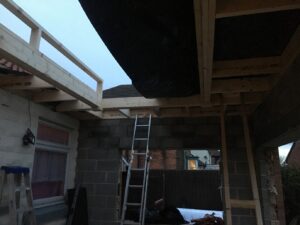
Stephen Pywell was working under the control of Affordable Lifestyle Design Limited at a site in Thurmaston on 18 March 2019. It was during the roof construction phase when the 59-year-old fell while walking on the beams. He had accessed the beams via a ladder, however there was no edge protection in place to prevent falls. He fell from a height of just under eight feet. He was taken to hospital where he underwent surgery, but died several weeks later on 13 May as a result of his injuries.

Stephen Pywell fell from the wooden roof beams of the house extension

An investigation by the Health and Safety Executive (HSE) found that James Pitsillides, the director of Affordable Lifestyle Design Limited, had failed to manage the roof work. This included ensuring that roofing subcontractors, including Mr Pywell, were not exposed to health and safety risks.

Pitsillides pleaded guilty and was given a 20-week prison sentence, suspended for two years. The district judge also ordered him to complete 200 hours of unpaid work.

Working at height remains one of the leading causes of workplace injury and death and HSE has detailed guidance on working safely at height.

That guidance states that work at height must be properly planned, appropriately supervised and carried out in a manner that is safe. The “hierarchy of control” prioritizes collective fall prevention measures, for example scaffolding with suitable edge protection. If this isn’t feasible, fall mitigation measures like airbags or netting should be considered to reduce the consequences of a potential fall. In this case, none of these measures were used, and workers were accessing the roof with a ladder and no additional fall prevention measures in place.

James Pitsillides of Orchard Lane, Great Glen, Leicester, pleaded guilty to breaching Section 37 of the Health and Safety at Work etc. Act 1974, relating to an underlying breach of s.3(1) by his company. He received a 20-week prison sentence, suspended for two years and must complete 200 hours of unpaid work. He was also ordered to pay £10,000 in costs at Leicester Magistrates’ Court on 7 May 2025.

HSE inspector Phil Gratton said: “Every year, a significant number of incidents occur in construction as a result of poorly planned work at height.

“This was a wholly avoidable incident, caused by the failure to implement simple fall protection measures. Had the company used suitable work equipment or devised a safe system of work, Mr Pywell’s tragic death could have been avoided.

“Our thoughts remain with his family and friends.”

Further information: 

  1. The Health and Safety Executive (HSE) is Britain’s national regulator for workplace health and safety. We are dedicated to protecting people and places, and helping everyone lead safer and healthier lives.
  2. More information about the legislation referred to in this case is available.
  3. Further details on the latest HSE news releases is available.
  4. HSE has detailed guidance on working safely at height.
  5. HSE does not pass sentences, set guidelines or collect any fines imposed. Relevant sentencing guidelines must be followed unless the court is satisfied that it would be contrary to the interests of justice to do so.  The sentencing guidelines for health and safety offences can be found here.
School trust fined after member of public hit by falling tree branch

A school academy trust has been fined and a man given a suspended prison sentence after a member of the public was hit by a falling tree branch.

Bishop Bewick Catholic Education Trust and gardening services provider Nicolas Thépot (trading as ‘The Green Yem’) both pleaded guilty to health and safety breaches following the incident, which left a 68 year-old with serious injuries.

Gillian Gardner had been walking her dog on the pavement along West Road in Newcastle when she was hit by the falling branch, which, as a result of the impact, knocked her on to the road and into the path of incoming traffic.

Thépot continued working on the tree the very next day with the only change being that some cones and tape were placed on to the pavement.

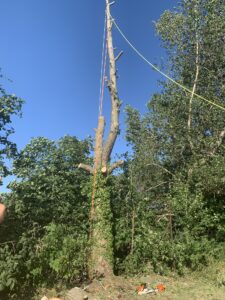
The incident took place on 9 August 2022. Thépot had been contracted by the trust to fell two trees in the grounds of St Cuthberts Catholic High School on Gretna Road. He and a young apprentice set about the work and having climbed one of the trees, Thépot was using a chainsaw to remove branches and sections of the trunk. He had been using a rope to tie to the branches to be removed, with his young apprentice tasked with pulling each one inside the school boundary as they fell.

However, it was during this operation that the rope snapped, causing both it and the falling branch to crash into Mrs Gardner and her dog.

In a statement, she said her ordeal had left her unable to leave the house for several weeks, with the injuries sustained including several broken ribs.

“It probably took about a year to totally recover she said.

“I still can’t carry anything heavy.

“I feel like it has all been downhill since my accident and I’ve lost confidence in what I can and can’t do.

“I haven’t been able to return to my weekly swimming I was used to before the accident.

“My dog has been very therapeutic for me and we’re inseparable.”

Thépot had no training or qualifications in arboriculture or use of chainsaws

An investigation by the Health and Safety Executive (HSE) found that Thépot had no training or qualifications in arboriculture or in the use of chainsaws. He was using an unsafe method to fell the tree, by carrying out aerial chainsaw work above the open footpath and road.

The investigation also found Bishop Bewick Catholic Education Trust had made no checks on Thépot’s experience, competence or qualifications. The trust had not checked how he intended to do the work in advance of awarding the contract, made no check on the method used during the work, and did not stop the work after the incident.

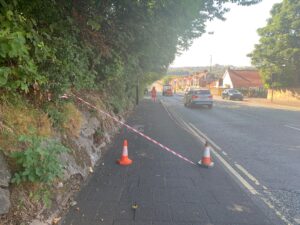
In fact, Thépot continued working on the tree the very next day using the same method. The only change made was that some cones and tape were placed on to the pavement. There was no way around the coned off area for pedestrians without stepping into the busy road, nor was there any signage in place to indicate risk. Members of the public were still walking underneath the tree while Thépot was working with a chainsaw – with the risk not immediately obvious to members of the public from the path. The trust did not attempt to stop him working in this manner despite the obvious risks and the incident the previous day.

The work was only stopped when HSE inspectors became aware of the incident, arrived on the scene, and served prohibition notices on both the trust and Thépot.

The rope being used to to tie to branches snapped during the tree felling work

Bishop Bewick Catholic Education Trust, pleaded guilty to breaching their duty under section 3(1) of the Health and Safety at Work Act 1974 to conduct their undertaking in such a way as to ensure, so far as is reasonably practicable, that persons not in their employment are not exposed to risks to their health or safety. It was fined £20,000 and ordered to pay £4,344 in costs at Newcastle Upon Tyne Magistrates Court on 17 April 2025.

Nicolas Thépot, (of Netherwitton Way, Newcastle upon Tyne) as a self-employed person, failed to discharge his duties under section 3(2) of the Health and Safety at Work Act 1974, to ensure persons not being his employees are not exposed to risks to their health or safety. He pleaded guilty at South Tyneside Magistrates Court on 7 May 2025 and was given a 12 week prison sentence, suspended for 12 months. He must also complete 100 hours of unpaid work and ordered to pay £1,000 towards the prosecution costs.

After the hearing, HSE inspector Stephen Garner said: “This incident was completely avoidable had the tree been felled by a safe method with controls put in place to protect members of the public from being struck by falling branches.

“It is particularly concerning that, in this case, the work continued by the same method the very next day, even after a member of the public was injured.

“This prosecution demonstrates HSE will not hesitate to take action against those who put the public at risk through unsafe work methods.”


Further information:

  1. The Health and Safety Executive (HSE) is Britain’s national regulator for workplace health and safety. We are dedicated to protecting people and places, and helping everyone lead safer and healthier lives.
  2. More information about the legislation referred to in this case is available.
  3. Further details on the latest HSE news releases is available.
  4. HSE does not pass sentences, set guidelines or collect any fines imposed. Relevant sentencing guidelines must be followed unless the court is satisfied that it would be contrary to the interests of justice to do so.  The sentencing guidelines for health and safety offences can be found here.
Firm fined more than £500,000 after shift worker fell to his death

A North Yorkshire company has been fined more than half a million pounds after a night shift worker fell to his death.

Mark Pinder, 51, was working for East Riding Sacks Ltd, a manufacturer of paper sacks, at its site in Stamford Bridge, near York, when the incident happened on 11 February 2023.

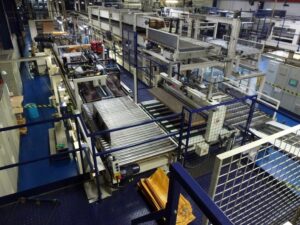
Mr Pinder, from York, had been operating one of the production lines when a blockage occurred on the upper deck of the machinery. After identifying the cause, he attempted to remove the blockage. He had been standing on the stationery metal rollers when his colleagues witnessed part of the machine being activated. Mr Pinder was struck by the machine which caused him to lose his footing.

Mark Pinder fell from a height of approximately three metres

He fell approximately three metres from the unguarded edge of the metal rollers to the factory floor below.

Although paramedics were called to the factory, he died at the scene as a result of his injuries.

An investigation by the Health and Safety Executive (HSE) found that East Riding Sacks Ltd failed to provide a robust safe system of work. This related to the isolation of the sack making line and the removal of blockages. They also failed to identify the risk from a fall from height and implement appropriate measures.

Falls from height remains one of the leading causes of workplace injury and death and HSE has detailed guidance on working safely at height.

The pusher plate and metal rollers which Mr Pinder stood on

The HSE investigation also found that workers routinely cleared blockages themselves, relying solely on the interlock guarding to stop the machine, even though they had not been adequately trained in isolation or blockage removal procedures. In addition, workers were using the conveyor belt as a shortcut between gantries, often climbing over the handrails onto the equipment rather than down the stairs and walking around. Management were unaware of this practice.

HSE guidance states employers must take effective measures to prevent access to dangerous parts of machinery and to avoid work at height where possible. Where routine access is required to components, suitable measures should be taken to stop the movement of dangerous parts before a person can reach a danger zone. Further guidance can be found here: https://www.hse.gov.uk/work-equipment-machinery/puwer-overview.htm

East Riding Sacks Ltd, of Full Sutton Industrial Estate, Stamford Bridge, Full Sutton, York, pleaded guilty to breaching Section 2(1) of the Health and Safety at Work Act 1974 . The company was fined £533,000 and ordered to pay £6,066 in costs at Hull Magistrates Court on 30 April 2025.

Open edge on the left of the blue railings is where the fall occurred

HSE inspector Elliot Archer said: “Every year, a significant proportion of accidents, many of them serious and often fatal, occur as a result of people accessing dangerous parts of machinery and working at height.

“Where access beyond machinery guarding and safety devices is required for the removal of blockages, robust isolation procedures to remove all sources of power should be implemented alongside a suitable safe systems of work.

“Had these been in place, and the recognition of work at height being undertaken been flagged by the company, with appropriate controls implemented, this incident would have been avoidable”

This HSE prosecution was brought by HSE enforcement lawyer Karen Park and paralegal officer Lucy Gallagher.

Further information:

  1. The Health and Safety Executive (HSE) is Britain’s national regulator for workplace health and safety. We are dedicated to protecting people and places, and helping everyone lead safer and healthier lives.
  2. More information about the legislation referred to in this case is available.
  3. Further details on the latest HSE news releases is available.
  4. Guidance on the provision and use of work equipment can be found here: https://www.hse.gov.uk/work-equipment-machinery/puwer-overview.htm
  5. HSE does not pass sentences, set guidelines or collect any fines imposed. Relevant sentencing guidelines must be followed unless the court is satisfied that it would be contrary to the interests of justice to do so. The sentencing guidelines for health and safety offences in England can be found here and those for Scotland here.

Manufacturing company fined £15,000 for wood dust failures

A manufacturing company has been fined £15,000 after exposing its own workers to wood dust and failing to comply with two improvement notices.

Wood dust can cause serious and often irreversible health problems, including sino-nasal cancer, asthma and dermatitis. Employers have a legal responsibility to prevent or adequately control exposure in the workplace.

After concerns were raised to the Health and Safety Executive (HSE), inspectors from the workplace regulator went to Billy Davidson NV Stables Limited’s premises in Wingate, Durham on 17 June 2022. As a result, notices were served on the firm requiring it to undertake an examination of the local exhaust ventilation (LEV) system fitted to a chop saw and for failing to control exposure to wood dust from the use of a circular table saw.

Proper dust extraction can include having the right machinery, and vacuuming dust instead of sweeping is often required. HSE’s easy-to-follow guidance can be found here.

Despite the action taken by HSE, when inspectors returned to the site on 12 January 2023, the circular saw was still being used, despite the company saying it had been taken out of use. Likewise, the chop saw and LEV was also still being used, and the company had not provided HSE with confirmation it had been examined and was adequately controlling wood dust exposure.

The subsequent HSE investigation found the company had shown a disregard for health and safety due to their failure to comply with the improvement notices.

A HSE campaign to protect workers from exposure to wood dust is ongoing.

Billy Davidson NV Stables Limited was found guilty of contravening two counts of Section 33(1)(g) of the Health and Safety at Work etc Act 1974 and Regulations 9(2) and 7(1) of the Control of Substances Hazardous to Health Regulations 2002. The company was fined £15,000 and ordered to pay £4,500 in costs at Peterlee Magistrates Court on 24 January 2024.

Speaking after the hearing, HSE inspector Clare Maltby said: “This company showed a blatant disregard to the safety of its own workers.

“Companies are responsible for controlling the exposure to wood dust, a substance which is hazardous to health and can cause long term health effects such as occupational asthma.

“Compliance could have been achieved by simply getting a LEV fitted to the circular table saw and getting a competent person to undertake a thorough examination and test of the LEV on the chop saw.

“This case demonstrates that we will not hesitate to prosecute companies who fail to comply with the law.”


Notes to Editors:

  1. The Health and Safety Executive (HSE) is Britain’s national regulator for workplace health and safety. We prevent work-related death, injury and ill health through regulatory actions that range from influencing behaviours across whole industry sectors through to targeted interventions on individual businesses. These activities are supported by globally recognised scientific expertise.
  2. More information about the legislation referred to in this case is available.
  3. Further details on the latest HSE news releases is available.

Company director avoids prison over wood dust failures

The director of a Norwich woodworking company has avoided an immediate spell behind bars after he exposed his employees to harmful wood dust.

Wood dust can cause serious and often irreversible health problems, including sino-nasal cancer, asthma and dermatitis. Employers have a legal responsibility to prevent or adequately control exposure in the workplace.

John Risby, the director of Turners and Moore Limited, was given a four month custodial sentence, suspended for two years, at Norwich Magistrates Court. The 33-year-old’s company was also fined £40,000.

The Health and Safety Executive (HSE) carried out an inspection at the firm’s Hurricane Way site on November 2017, which identified significant failings in its measures to control exposure of employees to wood dust. Enforcement action was taken, however a subsequent inspection in August 2022 showed the company had failed to maintain standards and further enforcement action was taken.

Dust extraction and vacuuming instead of sweeping can be some of the measures taken to control exposure to workers. Guidance on working in the woodworking industry is available and an inspection-led campaign to protect workers continues.

Turners and Moore Limited of Hurricane Way, Norwich was fined £40,000 after pleading guilty to breaches of Sections 2 (1) and 3 (1) of the Health and Safety at Work Act 1974. The company must also pay £2,000 in costs. Director John Risby was given a four month custodial sentence, suspended for two years. He will also pay costs of £1,100 for breaching section 37 of the same Act.

After the hearing, HSE inspector Natalie Prince said: “This outcome should send a strong message out to anyone with a responsibility for protecting workers.

“Exposure to wood dust can cause serious ongoing health problems and businesses must do all that they can to protect their workers.

“This outcome should underline to those in the woodworking industry that the courts, and HSE, take a failure to protect the health of employees extremely seriously and will not hesitate to take action against companies that fail to do so.”

This HSE prosecution was brought by HSE enforcement lawyer Gemma Zakrzewski and paralegal officer Sarah Thomas.


Notes to Editors:

  1. The Health and Safety Executive (HSE) is Britain’s national regulator for workplace health and safety. We prevent work-related death, injury and ill health through regulatory actions that range from influencing behaviours across whole industry sectors through to targeted interventions on individual businesses. These activities are supported by globally recognised scientific expertise.
  2. More information about the legislation referred to in this case is available.
  3. Further details on the latest HSE news releases is available.

Company fined after 21-year-old worker dies

A company in Peterborough has been fined £67,000 after a young employee lost his life.

George Setchfield was found unconscious over the side of a large container while working for Electrostatic Magic Limited at the firm’s site in Peterborough.

George’s mum says his passing has affected “every aspect” of her life.

The 21-year-old had entered the company’s stripping shed, which housed an Intermediate Bulk Container (IBC) containing alloy wheel stripper.

He was later found by his manager slumped over the side of the IBC, and could not be revived.

Twenty-one-year-old George Setchfield was found dead in work

George had sustained multiple organ failure and chemical pneumonitis and cutaneous burns from exposure to dichloromethane, hydrofluoric acid and methanol.

Health and Safety Executive (HSE) guidance for those working with dichloromethane is available.

An investigation by HSE found that Electrostatic Magic Limited had failed to control exposure to dichloromethane and hydrofluoric acid. It would have been reasonably practicable for the company to have installed local exhaust ventilation (LEV), used a hoist or long-handled tools to lower and lift parts in and out of the tank, provide pumped chemical systems to prevent the need to lean into the IBC and finally ensure that any Personal Protective Equipment (PPE) or Respiratory Protective Equipment (RPE) provided was suitable for the environment it was being used in.

George had entered the company’s stripping shed, which housed an Intermediate Bulk Container (IBC) containing alloy wheel stripper.

George’s Mum, Amanda Foster, told Peterborough Magistrates’ Court: “Trying to find some level of justice for George has taken over my entire life.  I have spent hours going into detail, reviewing, rereading and making notes about how George died and how it should have been prevented.

“This is something that I struggle to accept, how has this been able to happen to my son? George’s death has affected every aspect of my life. It has left me with a constant feeling of emptiness and devastation. It will shadow my future forever and I know that my life will never be as it once was. It has shattered my family’s lives and changed everyone’s life who knew and loved George.”

Electrostatic Magic Limited, of Ivatt Way, Westwood, Peterborough, pleaded guilty to breaching Regulation 7(1) of the Control of Substances Hazardous to Health Regulations 2002 and Article 67 of the REACH regulation. The company was fined £67,000 and ordered to pay £7,231 in costs at Peterborough Magistrates’ Court on 19 January 2024.

HSE inspector Tom Pouncey said: “Our thoughts today are with the family of Mr Setchfield, a young man, who should have returned home safely to his family at the end of his working day, but because of the failings of Electrostatic Magic Limited, he did not, and his family are understandably heartbroken.”

“Awareness within the alloy wheel stripping industry of the importance of using appropriate control measures and the dangers of this cold stripping process needs to improve.

“Companies need to understand the dangers of working with hazardous chemicals and ensure employees are not unnecessarily exposed. Deaths can result from working with Dichloromethane-based stripping fluids. HSE will be inspecting businesses carrying out similar work to ensure suitable health and safety arrangements are in place. If they are not then HSE will take appropriate action.”

This prosecution was brought by HSE enforcement lawyer Jon Mack and supported by HSE paralegal officer Rebecca Forman.


Notes to editors:

  1. The Health and Safety Executive (HSE) is Britain’s national regulator for workplace health and safety. We prevent work-related death, injury and ill health through regulatory actions that range from influencing behaviours across whole industry sectors through to targeted interventions on individual businesses. These activities are supported by globally recognised scientific expertise.
  2. More information about the legislation referred to in this case is available.
  3. Further details on the latest HSE news releases is available.