Press release

Manufacturing company fined £600k after fatal workplace incident

A global manufacturing company has been fined £600,000 after an employee suffered fatal injuries following an incident at the premises in Airedale Mills, Gargrave, Craven.

On 21st September 2020 Tony Snowden, 56, was fatally injured when a pallet that was stacked on top of another pallet fell trapping him between the pallet and a ledge on a wall behind him.

The loaded pallet in total weighed 592kg and other employees in the area had to ‘unload’ the pallet as it was too heavy for them to lift in order to remove it from Mr Snowden. Sadly, when the pallet was removed Mr Snowden had died from his injuries.

A HSE investigation found the company failed to conduct risk assessments considering load, height, weight and stability. The company stored three-legged pallets without racking systems, stacking them on top of each other at floor level. The investigation concluded these pallets should never have been stacked vertically.

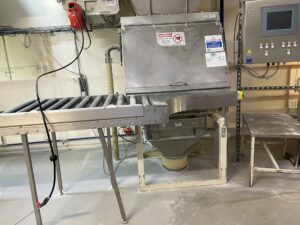
Image of warehouse
RMS area – where the incident happened

Although the company had a “Procedure for Pallet Handling Policy” not all employees working in the RMS area had been trained on it. No evidence was found that Mr Snowden had been trained on the procedure.

Systagenix Wound Management Manufacturing Limited t/a Scapa Healthcare Limited of 997 Manchester Road, Ashton Under Lyne, pleaded guilty to a single charge of breaching section 2(1) of the Health and Safety at Work etc. Act 1974.

The court was told that the main failings of the company were:

The company was fined £600,000 and ordered to pay £15,000 in costs at Leeds Magistrates’ Court on 12 November 2025.

Further information is available in HSE’s Guidance ‘Pallet Safety’ – PM15 Pallet safety – HSE.

Following the hearing, HSE Inspector Kirsty Storer-Cottrell said:

“This tragic incident could have been easily prevented had a suitable and sufficient risk assessment taken place and the actions identified implemented. Training, monitoring and supervision along with risk control measures, including not double stacking these pallets, would have prevented a fatality happening.”

This prosecution was brought by HSE Enforcement Lawyer Jonathan Bambro and Paralegal Officer Rebecca Withell.

Further information:

  1. The Health and Safety Executive (HSE) is Britain’s national regulator for workplace health and safety. We prevent work-related death, injury and ill health through regulatory actions that range from influencing behaviours across whole industry sectors through to targeted interventions on individual businesses. These activities are supported by globally recognised scientific expertise. hse.gov.uk
  2. More about the legislation referred to in this case can be found at: legislation.gov.uk/
  3. HSE news releases are available at: http://press.hse.gov.uk
  4. HSE guidance and information on Pallet safety is available here: Pallet safety – HSE

Home improvement company fined after worker sustains life-changing injuries in fall

A Staffordshire-based home improvement company has been fined £16,500 after a worker sustained serious injuries when he fell from height while carrying out gutter replacement work.

Birmingham Magistrates’ Court heard how the worker had been tasked with replacing guttering on a domestic garage building in Hednesford on 12 August 2024. He had not been given any instructions on how to carry out the work safely and had not been told that a shed was restricting access to some parts of the guttering.

Whilst reaching from his position on the shed to the last gutter bracket, the worker fell approximately 7 feet to the ground below. The fall resulted in serious injuries, including fractures to his shoulder, upper arm, eye socket and nose.

An investigation by the Health and Safety Executive (HSE) found that the company, Goliath Home World Limited, failed to properly plan the work, put in place measures to prevent or protect against a fall from height, or provide adequate information and instruction to its worker.

The Work at Height Regulations 2005 require activities to be properly planned, appropriately supervised and carried out safely. Guidance on achieving compliance with the law and keeping workers safe is available on the HSE website.

Goliath Home World Limited of Goliath House, Navigation Way, Cannock, Staffordshire, WS11 7XU, pleaded guilty to breaching Section 3(1) of the Health and Safety at Work etc. Act 1974. The company was fined £16,500  and ordered to pay costs of £5,994.55 at a hearing on 12 November 2025.

Speaking after the hearing, HSE Inspector, Rob Gidman, said: “This incident highlights the importance of undertaking a thorough assessment of the risks for all work at height activities and ensuring that suitable control measures are implemented. Had the work been properly planned and suitable work equipment provided, this incident would not have happened.”

The HSE prosecution was brought by HSE enforcement lawyer, Arfaq Nabi.

 Further Information:

1.    The Health and Safety Executive (HSE) is Britain’s national regulator for workplace health and safety. We are dedicated to protecting people and places, and helping everyone lead safer and healthier lives.

2.    More information about the legislation referred to in this case is available.

3.    Further details on the latest HSE news releases is available.

4.    Relevant guidance can be found here Working at height: A brief guide.

5.    HSE does not pass sentences, set guidelines or collect any fines imposed. Relevant sentencing guidelines must be followed unless the court is satisfied that it would be contrary to the interests of justice to do so.  The sentencing guidelines for health and safety offences can be found here.
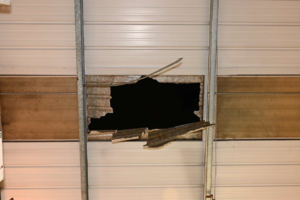


Haulage company fined £250,000 following death of employee

A Middlesbrough road haulage company has been fined £250,000 after a man died while working inside a shipping container.

Gary Lee James, 30 was working for Ward Bros (Malton) Ltd at its yard at South Bank, in the early hours of 8 January 2019, when he suffered a fatal injury.

Mr James and a colleague had been standing up metal frames, each weighing approximately 120kg, within a shipping container, part of what is known as a “devanning” activity.

As the two men lifted the sixth frame, the fifth one fell back towards them, followed by the four others. Mr James was pinned by the neck between the container wall and the fallen frames. Although he was transported to James Cook University Hospital after suffering a cardiac arrest, he was sadly pronounced dead three days later.

An investigation by the Health and Safety Executive (HSE) found the frames had not been secured to the container wall. It found that Ward Bros (Malton) Ltd failed to ensure, so far is reasonably practicable, the health, safety and welfare of its employees, including Gary James, at work in connection with the devanning of containers.

Despite the company having never undertaken devanning work before, it failed to create a suitable and sufficient written risk assessment. There was no clear and properly planned safe system of work for its employees.

Instead, the company embarked upon an ad-hoc and ultimately unsafe system of work, which was not effectively communicated to the employees who were left largely unsupervised to determine their own methods of devanning the containers.

HSE guidance states that employers must identify hazards, assess risk, and take action to eliminate or control those risks. Employers are not expected to eliminate all risks but they need to do everything ‘reasonably practicable’ to protect people from harm. This means balancing the level of risk against the measures needed to control the real risk in terms of money, time or trouble. Further guidance can be found here: https://www.hse.gov.uk/simple-health-safety/risk/steps-needed-to-manage-risk.htm

Ward Bros (Malton) Ltd, of Dormor Way, South Bank, Middlesbrough, pleaded guilty to breaching Section 2(1) of the Health and Safety at Work etc. Act 1974. The company was fined £250,000 with costs to be determined at a later date at Teesside Crown Court on 31 October 2025.

HSE Inspector Joy Craighead said: “This was a tragic and preventable incident, that cost a young man his life.

“Every year, a significant proportion of accidents, many of them serious and sometimes fatal, occur as a result of poorly planned work activity.

“In this case there was a complete failure to risk assess and implement control measures. Had the company done so, Mr James would still be alive.”

This HSE prosecution was brought by HSE enforcement lawyer Jonathan Bambro and law clerk Rebecca Forman.

Further information:

  1. The Health and Safety Executive (HSE) is Britain’s national regulator for workplace health and safety. We are dedicated to protecting people and places, and helping everyone lead safer and healthier lives.
  2. More information about the legislation referred to in this case is available.
  3. Further details on the latest HSE news releases is available.
  4. Relevant guidance can be found here: https://www.hse.gov.uk/simple-health-safety/risk/steps-needed-to-manage-risk.htm
  5. HSE does not pass sentences, set guidelines or collect any fines imposed. Relevant sentencing guidelines must be followed unless the court is satisfied that it would be contrary to the interests of justice to do so.  The sentencing guidelines for health and safety offences can be found here.



Sign fitting company and director fined after fatal fall from scaffolding

A shop sign making and fitting company and its director have been fined after an employee fell from an unguarded scaffolding tower and later died from his injuries.

Mr Mughal, 64, was working for WH Metals Limited installing a metal sign to the front of the shop in Darwen, Lancashire on 22 November 2022. He was standing on the platform of a scaffolding tower without any edge protection in place, when he fell to the pavement below.

Although the height he fell from was only six feet, it was enough for him to suffer serious head injuries which resulted in him being taken to hospital by ambulance. Sadly, he died from his injuries four days later.

The scaffolding tower without edge protection

An investigation by the Health and Safety Executive (HSE) found that WH Metals Limited and its director, who was on site at the time of the incident, failed to prevent the risk of a fall from a distance liable to cause personal injury.

HSE guidance on working at height is available on the HSE website: Work at height – HSE. The preferred method of fall prevention on tower scaffolds is the fitting of suitable guardrails around the platform. This is a well-known and long-established control measure. If this had been in place at the time of the incident, it is highly unlikely that the worker in this case would have died.

Mr Asad Iftikar, Mr Mughal’s son, said: “My father was like a roof to the family, and since his death, I and my siblings have felt alone. He always supported us in everything we did; he would help us make all the important decisions in our lives.”

WH Metals Limited of Navigation Way, Preston, pleaded guilty to breaching Section 2(1) of the Health and Safety at Work etc Act 1974 and was fined £45,000. At Bolton Magistrates Court on 23 September 2025, the company was also ordered to pay costs of £4,826.

Mr Waqas Hanif, the company’s director, pleaded guilty to breaching Section 37 of the Health and Safety at Work etc Act 1974 and was given a 26-week custodial sentence, suspended for 12 months. He was also ordered to pay costs of £4,846.

HSE inspector David Hobbs said: “Work at height remains one of the leading causes of workplace injury and death. In this case, a fall of six feet was enough to cause a death, highlighting the dangers.

“This incident highlights the importance of suitable control measures, such as edge protection, to minimise the risk of serious personal injury.”

This HSE Prosecution was brought by enforcement lawyer Samantha Wells and paralegal officer Rebecca Withell.


Further information

  1. The Health and Safety Executive (HSE) is Britain’s national regulator for workplace health and safety. We are dedicated to protecting people and places, and helping everyone lead safer and healthier lives.
  2. More information about the legislation referred to in this case is available.
  3. Further details on the latest HSE news releases is available.
  4. Relevant guidance can be found here: Work at height – HSE.
  5. HSE does not pass sentences, set guidelines or collect any fines imposed. Relevant sentencing guidelines must be followed unless the court is satisfied that it would be contrary to the interests of justice to do so. The sentencing guidelines for health and safety offences can be found here.
NHS trust fined after employee found unconscious in manhole

Kettering General Hospital NHS Foundation Trust has been fined £480,000 after an employee suffered a brain injury after he was found unconscious in a manhole.

The man had been unblocking a drain at the hospital on 1 February 2022 when he was discovered by other members of staff.

He was rescued from the manhole by Northamptonshire Fire and Rescue Service and was treated at hospital for acute sulphate intoxication. This resulted in a traumatic brain injury, and ongoing issues with memory loss and nerve damage.

HSE guidance can be found at: Introduction to working in confined spaces (hse.gov.uk)

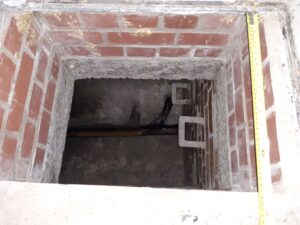
The worker was found unconscious in a manhole (pictured)

A Health and Safety Executive (HSE) investigation found that Kettering General Hospital NHS Foundation Trust failed to identify the manhole as a confined space, and thereafter, failed to properly risk assess the activity. The trust failed to prevent entry of employees into confined spaces at the site – which was custom and practice for a number of years. The trust also failed to identify a safe system of work or method statement for clearing blocked drains and no precautions were identified to reduce the risk of injury.

HSE’s investigation also highlighted that no confined space training was given to members of the estates team and insufficient information and instruction was provided to those involved as to the methods to be adopted, the risks involved and the precautions to be taken, when clearing drains and entering deep drains or manholes.

Kettering General Hospital NHS Foundation Trust, of Rothwell Road, Kettering, Northants, pleaded guilty to breaching Section 2(1) of The Health & Safety at Work etc. Act 1974. The trust was fined £480,000 and ordered to pay £4,286.15 in costs at Wellingborough Magistrates’ Court on 9 January 2024.

The prosecution was brought by HSE enforcement lawyer Samantha Wells.

HSE inspector Heather Campbell said: “This case highlights the dangers of working in confined spaces. The manhole should have been identified as a confined space, and risk assessed accordingly. Safe systems of work for entry into confined spaces should have been in place, such as those outlined in the HSE’s Approved Code of Practice.”

Notes to Editors:

  1. The Health and Safety Executive (HSE) is Britain’s national regulator for workplace health and safety. We prevent work-related death, injury and ill health through regulatory actions that range from influencing behaviours across whole industry sectors through to targeted interventions on individual businesses. These activities are supported by globally recognised scientific expertise. www.hse.gov.uk
  2. More about the legislation referred to in this case can be found at: www.legislation.gov.uk/
  3. HSE news releases are available at http://press.hse.gov.uk

Company and director sentenced after worker fractures arm and leg

A company and its director have been sentenced after an employee fell from height and suffered serious injuries.

Andrew Smith fractured his left femur, left elbow, left arm and pelvis after falling approximately three metres off a ladder on 28 July 2021.

He had been working for Profascias Ltd at Park Lane Primary School in Tilehurst, Reading.

The company had been hired to replace guttering and supply fascia boards and soffits at the infant school.

The ladder Mr Smith had been working from against the school wall slipped, causing the 53-year-old to fall to the ground.

He spent 16 days in hospital as a result of his injuries and later underwent surgery to add a bolt to his hip and metal plate to his arm.

A Health and Safety Executive (HSE) investigation found there had been insufficient planning of the work at height by Profascias Ltd and its director, John Nolan. A safe platform from which to work, such as a properly erected scaffold, should have been provided as workers needed both hands to carry out the work and could not therefore work safely from a ladder. Ladders should only be used for access or, where it is not reasonably practicable to provide safer working platforms, for short-term work of up to 30 minutes where workers can normally maintain three points of contact.

HSE guidance can be found at: Work at height – HSE

Profascias Ltd, of Sandy Lane, Pamber Heath, Tadley, Hampshire, pleaded guilty to breaching Section 4(1) of the Work at Height Regulations 2005. The company was fined £6,000 and ordered to pay £2,000 in costs at Slough Magistrates’ Court on 18 December 2023.

Imposing the sentence, District Judge Goozee remarked: “Because of the financial penalty, the company may end up being wound up completely; but that is a consequence of the conviction.”

John Nolan, of Sandy Lane, Pamber Heath, Tadley, Hampshire, pleaded guilty to breaching Section 4(1) of the Work at Height Regulations 2005 by virtue of Section 37(1) of the Health and Safety at Work etc. Act 1974. He was handed a 12-month community order where he must undertake 180 hours of unpaid work and ordered to pay £1,000 in costs at Slough Magistrates’ Court on 18 December 2023.

HSE inspector Rachael Newman said: “This worker’s injuries were serious. This incident could have been avoided through the selection of suitable work equipment to prevent persons from falling.

“Falls from height remain one of the most common causes of work-related fatalities and injuries in this country and the risks associated with working at height are well known.”

This HSE prosecution was brought by HSE enforcement lawyer Jon Mack and supported by HSE paralegal officer Cristina Alcov.

Notes to editors:

  1. The Health and Safety Executive (HSE) is Britain’s national regulator for workplace health and safety. We prevent work-related death, injury and ill health through regulatory actions that range from influencing behaviours across whole industry sectors through to targeted interventions on individual businesses. These activities are supported by globally recognised scientific expertise.
  2. More information about the legislation referred to in this case is available.
  3. Further details on the latest HSE news releases is available.

North Wales health board fined after failings resulted in woman’s death

One of the largest health boards in Wales has been fined £200,000 after a patient died in its care.

Llandudno Magistrates’ Court heard that 46-year-old Dawn Owen was found unconscious at the Hergest Unit – a secure mental health unit – at Ysbyty Gwynedd in Bangor on 20 April 2021.

Dawn’s family have called on Betsi Cadwaladr University Health Board to act on the findings of a Health and Safety Executive (HSE) investigation, calling her death ‘wholly avoidable’ and ‘completely unnecessary’.

“Staff complacency at all levels contributed in this case, as well as numerous policy breaches and issues between staff and management,” they said.

“We have been tragically let down by the Hergest Unit, who we believed, were providing a safe place for Dawn and the care that she urgently needed.”

Dawn Owen

The HSE investigation found no risk assessment had been carried out when she was admitted and due to communication failure on transfer to the ward, staff had wrongly relied on an assessment carried out for a previous admission a year earlier. This failure resulted in Dawn’s high risk of self-harm being tragically missed.

Staff also failed to place her in an anti-ligature bed and had de-escalated the completion of regular monitoring checks. Dawn was also provided with a dressing gown and belt, of which the belt was later used as a ligature.

There were several missed opportunities during the course of the admission, where Dawn had expressed the desire to self-harm. This did not trigger any review of the care and management of the patient.

“Dawn was a highly vulnerable person and had been battling her demons and addictions for many years,” the family went on to say.

“She was a bright, happy person who always had a positive attitude. She had a heart of gold and would always help others in need – she would give away her last penny to do so.

“Betsi Cadwaladr must now act on the findings of this investigation and keep vulnerable patients safe at the unit.

“We hope as a family that Dawn may now rest in peace – her battles with mental health are now over.

“We as a family would like to thank the Coroner and HSE for their diligence in ensuring there was a thorough investigation into Dawn’s untimely death.”

Betsi Cadwaladr University Health Board have pleaded guilty to breaching Section 3 (1) of the Health and Safety at work Act 1974 and have been fined £200,000 and ordered to pay costs of £13,174 at Llandudno Magistrates’ Court on 18 December 2023.

Speaking after the case, HSE inspector Sarah Baldwin-Jones said: “This incident could so easily have been avoided had a thorough risk assessment been carried out on admission, identifying in this case, the change in Dawn’s condition and risk of self-harm.

“Where a patient presents with a risk of self-harm, there is a requirement upon a health board to manage the patient’s safety, to avoid incidents like this. Devices such as reduced ligature beds and removing ligature anchor points and ligatures in the ward environment, can assist staff manage these risks. Importantly, the health board should have trained staff in managing this risk in patients considering self-harm.

“This would enable staff to identify the trigger points and take appropriate actions. The health board also failed to monitor the management of patients, so that any patient emotional or behavioural changes can be identified and managed.

“Health Boards and Trusts should be aware that HSE will not hesitate to take appropriate enforcement action against those that fall below the required standards. Our thoughts remain with Dawn’s family and friends.”

This prosecution was led by HSE enforcement lawyer Samantha Wells.

Notes to editors:

  1. The Health and Safety Executive (HSE) is Britain’s national regulator for workplace health and safety. We prevent work-related death, injury and ill health through regulatory actions that range from influencing behaviours across whole industry sectors through to targeted interventions on individual businesses. These activities are supported by globally recognised scientific expertise.
  2. More information about the legislation referred to in this case is available.
  3. Further details on the latest HSE news releases is available.

Roofing firm and company business partner sentenced following HSE investigations

A roofing company has been fined a total of £881,000 after two workers were seriously injured during two separate incidents.

Billy Hewitt, a worker at Mitie Tilley Roofing Limited, fractured his pelvis after falling through a factory roof in Newcastle. Meanwhile, a 24-year-old labourer employed by RM Scaffolding broke his femur after falling through the roof of a building in Swansea while working on a project run by Mitie Tilley Roofing Limited.

The Health and Safety Executive (HSE) investigated both incidents and prosecuted Mitie Tilley Roofing Limited. Paul Robinson, a business partner at RM Scaffolding, was also prosecuted by HSE following the incident in Swansea.

On 11 November 2019, Billy Hewitt, 60, fractured his pelvis, left wrist and eye socket after falling through the roof of a factory in Throckley, Newcastle upon Tyne.

He had been replacing a skylight when he fell and landed on the concrete floor seven metres below. Billy was in hospital for three weeks after the incident.

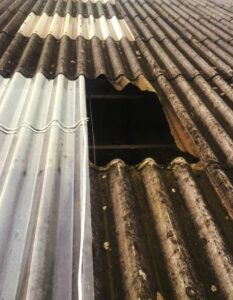
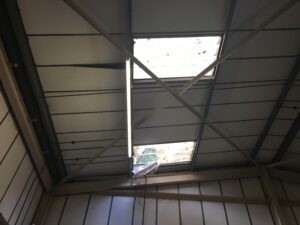
The roof Billy had been working on

Billy, who is from Whickham, said: “You don’t go to work in the morning and expect to end up in intensive care but that’s what happened to me. It’s been four years since my accident and I don’t know really do anything with my days. I really miss work. I was a roofer for 40 years but this accident changed everything because I still can’t work. I used to earn a good wage, but now I’m classed as 51% disabled and I rely entirely on benefits.”

The HSE investigation found Mitie Tilley Roofing Limited failed to properly plan and carry out the work to replace the skylight. The work at height had not been thoroughly assessed as a standalone piece of work. The investigation also found that safety nets were in place on other sections of the roof but not directly underneath the skylight where the accident happened.

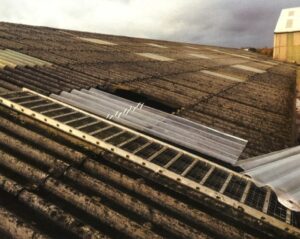
The roof Billy had been working on

HSE guidance can be found at: Work at height – HSE

On 3 June 2019, a scaffold labourer, employed by RM Scaffolding, was crossing a fragile roof when he fell through a skylight at a unit at Plasmarl Industrial Estate in Swansea. The 24-year-old landed on his back approximately 20 feet on the floor below. He fractured his femur and suffered a blood clot in one of his main arteries, which required long-term medication.

The roof of the unit at Plasmarl Industrial Estate

HSE found that Mitie Tilley Roofing Limited, the principal contractor for the project, failed to plan, manage and monitor the work undertaken by RM Scaffolding, the sub-contractor, to prevent unsafe work practices being used. Paul Robinson, a business partner at RM Scaffolding, failed to plan the work properly and ensure staff had appropriate skills, knowledge and experience. Robinson also failed to provide appropriate fall protection on the roof.

Following the incident on 11 November 2019, Mitie Tilley Roofing Limited, of London Bridge Street, London, was found guilty to breaching Section 2(1) of the Health and Safety at Work etc. Act 1974 and breaching Regulation 4(1) of the Work at Height Regulations 2005, following a two-week trial in April 2023. Following a three-day sentencing hearing at Newcastle Crown Court on 6 December 2023, Mitie Tilley Roofing Limited was fined £575,000 and ordered to pay £84,940.08 in costs.

Following the incident on 3 June 2019:

HSE principal inspector John Heslop said: “Too many workers are injured or die every year as a result of falling through fragile rooflights without adequate fall prevention or protection measures in place.

“These were both shocking incidents, which had a lasting impact on those who were injured.

“The law is clear about the measures needed to ensure safety when working on fragile roofs and there is a wide range of guidance available from HSE and the Construction industry on correct ways of working. HSE will not hesitate to take action against employers who do not do all that they should to keep people safe.”

Notes to editors:

  1. The Health and Safety Executive (HSE) is Britain’s national regulator for workplace health and safety. We prevent work-related death, injury and ill health through regulatory actions that range from influencing behaviours across whole industry sectors through to targeted interventions on individual businesses. These activities are supported by globally recognised scientific expertise.
  2. More information about the legislation referred to in this case is available.
  3. Further details on the latest HSE news releases is available.

Company fined as stunt performer sustains life-changing injuries during filming of Fast and Furious movie

A production company has been fined after a stunt performer was injured during the filming of Fast and Furious 9: The Fast Saga.

Joe Watts, from Surrey, sustained life-changing injuries after he fell approximately 25 feet at Warner Bros. studios in Leavesden, Hertfordshire on 22 July 2019.

He had been filming a fight scene for the action movie.

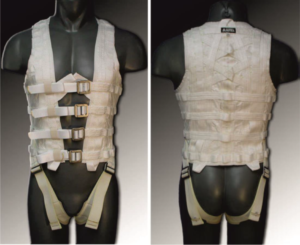
Mr Watts fell 25 feet onto the concrete floor below when the line on his stunt vest became detached.

The stunt vest Mr Watts was wearing

As a result of his fall, Mr Watts suffered a fractured skull and a severe traumatic brain injury, which has resulted in permanent impairment and disability.

A Health and Safety Executive (HSE) investigation found several failings by FF9 Pictures Limited. FF9 Pictures Limited’s risk assessment failed to address the potential issue of a rope snap or a link failure, there was no system for double checking that the link had been properly engaged and tightened. There was also no system for checking the link for signs of deformation or stretching between takes, the manufacturer’s website stated that the link used was forbidden for use as PPE and shock loading should be avoided. On top of that, six-monthly inspections of harnesses were required but Mr Watts’ harness had not been inspected in the last six months and FF9 Pictures Limited did not extend the crash matting needed to mitigate the consequences of an unintended fall following changes to the set and the sequence of the stunt.

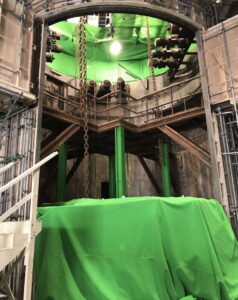
The incident took place at Warner Brothers’ studios in Leavesden

FF9 Pictures Limited, of St. Giles High Street, London, pleaded guilty to breaching Section 3(1) of the Health and Safety at Work etc. Act 1974. The company was fined £800,000 and ordered to pay £14,752.85 in costs at Luton Magistrates’ Court on 24 November 2023.

HSE inspector Roxanne Barker said: “Mr Watts’ injuries were life-changing and he could have easily been killed. In stunt work, it is not about preventing a fall but minimising the risk of an injury.”

This prosecution was brought by HSE enforcement lawyer Rebecca Schwartz and supported by HSE paralegal officer Gabrielle O’Sullivan.

Sentencing, district judge Talwinder Buttar stated Mr Watts is fortunate to be alive and added that she was astonished that the crash matting was not adequate.

Notes to Editors:

  1. The Health and Safety Executive (HSE) is Britain’s national regulator for workplace health and safety. We prevent work-related death, injury and ill health through regulatory actions that range from influencing behaviours across whole industry sectors through to targeted interventions on individual businesses. These activities are supported by globally recognised scientific expertise. hse.gov.uk
  2. More about the legislation referred to in this case can be found at: legislation.gov.uk/
  3. HSE news releases are available at http://press.hse.gov.uk

Priory Healthcare fined following patient death

The company that runs The Priory Hospital has been fined for failing to ensure the safety of patients on the hospital’s Emerald Ward following the death of 21-year-old Francesca Whyatt.

Francesca, from Knutsford in Cheshire, was found unconscious at The Priory Hospital in Roehampton, London. She died three days later.

Priory Healthcare has been fined £140,000 after an investigation by the Health and Safety Executive (HSE).

Francesca died on 28 September 2013. She had been transferred from a local hospital to the Emerald Ward, a specialist unit at The Priory Hospital, in March 2013.

She was found unconscious in a patient lounge on the top floor of the hospital on 25 September.

Francesca Whyatt

Francesca had managed to make her way to the lounge as the hospital responded to an incident involving other patients and used the tights that she was wearing as a ligature.

An investigation by HSE concluded Priory Healthcare Limited failed to ensure the provision of in-patient psychiatric treatment was carried out in such a way that patients were not exposed to risks to their health and safety.

Daniel Whyatt, Francesca’s brother, said his sister was a “truly selfless [and] special individual.”

Daniel said: “The tragic and untimely death of our beloved sister has had a profound impact, and has repercussions well beyond those conceivable to anyone outside of our little family unit. It has invariably ruined all of our lives, and has muddied the precious memories we have of Francesca.

“It is a strange thing to note that it is just as difficult to write her name as it is to speak it, all these years later it is still so raw. We should be able to talk about her fondly, with a smile… instead every mention of her is done so in anger and rage and it feels like being stabbed in the heart.

“It is extremely overwhelming. Francesca had a proclivity for helping everyone she met and changed their lives in positive and meaningful ways, often at her own expense. She was a truly selfless, special and unique individual.”

Priory Healthcare Limited, of Hammersmith Road, Hammersmith, London, pleaded guilty to failing to discharge a duty under Section 3(1) Health and Safety at Work etc. Act 1974. The company was fined £140,000 at Southwark Crown Court on 14 November 2023. Costs will be decided at a later date.

Paul Hems, HSE’s head of operations for London, said: “This incredibly sad case highlights the need for suitable and sufficient systems to be put in place to monitor patients.

“Employers should be aware that HSE will hold to account those who do not comply with health and safety legislation. It should also be noted that similar incidents which have taken place after April 2015 will be enforced by the Care Quality Commission (CQC).”

Notes to Editors:


  1. The Health and Safety Executive (HSE) is Britain’s national regulator for workplace health and safety. We prevent work-related death, injury and ill health through regulatory actions that range from influencing behaviours across whole industry sectors through to targeted interventions on individual businesses. These activities are supported by globally recognised scientific expertise.
  2. More information about the legislation referred to in this case is available.
  3. Further details on the latest HSE news releases is available.
  4. Following the Mid Staffordshire NHS Foundation Trust Public Inquiry and the publication of the Francis Report, the Care Quality Commission (CQC) was given powers to carry out criminal investigations and bring prosecutions. These took effect in April 2015. Since that time, in England, the CQC has been the regulator for patient health and safety matters, with HSE regulating health and safety for workers and members of the public. A revised memorandum of understanding reflecting these changes and setting out areas of responsibility was agreed by the two organisations which is available on HSE’s website. MoU between the Care Quality Commission (CQC) and HSE