Press release

Animal feed manufacturer fined £500,000 after worker seriously injured

A Yorkshire animal feed manufacturer has been fined £500,000 after a worker lost part of his foot when it was entangled in machinery.

William Thompson (York) Limited pleaded guilty after failing to prevent access to a rotating auger – a tool consisting of a central shaft with a blade wrapped around it – which is designed to transport excess feed away from a press.

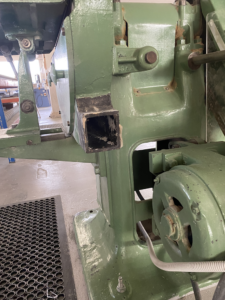
The pressing machine at the factory

The 41-year-old had been working as a supervisor at the company’s Jubilee Mill site in York on 14 November 2023. At the time of the incident, the man had been trying to resolve a maintenance issue with the machinery. However, he was able to open the press while its parts remained in operation at significant speed. His foot became entangled in the rotating auger and he sustained injuries so serious he remained in hospital for a period of six weeks.

An investigation by the Health and Safety Executive (HSE) found that William Thompson (York) Limited failed to prevent access to dangerous parts of the machinery and also to carry out a suitable risk assessment of the work being done.

A CCTV still shows only two bars of guarding above the auger – this allowed the worker’s foot to slip through to the blade below

HSE guidance states employers must take effective measures to prevent access to dangerous parts of machinery. This will normally be by fixed guarding but where routine access is needed, interlocked guards may be needed to stop the movement of dangerous parts before a person can reach the danger zone. Further guidance can be found here: Provision and Use of Work Equipment Regulations 1998 (PUWER) – HSE.

William Thompson (York) Limited, of Main Street, Malton, North Yorkshire, pleaded guilty to breaching Section 2(1) of the Health and Safety at Work Act etc 1974. The company was fined £500,000 and ordered to pay £4,455 in costs at York Magistrates court on 18 November 2025.

HSE Inspector Shauna Halstead said: “This company’s failures resulted in a man sustaining life-changing injuries.

“Too many workers are injured or killed every year because of failures to guard dangerous parts of machinery.

“Companies must implement safe working practices when carrying out maintenance operations.

“We will not hesitate to take action against companies which do not do all they should to keep people safe when working with machinery.

This HSE prosecution was brought by HSE enforcement lawyer Arfaq Nabi and paralegal officer Sarah Thomas.

Further information:

  1. The Health and Safety Executive (HSE) is Britain’s national regulator for workplace health and safety. We are dedicated to protecting people and places, and helping everyone lead safer and healthier lives.
  2. More information about the legislation referred to in this case is available.
  3. Further details on the latest HSE news releases is available.
  4. Relevant guidance can be found here Provision and Use of Work Equipment Regulations 1998 (PUWER) – HSE
  5. HSE does not pass sentences, set guidelines or collect any fines imposed. Relevant sentencing guidelines must be followed unless the court is satisfied that it would be contrary to the interests of justice to do so.  The sentencing guidelines for health and safety offences can be found here.

Plastics firm fined following fatal machinery accident

A plastics conversion company based in Derbyshire has been fined £277,500 after an employee sustained fatal injuries when he became trapped in the moving parts of an unguarded machine.

Paul Whalley, 46, was employed by Reflex Flexible Packaging Ltd at their factory on Amber Drive, Langley Mill, when the incident occurred.

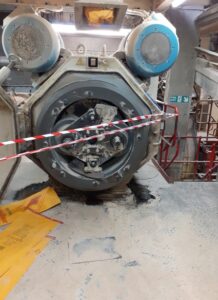
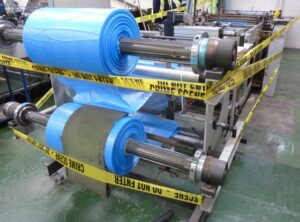
On 29 May 2020, Mr Whalley entered an opening in the side of a plastic conversion machine that permitted whole-body access to dangerous moving parts. The area contained several unguarded mechanisms, and Mr Whalley became trapped in the machine.

Despite efforts by the emergency services, including cutting conveyor belts and rollers to free him, he sadly died at the scene from crush asphyxia.

Reflex Flexible Packaging machine

An investigation by the Health and Safety Executive (HSE) found that Reflex Flexible Packaging Ltd failed to carry out a suitable and sufficient risk assessment for operation of the machine.

The company had not installed appropriate guarding to prevent access to dangerous parts and had no written safe systems of work or isolation procedures in place.

HSE guidance states that employers must take effective measures to prevent access to dangerous parts of machinery.

This typically involves fixed guarding, but where routine access is required, interlocked guards may be needed to stop movement before a person can reach the danger zone.

Further information is available in HSE’s Safe Use of Work Equipment – Provision and Use of Work Equipment Regulations 1998 (PUWER) and its Approved Code of Practice: Safe use of work equipment (PUWER).

Reflex Flexible Packaging Ltd, of Hamilton Way, Mansfield, Nottinghamshire, pleaded guilty to breaching Section 2(1) of the Health and Safety at Work etc. Act 1974.

The company was fined £277,500 and ordered to pay £20,000 in costs at Derby Crown Court on 5 November 2025.

Following the hearing, HSE Inspector Lee Greatorex said:

“This tragic incident could have been easily prevented had a suitable and sufficient risk assessment taken place and the actions identified implemented. The accident is made worse by the fact that the company’s own internal health and safety department had identified a lack of risk assessments 18 months before the accident, but no follow-up action was taken to remedy this failing.

“This wholly avoidable incident was caused by the failure of Reflex Flexible Packaging Ltd to guard the dangerous parts of the machine Mr Whalley was operating. It was obvious that these moving parts were not guarded and presented a clear risk of injury. Had the company fitted suitable guarding, this fatality would not have occurred.”

This prosecution was brought by HSE Enforcement Lawyer Edward Parton and Paralegal Officer Rebecca Withell.


Further information:

  1. The Health and Safety Executive (HSE) is Britain’s national regulator for workplace health and safety. We are dedicated to protecting people and places, and helping everyone lead safer and healthier lives.
  2. More information about the legislation referred to in this case is available.
  3. Further details on the latest HSE news releases are available at press.hse.gov.uk.
  4. Relevant guidance can be found here: Safe use of work equipment (PUWER).
  5. HSE does not pass sentences, set guidelines, or collect any fines imposed. Relevant sentencing guidelines must be followed unless the court is satisfied that it would be contrary to the interests of justice to do so. The sentencing guidelines for health and safety offences can be found here.
Waste and recycling company fined after worker injured cleaning machinery


A North East waste and recycling company has been fined £270,000 after an employee was injured while cleaning a waste picking line.

On 24 March 2023, during cleaning of a waste picking line, an employee became trapped in a section of machinery when the line was accidentally switched on.

An investigation by the Health and Safety Executive (HSE) found the company failed to ensure an isolation procedure was correctly implemented while employees were cleaning machinery at its site at Aycliffe Quarry, Aycliffe Village, County Durham.

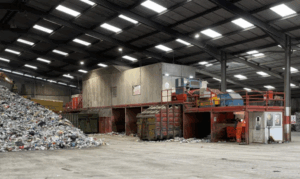
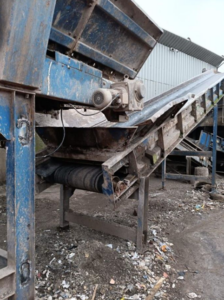
Machinery at the site at Aycliffe Quarry

The incident occurred when a senior supervisor, restarted the machinery after mistaking the worker in question for a colleague in similar clothing nearby.

The employee suffered a fractured shoulder, torn ligaments, and a broken finger.

This was not the first serious incident at the site. In December 2015, one worker was killed and another suffered life-changing injuries on a separate waste sorting line due to similar failures to follow proper isolation and lock-off procedures.

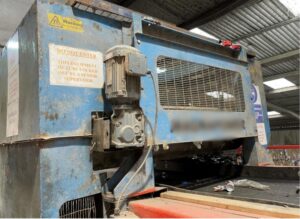
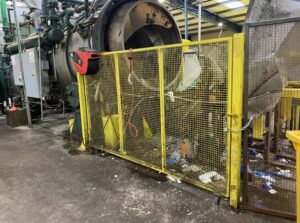
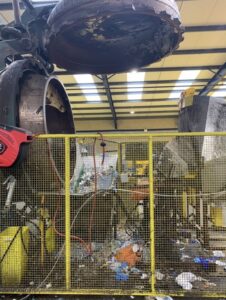
Waste sorting line machinery

HSE guidance highlights the importance of following safe isolation and lock-off procedures before any maintenance or cleaning work is carried out. Employers must ensure all machinery is properly isolated from power sources, and that systems are regularly monitored and reviewed to prevent inadvertent start-up. Further guidance is available here: The safe isolation of plant and equipment – HSE

Stonegrave Aggregates Limited, part of the Ashcourt Group, of Halifax Way, Pocklington, pleaded guilty to breaching Section 2(1) of the Health and Safety at Work etc. Act 1974. The company was fined £270,000 and ordered to pay full costs of £15,637 at Teesside Crown Court.

Following the hearing, HSE inspector Darian Dundas said:

“Effective monitoring, auditing and review of isolation systems is essential to demonstrate that they are working and controlling risk. Incidents like this can and should be prevented by following robust lock-off procedures.”

This prosecution was brought by HSE Enforcement Lawyer Karen Park, supported by Paralegal Officer Rebecca Foreman.


Further information:

  1. The Health and Safety Executive (HSE) is Britain’s national regulator for workplace health and safety. We are dedicated to protecting people and places, and helping everyone lead safer and healthier lives.
  2. More information about the legislation referred to in this case is available.
  3. Further details on the latest HSE news releases is available.
  4. HSE does not pass sentences, set guidelines or collect any fines imposed. Relevant sentencing guidelines must be followed unless the court is satisfied that it would be contrary to the interests of justice to do so.  The sentencing guidelines for health and safety offences can be found here.
  5. HSE guidance can be found here: The safe isolation of plant and equipment – HSE

TATA Steel fined £1.5 million after father-of-three crushed to death at Port Talbot plant

Tata Steel has been fined £1.5 million following the death of a contractor at its Port Talbot steelworks plant.

Justin Day’s family learnt of his death while they were waiting for him at his youngest son’s school rugby match.

Justin and Zoe Day

The much-loved father-of-three and grandfather was working at the steel manufacturer’s site in South Wales when he was crushed to death by a piece of machinery on 25 September 2019.

Maintenance work to replace a lift cylinder on a large conveyor system had been completed earlier that day, and the system was in the process of being put back into service when a hydraulic leak was found. A radio call was sent out for Justin, 44, to resolve the issue at about 2pm.

Although power was isolated to part of the system, other sections remained live. As staff worked on the lower level to fix the leak, Justin returned to the floor above and climbed into the conveyor system. His presence triggered sensors that activated a moving beam in a live section, fatally injuring him. He was sadly pronounced dead at the scene.

Tata Steel failed to ensure the conveyor system was properly isolated and guarded. The company did not take sufficient steps to manage the safety of the ongoing work.

The Health and Safety Executive (HSE) investigated Justin’s death and brought a prosecution against Tata for what an inspector described as “basic” health and safety failures.

At the time Tata’s Port Talbot plant was the largest steelworks in the UK. Earlier this month, construction started on Tata’s electric arc furnace (EAF) at the same site.

Justin Day’s family had been waiting for him at the rugby field that afternoon, ready to watch his youngest son play in a school match. But instead, they received a devastating phone call telling them he had been involved in an accident. Just an hour later, they learned he had been killed.

Zoe and Justin’s two boys playing rugby. Right: Korey, Justin’s eldest son Left: Kaylan, Justin’s youngest son

Justin would have turned 50 this year. His wife Zoe Day said rugby was his passion, and that when his sons played, he was their “biggest fan”. She “never imagined” to be given the news of the incident while waiting for him to arrive pitch side.

“Since losing Justin I am not the same person I was,” she said. “I have struggled since that day – mentally, I am lost and don’t know where I’m going with life. It’s shattered my whole world.

“We were together for 23 years and did everything together. I can’t put into words how much this has affected me. I am a shadow of my former self and from the day of the incident, my world fell apart.”

The HSE investigation into the incident found Tata Steel failed to ensure the work to replace the lift cylinder was done safely. After the job was completed, the company also failed to properly isolate the conveyor system before Justin returned to address the leak.

Tata Steel also failed to ensure the conveyor system was effectively guarded to prevent access to dangerous moving parts of the machinery.

Tata Steel (UK) Ltd, of Grosvenor Place, London, pleaded guilty to breaching Sections 2(1) and 3(1) of the Health and Safety at Work etc. Act 1974. The company was fined £1.5 million and ordered to pay £26,318.67 in costs at Swansea Crown Court on 31st July 2025.

HSE inspector Gethyn Jones said: “Justin Day’s death could so easily have been prevented. A much-loved family man is not here because of failures in health and safety basics.

“Employers have a responsibility to make sure sufficient procedures are in place to protect workers – both employees and contractors – and that those procedures are understood and followed.

“The dangers of moving machinery are well known. Sufficient risk assessments must be carried out and access to dangerous areas must be properly guarded and controlled.

“This has been a long and thorough investigation, and we believe this is the right outcome. It is clear that Justin’s death has had a devastating impact on his family, his friends and the wider community. Our thoughts remain with them.”

HSE guidance on the safe use of work equipment is available on our website: Safe use of work equipment – HSE

This prosecution was brought by senior enforcement lawyer Jon Mack at HSE.

Notes to Editors

  1. The Health and Safety Executive (HSE) is Britain’s national regulator for workplace health and safety. We are dedicated to protecting people and places and helping everyone lead safer and healthier lives.
  2. More information about the legislation referred to in this case is available.
  3. Further details on the latest HSE news releases is available.
  4. HSE does not pass sentences, set guidelines or collect any fines imposed. Relevant sentencing guidelines must be followed unless the court is satisfied that it would be contrary to the interests of justice to do so.  The sentencing guidelines for health and safety offences can be found here.

  5. Prosecution counsel, Nuhu Gobir, told the court that Tata Steel UK has 10 previous convictions for 17 health and safety offences.

Fine for manufacturing firm after man loses finger in machinery

A manufacturing company has been fined £20,000 after a worker lost part of his finger in machinery at its site in St Helens.

The man was injured at Film & Foil Solutions Ltd, which makes flexible film used in the food industry, on 4 December 2023.

He was using a machine that converts and folds plastic film at the company’s site on Haydock Industrial Estate. He tried to stop the material becoming tangled by using his hand to stop the poorly guarded rotating shaft. However, in doing so, his right index finger made contact with a rotating part of the machine and became entangled.

He was taken to hospital and due to the seriousness of the injuries, surgery was carried out the following day to amputate part of the finger on his dominant right hand. In a statement provided to HSE, the employee, who doesn’t wish to be named, described the impact of the injuries.

He said: “I was unable to carry out normal daily tasks such as tying my shoelaces.

“My right hand is my dominant hand and I find it extremely difficult to write with that hand now.

“I am now self-conscious when I go outside.

“My family have also been affected by the injury as I am unable to do normal things I used to be able to do before.

“As a result of the injury I feel my job prospects have been affected, both now and in the future.”

An investigation by the Health and Safety Executive (HSE) found that Film & Foil Solutions Ltd failed to protect its employees, including ensuring the machinery being used to produce it had suitable guarding. The company had failed to carry out a suitable and sufficient risk assessment, resulting in a failure to provide suitable guarding arrangements on the machine and had failed to put in place an adequate safe system of work. It also revealed inconsistencies and inadequacies in the provision of information, instruction and training for those required to use the machine.

HSE guidance states employers must take effective measures to prevent access to dangerous parts of machinery or to stop the movement of any dangerous parts of it before any part of a person enters a danger zone. This will normally be by fixed guarding, but where routine access is needed, other measures may be needed to stop the movement of dangerous parts, for example by having interlocked guards, pressure mats and electro-sensitive protective equipment (ESPE). Further detailed guidance on safe working with machinery is available.

Film & Foil Solutions Ltd, of North Florida Road, Haydock Industrial

Estate, Haydock, St. Helens, Merseyside, pleaded guilty to breaching Regulation 11(1) of The Provision and Use of Work Equipment Regulations 1998. The company was fined £20,000 and ordered to pay £2,932 in costs at Sefton Magistrates’ Court on 15 May 2025.

HSE inspector Sam Eves said “This incident could so easily have been avoided had the company taken simple steps to guard dangerous parts of machinery and implement safe working practices.

“Companies and individuals should be aware that HSE will not hesitate to take appropriate enforcement action against those that fall below the required standards.”

This HSE prosecution was brought by HSE Enforcement Lawyer Matthew Reynolds and supported by Paralegal Officer Imogen Isaac.


Further information:

  1. The Health and Safety Executive (HSE) is Britain’s national regulator for workplace health and safety. We are dedicated to protecting people and places, and helping everyone lead safer and healthier lives.
  2. More information about the legislation referred to in this case is available.
  3. Further details on the latest HSE news releases is available.
  4. detailed guidance on safe working with machinery is available.
  5. HSE does not pass sentences, set guidelines or collect any fines imposed. Relevant sentencing guidelines must be followed unless the court is satisfied that it would be contrary to the interests of justice to do so.  The sentencing guidelines for health and safety offences can be found here.
Hydraulics company fined after worker’s legs trapped in machine

A hydraulics company, with locations throughout the UK, has been fined after an employee became trapped in a machine that he was working on at a customer’s premises in Plymouth.

David Lawrence, a 63-year-old engineer, was undertaking fault finding on a laser cutting machine for Pearson Hydraulics Ltd, on 26 July 2023, when the cutting bed of the machine dropped and trapped both of his legs. After spending five weeks in hospital, Mr Lawrence had to have his right leg amputated above the knee. Despite extensive surgery to save his left leg, Mr Lawrence faces the possibility of having it amputated in the future.

David Lawrence suffered life-changing injuries when the machinery trapped both of his legs

An investigation by the Health and Safety Executive (HSE) found that Pearson Hydraulics Ltd did not have a safe system of work in place for maintenance activities  carried out by its engineers at its customer’s premises. It failed to carry out a suitable and sufficient risk assessment of the work to be undertaken by Mr Lawrence and there had been a total failure to monitor and supervise his work.  The investigation also identified that Mr Lawrence had not been adequately trained by his employer and that his knowledge of hydraulic systems on laser cutting machinery was inadequate, preventing him from carrying out the work safely.

HSE guidance stresses that it is important  these situations are properly assessed. Workers carrying out maintenance activities may need to undertake significant regular risk assessment (as the situation may develop and change in ways that could not be foreseen at the outset. Further information can be found here.

Pearson Hydraulics Ltd of Electric Avenue, Witham St Hughes, Lincoln pleaded guilty to breaching Section 2(1) of the Health and Safety at Work etc. Act 1974. The company was fined £96,333 and ordered to pay £10,701 in costs at Plymouth Magistrates’ Court on 13 March 2025.

HSE inspector Emma O’Hara said “This incident could so easily have been avoided with the correct risk assessment and implementation of a safe working procedure. Pearson Hydraulics Ltd left its employees to work out their own methods of completing fault finding and maintenance tasks, instead of providing them with suitable training and supervision so it could be done safely every time.”

This HSE prosecution was brought by HSE enforcement lawyer Andrew Siddall and paralegal officer Imogen Isaac with counsel Alan Fuller.


Further information:

  1. The Health and Safety Executive (HSE) is Britain’s national regulator for workplace health and safety. We are dedicated to protecting people and places, and helping everyone lead safer and healthier lives.
  2. More information about the legislation referred to in this case is available.
  3. Further details on the latest HSE news releases is available.
  4. HSE guidance about maintaining machinery is available.
  5. HSE does not pass sentences, set guidelines or collect any fines imposed. Relevant sentencing guidelines must be followed unless the court is satisfied that it would be contrary to the interests of justice to do so.  The sentencing guidelines for health and safety offences can be found here.
Animal feed manufacturer fined after employee’s arm severed

An East Yorkshire company has been fined more than half a million pounds after an employee’s lower arm was severed when it became entangled in a conveyor.

Bartosz Gaj, a blender operative, had been attempting to clear a blockage at AB Agri Limited’s premises in Fridaythorpe, Driffield on 3 November 2021.

Mr Gaj’s hand was drawn into the conveyor mechanism, severing the 34-year-old’s right arm below the elbow. He had only been working at the company for a few months at the time of the incident. As a result of his life-changing injury, Mr Gaj was unable to return to work for more than two years. He has had to adapt all aspects of his daily life.

The conveyor had been installed a few months before the incident and was prone to blockages which needed to be cleared by pulling out a manual slide plate, removing the accumulated material and resetting a cut-off switch.

The Health and Safety Executive (HSE) investigation found that operatives routinely cleared blockages themselves if they could be done quickly, even though they had not been adequately trained in isolation procedures. There had been no review of the risk assessment for operating the conveyor, when the new conveyor was installed.

The investigation also found that there was no system for checking that guards and safety features were in place prior to using the conveyor.

HSE guidance states that effective measures should be taken to prevent access to dangerous parts of machinery.  In addition, machinery should be isolated before interventions are carried out.  Employees should be adequately trained in isolation procedures. Further guidance is available on the HSE website.

AB Agri Limited of Weston Centre, Grosvenor Street, London pleaded guilty to breaching Section 2(1) of the Health and Safety at Work etc Act 1974. The company was fined £566,000 and ordered to pay costs of £6,410 at Hull Magistrates’ Court on 5 March 2025.

HSE inspector Sally Gay said: “The life changing injury Mr Gaj suffered could so easily have been avoided by properly assessing the risks, and applying the correct control measures and safe working practices.

“Companies should be aware that HSE will not hesitate to take appropriate enforcement action against those that fall below the required standards.”

This HSE prosecution was brought by HSE enforcement lawyer Jayne Wilson and paralegal officer Lucy Gallagher.


Further information:

  1. The Health and Safety Executive (HSE) is Britain’s national regulator for workplace health and safety. We are dedicated to protecting people and places, and helping everyone lead safer and healthier lives.
  2. More information about the legislation referred to in this case is available.
  3. Further details on the latest HSE news releases is available.
  4. HSE does not pass sentences, set guidelines or collect any fines imposed. Relevant sentencing guidelines must be followed unless the court is satisfied that it would be contrary to the interests of justice to do so. The sentencing guidelines for health and safety offences can be found here.

Wood company fined more than £1million after two workers injured

A multi-national company that manufactures wood-based products has been fined more than £1 million after two workers were injured in separate incidents.

West Fraser (Europe) Ltd, formerly known as Norbord pleaded guilty to several health and safety breaches related to two incidents that took place at its plant in Cowie within six months of each other in 2020.

In the first  Sean Gallagher, 29, a utility operator, suffered serious injuries after his leg became entangled in moving parts at the bottom of a storage bunker in January 2020.

In July of the same year, David McMillan, 39, a scaffolder, plunged more than 13 feet to the ground after a rusty plate gave way on a rooftop gantry.

Both incidents led to investigations by the Health and Safety Executive (HSE). The same company had  been fined more than £2million in 2022 after another employee died after suffering serious burns at the same plant.

Stirling Sheriff Court heard that Mr Gallagher had been employed by the firm for a period of five years, spending the last two of which working at its biomass plant. On 20 January, he noticed a fault on a bunker at the plant.  He initially entered the bunker to carry out an inspection, and did so in accordance with the company’s safe system of work procedure.

However, when he identified further issues later into his shift, he entered the bunker again, but this time had not turned off the power. He became entangled in the machinery and had to use his own phone to alert a control room operator. He was eventually extracted from the machine and taken to hospital, with injuries including compound fractures to the tibia and fibula of his right leg.

As a result of the incident, the company installed a mesh guard across the bunker hatch, which is padlocked shut. It can only be unlocked by the supervisor once the system has been isolated.

The second incident happened on 21 July and resulted in David McMillan suffering multiple fractures to his body, including his neck and ankle. He had been working at height when a plate on the steel gantry gave way causing him to fall to the ground. He spent 20 days in hospital. The subsequent HSE investigation found there was no maintenance schedule or system of checks for the gantry structure. The steel flooring to the gantry was found to have been corroded in places, while some of the welds holding the plates in place were at the point of failure. Following the incident, the gantry was immediately placed out of bounds before it was dismantled and removed from the site.

In relation to the first incident, West Fraser (Europe) Ltd pleaded guilty to failing to comply with regulations 11(1) and (2) of the Provision and Use of Work Equipment Regulations 1998 and section 33(1)(c) of the Health and Safety at Work etc. Act 1974. The company was fined £28,000 at Stirling Sheriff Court on 17 February 2025.

For the second incident, West Fraser (Europe) Ltd pleaded guilty to failing to comply with sections 4(2) and 33(1)(a) of the Health and Safety at Work etc. Act 1974. The company was fined £1,040,000 at Stirling Sheriff Court on 17 February 2025.

Speaking after the hearing, HSE inspector Stuart Easson, said: “This is the second time in five years this company has been handed a large fine for failing to protect workers.

“Although both men sustained very serious injuries in these latest incidents, both are lucky to be alive.

“We hope this outcome demonstrates that repeated failures of this nature are not acceptable.”


Further information:

  1. The Health and Safety Executive (HSE) is Britain’s national regulator for workplace health and safety. We are dedicated to protecting people and places, and helping everyone lead safer and healthier lives.
  2. More information about the legislation referred to in this case is available.
  3. Further details on the latest HSE news releases is available.
  4. HSE does not pass sentences, set guidelines or collect any fines imposed. Relevant sentencing guidelines must be followed unless the court is satisfied that it would be contrary to the interests of justice to do so.  The sentencing guidelines for health and safety offences can be found here.
Manufacturing firm fined after worker sustains serious burns

A North-East manufacturing company has been fined more than £200,000 after a worker sustained serious burns to his hands.

Inspectors from the Health and Safety Executive (HSE) visited Novares Peterlee Limited on 30 March 2022. During the visit to the site on Northwest Industrial Estate, inspectors found unsafe working practices, including workers operating machinery at height, with risks of falling. Due to the safety failures, inspectors served eight prohibition notices against the company.

Further investigations during the visit determined that an employee had sustained serious burns to his hands on 13 October 2021, due to an incident involving an injection moulding machine. The injured worker had placed the machine in manual mode when he noticed that there were some ‘pips’ of hardened plastic material on the machine nozzles. He entered the machine, flicked the pips off, at which point molten nylon, at a temperature of approximately 260-300C, ejected from the machine and hit him. The molten nylon hit him in the hands and chest, causing significant burns.

The subsequent HSE investigation found the worker had not retracted the machine carriage to release the pressure before entering the mould area, and he was not wearing suitable PPE. They also found the company’s safe system of work which was in place at the time of the incident, did not contain adequate detail on the task and safety controls for the clearance of blockages, and the man had not received formal training on a safe system of work to remove blockages from the injection moulding machines.

Novares Peterlee Limited, Northwest Industrial Estate, Fiennes Road, Peterlee, pleaded guilty to breaching the Sections 2(1) of the Health and Safety at Work etc. Act 1974 and The Provision and Use of Work Equipment Regulations 1998, Regulation 12 (1). The company was fined a total of £204,000 told to pay £6,272 in costs at Peterlee Magistrates Court on 14 February 2025.

After the hearing, HSE inspector Clare Maltby said: “This company failed to protect its workers from several risks, including working at height.

“Falls from height remain one of the leading causes of workplace injury and death in the workplace.

“Companies who operate injection moulding machines should risk assess work at height and setting, fault finding and maintenance tasks and devise and implement documented safe systems of work.”


Further information:

  1. The Health and Safety Executive (HSE) is Britain’s national regulator for workplace health and safety. We are dedicated to protecting people and places, and helping everyone lead safer and healthier lives.
  2. More information about the legislation referred to in this case is available.
  3. Further details on the latest HSE news releases is available.
  4. Relevant guidance can be found here Work at height – HSE.
  5. HSE does not pass sentences, set guidelines or collect any fines imposed. Relevant sentencing guidelines must be followed unless the court is satisfied that it would be contrary to the interests of justice to do so.  The sentencing guidelines for health and safety offences can be found here.