Campaign

HSE urges employers to take action on work-related stress during Stress Awareness Week

As Stress Awareness Week begins, the Health and Safety Executive (HSE) is encouraging employers and managers to take practical action to prevent and manage work-related stress.

Work-related stress remains one of the leading causes of work-related ill health in Great Britain. Left unaddressed, it can affect workers’ health and wellbeing, increase sickness absence and impact workplace performance.

The good news is that small actions can make a big difference. Whether it’s starting a conversation, reviewing workplace pressures or making use of available support, every workplace can take steps to reduce stress and support good mental health.

Many employers still do not realise that they must assess and manage the risks of work-related stress in the same way as other workplace health and safety risks. Identifying the causes of stress, assessing who may be affected and taking action to eliminate or control risks are important steps in protecting workers’ health and preventing harm.

Through its Working Minds campaign, HSE is encouraging employers and managers to take action using the 5Rs approach:

Reach Out – Start conversations about stress and mental wellbeing.

Recognise – Understand the signs and causes of stress.

Respond – Take action to address concerns and support workers.

Reflect – Review what is working and where improvements can be made.

Make it Routine – Embed good practice into everyday working life.

HSE is also highlighting its Management Standards approach, which helps employers identify and address six key areas of work that can contribute to stress if they are not managed effectively:

By understanding these factors, engaging with workers and assessing associated risks, organisations can identify potential issues and take action before they affect health and productivity.

Kayleigh Roberts, HSE’s Work-Related Stress Policy Lead, said:

“Work-related stress is a health and safety issue. Employers should assess the risks of stress, and its impact on mental and physical ill-health, in the same way they assess other work-related health and safety risks.

By understanding the causes of stress, engaging with workers and taking action to eliminate or control risks, employers can help create workplaces where people feel supported, valued and able to perform at their best.

Stress Awareness Week is a valuable opportunity for employers and managers to review what they are doing, start conversations with workers and take practical steps to prevent work-related stress.”

HSE’s Working Minds campaign provides a range of free tools, guidance and resources, including the Talking Toolkit, Stress Indicator Tool, online learning modules and downloadable guidance materials.

During Stress Awareness Week, employers should:

While Stress Awareness Week provides a valuable focus, preventing and managing work-related stress should remain a priority throughout the year. Regular conversations, meaningful engagement with workers, effective risk assessment and action to eliminate or control workplace risks can help build healthier, more productive and more resilient workplaces.

For free tools, guidance and resources, visit the Working Minds campaign.


Further information:

  1. Employers have a legal duty to assess and manage risks to workers’ health, including risks to mental health.
  2. The Working Minds campaign provides free resources, including the Talking Toolkit, Stress Indicator Tool, Management Standards guidance and online learning modules.
  3. Stress Awareness Week takes place from 2-6 November 2026.
  4. For interview requests, case studies or further information, contact the HSE Press Office at [email protected].

PICTURED: Aftermath of apartment roof blaze workers ‘lucky to escape’ from

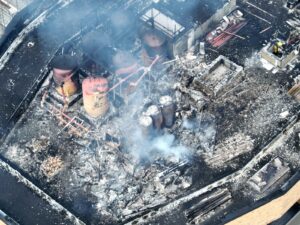
Shocking photographs taken in the aftermath of a fire on the roof of an apartment block in Surrey show how lucky four workers were to escape.

A contractor has been fined after the workers had to flee a fire that engulfed the roof of a 14-storey apartment building under construction in Surrey.

A HSE inspector happened to be nearby and took this image of the block ablaze

The four subcontractors were working under the control of C Watkins Plumbing Limited, installing an air source heat pump on the roof of the Old Telephone Exchange development in Staines-upon-Thames, when the incident happened on 26 June 2024.

Sparks from welding work ignited uncovered rigid foam insulation that had been laid across the roof. The self-sustaining fire developed quickly, spreading across the whole of the roof space before burning itself out when it ran out of fuel.

The men escaped through a single opening in the floor and down a ladder to Level 14. There was no other way off the roof, no means of raising the alarm, and no fire extinguishers.

Surrey Fire and Rescue Service took these images of the devastating aftermath of the fire

An investigation by the Health and Safety Executive (HSE) found that the company had failed to plan, manage and monitor the hot works on the roof. Despite the company having policies requiring them, there was no risk assessment or method statement in place, and a permit to work was not issued for the welding.

HSE’s guidance, HSG168 – Fire Safety in Construction, states that fire safety measures must be considered throughout all stages of design and procurement, and implemented effectively during construction. It says risk assessments must identify high-risk activities where fires can spread quickly, and situations where evacuation plans are complex, and that all risk assessments and control measures must be reviewed throughout the construction phase to make sure they remain suitable and sufficient.

C Watkins Plumbing Limited, of Watkins House, Leigh Road, Haine Industrial Park, Ramsgate, Kent, pleaded guilty to breaching Regulation 15(2) of the Construction (Design and Management) Regulations 2015. The company was fined £20,000 and ordered to pay £8,270 in costs at Staines Magistrates’ Court on 29 October 2026.

HSE inspector Stephanie Hickford-Smith said:

“Watkins failed to follow its own procedures for hot works. It did not assess the risks and so had no control measures in place.

“The four men working on the roof were lucky to escape. Had the fire started closer to their escape route, or had they not acted as quickly as they did, the outcome could have been devastatingly different.”

This HSE prosecution was brought by HSE senior enforcement lawyers James Towey and Laura Lax and paralegal officer Farhat Basir.


Further information:

  1. The Health and Safety Executive (HSE) is Britain’s national regulator for workplace health and safety. We are dedicated to protecting people and places, and helping everyone lead safer and healthier lives.
  2. More information about the legislation referred to in this case is available.
  3. Further details on the latest HSE news releases is available.
  4. HSE does not pass sentences, set guidelines or collect any fines imposed. Relevant sentencing guidelines must be followed unless the court is satisfied that it would be contrary to the interests of justice to do so.  The sentencing guidelines for health and safety offences in Scotland can be found here.

“This accident took away my freedom”; Vehicle recovery company fined after worker crushed under truck left unable to walk unaided

A Swindon-based vehicle recovery business has been fined after a worker was struck by a reversing vehicle and suffered life-changing injuries.

On 13 June 2025, Simon Pedder was undertaking yard duties at Cotswold Vehicle Recovery (Swindon) Limited in Highworth when he was suddenly hit and crushed under a company-owned recovery truck.

Mr Pedder suffered fractures to both legs and an arm, a punctured lung and a fractured rib. He was airlifted to the John Radcliffe Hospital in Oxford, where he spent five weeks and underwent several operations to rebuild his legs, including skin grafts.

An investigation by the Health and Safety Executive (HSE) found that Cotswold Vehicle Recovery (Swindon) Limited had failed to implement a suitable traffic management system to make sure vehicles and pedestrians could circulate safely and had not implemented proper precautions to assist reversing drivers.

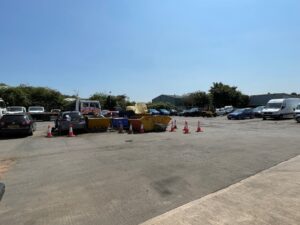
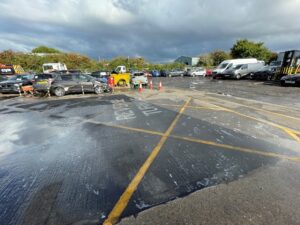
(Photographs showing before and after HSE intervention)

More than 10 months later, Mr Pedder’s recovery has not progressed as he had hoped. The extent of his injuries means that in addition to using crutches, a Zimmer frame and wheelchair, Simon now needs regular care visits and cannot carry out basic tasks like getting into the shower without help. He has been told he will most likely need walking aids for the rest of his life.

Describing the impact of the incident on his life, Mr Pedder said:

“I used to be a very sociable person, the life of the party, both in work and with friends; this has been taken away from me as now I spend my days sitting at home by myself. My mood is very low, and this is affecting not only myself but also my family, who say my personality appears to have changed completely.”

He added, “there are many basic things I can’t do, for example, I can’t cut the grass, I can’t fold the washing, I can’t go for a walk, and I am not allowed to drive. This accident took away my freedom.”

He also described the impact on his family, with his wife cutting short her working hours to support his care, and the family rearranging the living room to accommodate a hospital bed. Mr Pedder said: “I feel so bad because I am affecting those who are close to me. My life will never be the same and I feel like this accident should never have happened as I was only doing my job.”

Failure to manage reversing vehicle risks

HSE inspectors found failures by Cotswold Vehicle Recovery (Swindon) Limited to properly control the risk of reversing vehicles – despite this being one of the leading causes of workplace fatal injury. To manage workplace transport effectively, employers should consider the risks associated with their site and vehicles. Where workers are required to operate on foot in areas where there are moving vehicles, employers must ensure traffic routes are organised in a way that prevents collisions between pedestrians and vehicles.

HSE guidance advises implementing a one-way system for vehicle circulation to eliminate the need for reversing. Where this isn’t possible, the site should be organised to include safety measures such as protective barriers, clear markings and pedestrian crossing points. To aid a driver’s field of vision and alert pedestrians to reversing vehicles, precautionary measures such as rear-view cameras and warning alarms should also be fitted to vehicles.

Guidance on workplace transport safety is freely available on the HSE website: Workplace transport – HSE.

Cotswold Vehicle Recovery (Swindon) Limited, based at Blackworth Industrial Estate, Highworth, pleaded guilty to breaching Section 2(1) of the Health and Safety at Work etc. Act 1974. The company was fined £28,000 and ordered to pay £7,276 in costs at Bristol Magistrates’ Court on 29 October 2026.

HSE Inspector Laura Artosi said:

“Almost 25 per cent of fatal workplace transport accidents in Great Britain occur while a vehicle is reversing – a stark reminder to employers to properly assess and manage this fundamental risk.

“Cotswold Vehicle Recovery (Swindon) Limited lacked a suitable traffic management system, including adequate arrangements to ensure vehicles could reverse without risks to those on foot. These failings led to an incident that has robbed Simon Pedder of much of his freedom and will likely have a lasting impact on his life.

“Had Cotswold Vehicle Recovery (Swindon) Limited implemented robust measures to allow pedestrians and vehicles to move safely across its site, this incident would not have occurred.”

This HSE prosecution was brought by HSE enforcement lawyer Karen Park and paralegal officer Michael Millman.

Further information:

  1. The Health and Safety Executive (HSE) is Britain’s national regulator for workplace health and safety. We are dedicated to protecting people and places, and helping everyone lead safer and healthier lives.
  2. More information about the legislation referred to in this case is available.
  3. Further details on the latest HSE news releases is available.
  4. Relevant guidance can be found here: A guide to workplace transport safety – HSE and Safe manoeuvring – HSE.
  5. HSE does not pass sentences, set guidelines or collect any fines imposed. Relevant sentencing guidelines must be followed unless the court is satisfied that it would be contrary to the interests of justice to do so.  The sentencing guidelines for health and safety offences can be found here: Health and safety offences, corporate manslaughter and food safety and hygiene offences

Fish processing firm fined almost a quarter of a million pounds after worker’s arm pulled into machine after safety guard left off

A Peterhead fish processing company has been fined £245,000 after a worker was dragged into a machine through a gap where a safety guard should have been.

The man, then aged 30, was working as a chargehand on a production line at Lunar Freezing and Cold Storage Company Limited’s premises in Peterhead on 19 August 2025 when the incident happened.

What happened

The worker had stopped to deal with a box that had jammed too high in a rack loader cage to be reached from the ground. He entered the production line through a gap in the guarding without isolating the power, then climbed onto the conveyor and pressed down on the lid to release the jam. The machine restarted, and his right arm was pulled into the pusher section of the rack loader. Unable to free himself, he was drawn further into the mechanism until his head made contact with moving parts.

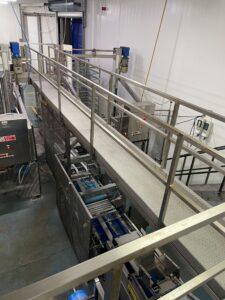
Overhead view of the production line

A colleague who heard the worker’s shouts for help isolated the power and stopped the machine. The man was taken to Aberdeen Royal Infirmary, where he was found to have a fractured jaw and trauma to his chest and right arm. He needed surgery to insert metal plates in his jaw and spent three days in hospital. He returned to work on 29 September 2025 and has made a full recovery.

HSE investigation

An investigation by the Health and Safety Executive (HSE) found that a section of fixed guarding next to the production line had been removed during maintenance around two weeks before the incident and had not been put back. Without the guard, the gap gave access to the machine without the power being isolated. The correct route in, through an interlocked gate, would have switched off the machinery as soon as the gate was opened.

HSE found that, while the guard was missing, staff had used the gap to reach the machinery on various occasions when boxes jammed, rather than the interlocked gate. Maintenance staff told HSE they had seen the guard missing and had seen employees using the gap, but it was not reinstated. The weekly inspection checklist used by the in-house maintenance team did not include checking the integrity of non-electrical fixed guarding.

Had the guarding been in place, the only way into the machine would have been through the interlocked gate, and the incident would not have happened.

HSE guidance highlights the importance of following safe isolation and lock-off procedures before any maintenance or cleaning work is carried out. Employers must ensure all machinery is properly isolated from power sources, and that systems are regularly monitored and reviewed to prevent inadvertent start-up. Further guidance is available here: The safe isolation of plant and equipment – HSE.

Lunar Freezing and Cold Storage Company Ltd, of East Quay, The Harbour, Peterhead, pleaded guilty to breaching Regulation 11(1) and (2) of the Provision and Use of Work Equipment Regulations 1998 and Section 33(1)(c) of the Health and Safety at Work etc. Act 1974. The company was fined £245,000 and ordered to pay a with a victim surcharge of £18,375, at Peterhead Sheriff Court on 28 October 2026.

HSE inspector Nicky Smith said:

“This was a wholly preventable incident which left a worker seriously injured.

“A missing guard and an unchecked gap left the way open for a worker to be dragged into a machine.

“Guards must be kept in place, and checks must cover every guard, not just the electrical ones.”


Further information:

  1. The Health and Safety Executive (HSE) is Britain’s national regulator for workplace health and safety. We are dedicated to protecting people and places, and helping everyone lead safer and healthier lives.
  2. More information about the legislation referred to in this case is available.
  3. Further details on the latest HSE news releases is available.
  4. HSE does not pass sentences, set guidelines or collect any fines imposed. Relevant sentencing guidelines must be followed unless the court is satisfied that it would be contrary to the interests of justice to do so.  The sentencing guidelines for health and safety offences in Scotland can be found here.

Engineering company fined after worker suffers finger amputation

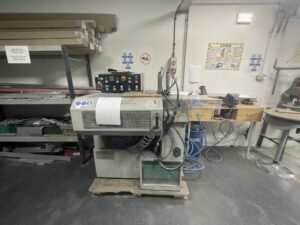
An engineering company has been fined £20,000 and ordered to pay £15,000 in compensation after a worker suffered a partial finger amputation when he reached into an inadequately guarded automatic saw.

Thomas Davies, 21, was working for Dlinexsign Ltd when the incident occurred. Having reached into the machine to retrieve a cut piece of material, his hand came into contact with the moving saw blade, resulting in him losing part of his finger.

The incident occurred at the company’s premises at Buckingham Road Industrial Estate, Brackley. The machine was used to cut lengths of material, and Mr Davies was able to reach into the machine and access the dangerous moving parts while it was operating.

The inadequately guarded automatic saw.

An investigation by the Health and Safety Executive (HSE) found that Dlinexsign Ltd had failed to take effective measures to prevent access to the dangerous parts of the machinery.

HSE guidance states that employers must take effective measures to prevent access to dangerous parts of machinery. This will normally be achieved using fixed guarding, but where access is required, other protective measures such as interlocked guards may be necessary to ensure dangerous movement has stopped before a person can reach the danger zone.

Further guidance can be found on HSE’s website on the safe use of work equipment: Introduction to machinery safety – HSE.

Dlinexsign Ltd, of Shires Road, Brackley, pleaded guilty to breaching Regulation 11(1) of the Provision and Use of Work Equipment Regulations 1998. The company was fined £20,000 and ordered to pay £15,000 in compensation to Mr Davies, and £9,064.34 in prosecution costs at Milton Keynes Magistrates’ Court on 23 October 2026.

HSE Inspector Dulanjala Kandana-Arachchige said:
“This incident demonstrates the serious consequences that can result when access to dangerous parts of machinery is not effectively prevented.

“Employers must ensure that machinery is properly guarded and that effective measures are in place to prevent workers from reaching dangerous moving parts.

“This was a preventable incident. Employers have a responsibility to ensure that work equipment can be used safely and that workers are protected from dangerous machinery.”

This HSE prosecution was brought by HSE enforcement lawyer Tom Ledden-Rocks and paralegal officer Natalie Ellis.

Further information:

  1. The Health and Safety Executive (HSE) is Britain’s national regulator for workplace health and safety. We are dedicated to protecting people and places and helping everyone lead safer and healthier lives.
  2. More information about the legislation referred to in this case is available.
  3. Further details on the latest HSE news releases is available.
  4. Guidance on machinery safety can be found here: Introduction to machinery safety – HSE
  5. HSE does not pass sentences, set guidelines or collect any fines imposed. Relevant sentencing guidelines must be followed unless the court is satisfied that it would be contrary to the interests of justice to do so. The sentencing guidelines for health and safety offences in England can be found here and those for Scotland here.


Company fined for providing false electrical safety certificates for car washes

A company has been fined after it falsely supplied electrical safety certificates to two car wash businesses in Runcorn, despite them both being declared unsafe.

Inspectors from Britain’s workplace regulator – alongside colleagues from Cheshire Police, Trading Standards and the immigration authorities – carried out an investigation into the activities of Super Hand Car Wash on Halton Road and Top Star Hand Car Wash on Bridge Street.

Both premises were found to have electrical systems that were dangerous. This resulted in Health and Safety Executive (HSE) inspectors taking enforcement action against both businesses – forcing them to immediately stop work. The car wash owners were advised to use a National Inspection Council for Electrical Installation Contracting (NICEIC) registered electrical contractor or similar, to ensure that electrics were made safe to ensure the safety of the public and the people working on site.

Epco Energy Solutions Limited, who were at the time, members of the NICEIC were engaged to carry out the work and certified the installations as being safe to use.

However, an examination of the certificates by one of HSE’s specialist electrical inspectors found that details in them did not match the installations he found on site.  A subsequent visit to both car washes found that the installations were still dangerous and presented a risk of serious injury or electrocution to those on site, including members of the public.

The Electricity at Work Regulations 1989 require all electrical installations to be maintained in a safe condition. This means that systems should only be worked on by someone who is a competent electrical contractor.  The NICEIC is one of the certification bodies for electrical contractors in the UK.  Membership of such a body indicates that the member has received appropriate training, and has been assessed to ensure that they are competent to carry out work on electrical systems. HSE guidance on electrical safety is available. Electrical safety – HSE

Epco Energy Solutions Limited had visited and provided electronically generated certificates using the NICEIC secure members only systems. Certificates provided to the car washes indicated that the electrical systems on site were safe to use when they were not.  With support from the NICEIC it was found that the certificates had been generated using password protected software and electronically signed with sole Epco Director Mohammed Naeem’s signature.

Epco Energy Solutions Limited, of Unit B, 37 Worlsey Road, Eccles, Manchester, were found guilty after a trial at Warrington Magistrates Court on 2 September 2026, of breaching section 3(1) of the Health and Safety At Work Act 1974 etc, 1974. The company was fined £20,000 and ordered to pay full costs of £15,239 at the same court on 22 October 2026.

HSE inspector Rose Leese-Weller said:

“Due to having such a close relationship with water, car wash owners must ensure that their electrical installations are maintained in a safe condition.

“As well as being safe to use they must also be fit for purpose so as to prevent serious personal injury or electrocution to anyone in the vicinity.

“These car washes where dangerous and unsafe – to both those working there and to members of the public visiting the sites.

“Electrical installations at all workplaces must be maintained in a safe condition and are safe to use.”

This HSE prosecution was brought by enforcement lawyer Sam Crockett and paralegal officer Hettie Burrows.


Further information:

  1. The Health and Safety Executive (HSE) is Britain’s national regulator for workplace health and safety. We are dedicated to protecting people and places, and helping everyone lead safer and healthier lives.
  2. More information about the legislation referred to in this case is available.
  3. Further details on the latest HSE news releases is available.
  4. Relevant guidance can be found here – Electrical safety – HSE.
  5. HSE does not pass sentences, set guidelines or collect any fines imposed. Relevant sentencing guidelines must be followed unless the court is satisfied that it would be contrary to the interests of justice to do so.  The sentencing guidelines for health and safety offences can be found here.

Fine for manufacturing company after man left as ‘a shadow of his former self’

A Staffordshire-based manufacturing company has been fined £300,000 after a family man was left with injuries so serious he became ‘a shadow of his former self’.

Gary Taylor, who was 63 at the time, spent three weeks in hospital and needed seven months off work, following the incident on 24 March 2025.

The grandfather had been working for E H Hassell & Sons Limited at its site on Newstead Ind Estate in Trentham. He was one of several workers involved in the unloading of a lorry trailer containing various steel components for a large filtration system.

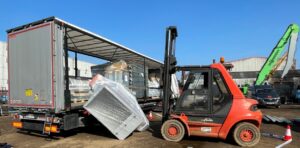
The one-tonne metal hopper slipped from the lorry and struck Gary Taylor on the head

The workers had improvised a system to unload the metal hopper with a forklift truck, placing the forks underneath the unsecured load to lift it from the trailer bed. However, as it slid from the forks, it struck Mr Taylor in the head as he was stood alongside it. His injuries included fractures to his skull, neck and spine, two broken ribs and a severe laceration to his forehead which required 17 staples and 14 stitches.

Mr Taylor described how the incident has had a lasting impact on his life.

“During my time off recuperating from my injuries, the seven months I was off work, I had no interest in anything,” he said.

“I know my wife thinks that I won’t be around with her in my eighties, she has constant worry that something is going to happen to me.

“She never thought like that before my accident.

“For me, I have no idea what the future holds.

“I can only hope that I will get better as time goes on and I become more like the old man I used to be – a supportive husband, father and grandfather to my grandchildren.

“I want to be a person that hopefully will become more of a person than a shadow of my former self.”

An investigation by the Health and Safety Executive (HSE) found that the lifting operation had not been properly planned by a competent person. The characteristics of the load, including its weight, size, centre of gravity and lifting points, had not been adequately assessed, and no safe system of work had been put in place.

Moving an object of this size and weight was not a regular task at the site and there was no established system of work for it.

HSE guidance on Planning and organising lifting operations – HSE states that it is important to properly resource, plan and organise lifting operations so they are carried out in a safe manner.

E H Hassell & Sons Limited of Alderflat Drive, Trentham, Staffordshire pleaded guilty to breaching Regulation 8(1) of the Lifting Operations and Lifting Equipment Regulations 1998 and were fined £300,000 and ordered to pay costs of £5,690 at a hearing at Birmingham Magistrates’ Court on 23 October 2026.

HSE inspector Claire Whitehurst said:

“The failures here resulted in an experienced worker suffering life-changing injuries.

“The company failed to properly plan the lifting operation or implement a safe system of work.

“Mr Taylor suffered serious injuries which could easily have resulted in his death. He has been left with facial scarring, and both he and his family have been deeply affected by this traumatic experience.

“Employers must ensure that lifting operations are properly planned by a competent person and carried out safely. This is especially important for non-routine tasks involving heavy or awkward loads.”

The HSE prosecution was brought by HSE enforcement lawyer, Julian White and supported by HSE paralegal officer, Stephen Grabe. The investigation was supported by visiting officer, Natalka Heath.


Further information:

  1. The Health and Safety Executive (HSE) is Britain’s national regulator for workplace health and safety. We are dedicated to protecting people and places, and helping everyone lead safer and healthier lives.
  2. More information about the legislation referred to in this case is available.
  3. Further details on the latest HSE news releases is available.
  4. Relevant guidance can be found here: Planning and organising lifting operations – HSE
  5. HSE does not pass sentences, set guidelines or collect any fines imposed. Relevant sentencing guidelines must be followed unless the court is satisfied that it would be contrary to the interests of justice to do so. The sentencing guidelines for health and safety offences can be found here.

Bed springs company fined after worker injured in warehouse collision

CCTV has captured the moment a young worker was injured when the ride-on pallet truck he was using collided with a fork lift truck in a warehouse in Yorkshire.

Bed spring manufacturer Leggett & Platt Components Europe Limited has been fined after Charlie O’Dowd was injured in the incident at its Long Royd warehouse in Barnsley on 14 November 2024.

The then 20-year-old had been using a ride-on pallet truck during the installation of new automated machinery within the warehouse. However, his truck, which was unguarded, collided with a fork lift truck being driven by another employee, resulting in multiple fractures to his foot, as well as longer term nerve damage.

An investigation by the Health and Safety Executive (HSE) found that the company had made changes to its workplace transport routes to accommodate the installation works taking place. However, these changes meant that both ride-on pallet trucks and fork lift trucks were required to use the same routes, within what was a busy stock loading area. Visibility was limited and vehicle movements had increased.

The HSE investigation concluded that the company had focused on the installation of the new machinery but had failed to adequately consider the impact that significant changes to workplace transport arrangements would have on worker safety. The changes to vehicle routes had not been properly risk assessed before being implemented.

Every year, there are accidents involving transport in the workplace, some of which result in people being killed. HSE guidance explains what should be done to keep workers safe – Introduction to workplace transport safety – HSE.

Leggett & Platt Components Europe Limited, pleaded guilty to a breach of  Section 2(1) of the Health & Safey at Work etc. Act 1974 in relation to the safe use of workplace transport within the warehouse. The company was fined £80,000 and ordered to pay full costs of £3,374 at Leeds Magistrates Court on 20 October 2026.

HSE Inspector Chris Parker said:

“This case highlights the importance of carefully assessing the wider safety implications of any changes made within a workplace, even where those changes may be temporary.

“When workplace transport routes are altered, employers must ensure that the risks created by those changes are properly assessed and controlled before they are introduced.

“Had suitable planning and risk assessment been carried out, this incident could have been prevented.”

This HSE prosecution was brought by HSE enforcement lawyer Julian White and paralegal officer Zara Salman and advocacy undertaken by enforcement lawyer Arfaq Nabi.


Further information:

  1. The Health and Safety Executive (HSE) is Britain’s national regulator for workplace health and safety. We are dedicated to protecting people and places, and helping everyone lead safer and healthier lives.
  2. More information about the legislation referred to in this case is available.
  3. Further details on the latest HSE news releases is available.
  4. HSE guidance on managing workplace transport safely can be found at: Workplace transport – HSE.
  5. HSE does not pass sentences, set guidelines or collect any fines imposed. Relevant sentencing guidelines must be followed unless the court is satisfied that it would be contrary to the interests of justice to do so.  The sentencing guidelines for health and safety offences can be found here.


Half-a-million pound fine for company after worker suffers 40 per cent burns

One of Britain’s leading steel galvanizers has been fined more than £500,000 after one of its workers suffered 40 per cent burns to his body when hit by a wave of molten zinc at its site in Devon.

The employee was working for Wedge Group Galvanizing Limited at its site in Marsh End, Lords Meadow Industrial Estate in Crediton, Mid Devon, when the incident happened on 12 October 2021.

Hot dip galvanizing is a process that provides long-term protection against rust and corrosion of steel products. On the day in question, a lifting chain, carrying a roller steel joist weighing nearly three tonnes, failed. The beam fell into a galvanizing bath and the resulting wave of molten zinc covered the 33-year-old, before hitting a wall and surging back along the floor towards him.

CCTV footage from the scene shows the worker alight and running towards the emergency shower where his clothes were removed and he was doused in water. He was initially treated at the scene by paramedics, before being taken by air ambulance to Southmead hospital in Bristol. He had suffered 40 per cent burns and remained in intensive care for 11 days undergoing 13 separate operations. Any remaining healthy skin was grafted to repair his burnt body.

During his lengthy treatment the man suffered infection and sepsis leaving him with multiple long-term health conditions.

An investigation by the Health and Safety Executive (HSE) found that the set of chains used to lift the heavy steel beam had signs of damage and deterioration and there was a failure to withdraw them. Crucially, the chains had not undergone their mandatory regular inspection.

The investigation also revealed that the load slinging arrangement used at the time of the incident was incorrect, which meant that the load being lifted was greater than the safe limit for the chains. The risk assessment in place at the time of the incident for “immersion & swilling” had no reference to checks on chains, or what type of sling configuration to use.

Wedge Group Galvanizing Limited failed to meet several regulations and standards. Under the Lifting Operations and Lifting Equipment Regulations (LOLER) 1998, lifting accessories must be thoroughly examined by a competent person at least every six months. Both the Lifting Equipment Engineers Association (LEEA) code of practice and the user manual for the chain manufacturer state that chain slings used in acidic environments, such as zinc galvanising, should be inspected before each day’s use.

The Health and Safety Executive publishes freely available guidance which underlines the importance of thorough inspection of lifting equipment, including the benefits of an ‘examination scheme’.

Wedge Group Galvanizing Limited of Stafford Street, Willenhall, West Midlands, pleaded guilty to breaching Section 3(1) of the Health and Safety at Work etc. Act 1974. The company was fined £566,666 and ordered to pay £15,521 in costs at Bristol Magistrates Court on Wednesday 14 October 2026.

HSE inspector Alexander Ashen said:

“This wholly-avoidable incident led to a young man having to endure truly terrible injuries – and the disturbing truth is that the consequences could have been even worse.

“It is shocking that an industry-leading firm,, with considerable resources at its disposal, should risk the lives of its workers with substandard inspection protocols.

“Our thoughts are with the victim at the heart of this incident, his friends and family, and all those at the site who have been affected by what happened that day.”

This HSE prosecution was brought by HSE enforcement lawyer Gemma Zakrzewski, Paralegal Officer, Farhat Basir and Rowena Goodwin, Enforcement Advocate.


Further information:

  1. The Health and Safety Executive (HSE) is Britain’s national regulator for workplace health and safety. We are dedicated to protecting people and places, and helping everyone lead safer and healthier lives.
  2. More information about the legislation referred to in this case is available.
  3. Further details on the latest HSE news releases is available.
  4. Relevant guidance can be found here Planning and organising lifting operations – HSE
  5. HSE does not pass sentences, set guidelines or collect any fines imposed. Relevant sentencing guidelines must be followed unless the court is satisfied that it would be contrary to the interests of justice to do so.  The sentencing guidelines for health and safety offences can be found here.

CCTV captures terrifying runaway Range Rover incident that left passer-by with life-changing injuries

A vehicle recovery driver has pleaded guilty after a runaway Range Rover he failed to secure rolled down a hill in Bournemouth, dragging him beneath the vehicle before crushing a member of the public who attempted to help.

Sean Baker, a vehicle recovery driver for GRS Recovery Bournemouth, pleaded guilty to breaching Section 7 of the Health and Safety at Work etc. Act 1974 following the incident on Exeter Crescent, Bournemouth.

CCTV footage shows Sean Baker being dragged beneath the Range Rover after it suddenly rolled away during a recovery operation on a steep hill.

Nearby, Kai Dransfield was on a break from his job at TGI Fridays when he witnessed the incident unfold.

He saw the Range Rover begin to roll down the hill with Sean Baker trapped beneath it and later described him as “hanging on for dear life”.

Mr Dransfield said:

“He made eye contact with me, and my first thought was to just grab him to try and help him.”

In attempting to help, Mr Dransfield was struck by the vehicle and pulled underneath it.

The Range Rover rolled over both of his legs, causing serious injuries including multiple broken bones in his legs and fractures to his spine.

More than two years later, Mr Dransfield continues to suffer constant pain and has difficulty walking.

HSE found that Sean Baker had initially attached a winch to the front of the Range Rover, which would have prevented the vehicle rolling away if the handbrake was released or failed.

However, he later removed the winch, jacked up the vehicle and placed skates beneath the rear wheels.

The wheels were not secured with chocks and no breakaway cables were attached. As a result, when the vehicle was lowered onto the skates there was nothing in place to prevent it rolling away down the incline.

This resulted in Sean Baker becoming trapped beneath the vehicle and being dragged down the road as it rolled downhill.

The investigation concluded that Sean Baker failed to take reasonable care for his own safety and that of others by not following established recovery procedures. HSE found that his actions fell far below the standard expected of a competent and experienced recovery driver.

HSE guidance states that all risks must be properly assessed and safe systems for working at the roadside prepared. Further guidance can be found here: Essential precautions for working roadside.

Sean Baker pleaded guilty to breaching Section 7 of the Health and Safety at Work etc. Act 1974. Sean Baker received 14-week prison sentence, suspended for one year at Bournemouth Crown Court on Friday 16 October 2026.

After the hearing, HSE inspector Alexander Ashen said:

“Sean Baker was an experienced recovery driver. Failing to properly secure a vehicle weighing more than two tonnes on a steep hill was a fundamental error.

“This happened in a busy town centre, close to restaurants and car parks, with vehicles, motorcyclists and pedestrians regularly passing through the area.

“Sean Baker’s failings were substantial, they exposed everyone nearby to risk and resulted in a member of the public, who stepped in to help, suffering life-changing injuries.

This HSE prosecution was brought by HSE enforcement lawyer Andrew Siddall and paralegal Officer, Gabrielle O’Sullivan.

Further Information

  1. The Health and Safety Executive (HSE) is Britain’s national regulator for workplace health and safety. We are dedicated to protecting people and places, and helping everyone lead safer and healthier lives.
  2. More information about the legislation referred to in this case is available.
  3. Further details on the latest HSE news releases are available.
  4. Guidance on essential precautions for working roadside can be found here: https://www.hse.gov.uk/mvr/roadside-repair/essential-precautions.htm
  5. HSE does not pass sentences, set guidelines or collect any fines imposed. Relevant sentencing guidelines must be followed unless the court is satisfied that it would be contrary to the interests of justice to do so. The sentencing guidelines for health and safety offences in England can be found here and those for Scotland here.