Press release

Half-a-million pound fine for company after worker suffers 40 per cent burns

One of Britain’s leading steel galvanizers has been fined more than £500,000 after one of its workers suffered 40 per cent burns to his body when hit by a wave of molten zinc at its site in Devon.

The employee was working for Wedge Group Galvanizing Limited at its site in Marsh End, Lords Meadow Industrial Estate in Crediton, Mid Devon, when the incident happened on 12 October 2021.

Hot dip galvanizing is a process that provides long-term protection against rust and corrosion of steel products. On the day in question, a lifting chain, carrying a roller steel joist weighing nearly three tonnes, failed. The beam fell into a galvanizing bath and the resulting wave of molten zinc covered the 33-year-old, before hitting a wall and surging back along the floor towards him.

CCTV footage from the scene shows the worker alight and running towards the emergency shower where his clothes were removed and he was doused in water. He was initially treated at the scene by paramedics, before being taken by air ambulance to Southmead hospital in Bristol. He had suffered 40 per cent burns and remained in intensive care for 11 days undergoing 13 separate operations. Any remaining healthy skin was grafted to repair his burnt body.

During his lengthy treatment the man suffered infection and sepsis leaving him with multiple long-term health conditions.

An investigation by the Health and Safety Executive (HSE) found that the set of chains used to lift the heavy steel beam had signs of damage and deterioration and there was a failure to withdraw them. Crucially, the chains had not undergone their mandatory regular inspection.

The investigation also revealed that the load slinging arrangement used at the time of the incident was incorrect, which meant that the load being lifted was greater than the safe limit for the chains. The risk assessment in place at the time of the incident for “immersion & swilling” had no reference to checks on chains, or what type of sling configuration to use.

Wedge Group Galvanizing Limited failed to meet several regulations and standards. Under the Lifting Operations and Lifting Equipment Regulations (LOLER) 1998, lifting accessories must be thoroughly examined by a competent person at least every six months. Both the Lifting Equipment Engineers Association (LEEA) code of practice and the user manual for the chain manufacturer state that chain slings used in acidic environments, such as zinc galvanising, should be inspected before each day’s use.

The Health and Safety Executive publishes freely available guidance which underlines the importance of thorough inspection of lifting equipment, including the benefits of an ‘examination scheme’.

Wedge Group Galvanizing Limited of Stafford Street, Willenhall, West Midlands, pleaded guilty to breaching Section 3(1) of the Health and Safety at Work etc. Act 1974. The company was fined £566,666 and ordered to pay £15,521 in costs at Bristol Magistrates Court on Wednesday 14 October 2026.

HSE inspector Alexander Ashen said:

“This wholly-avoidable incident led to a young man having to endure truly terrible injuries – and the disturbing truth is that the consequences could have been even worse.

“It is shocking that an industry-leading firm,, with considerable resources at its disposal, should risk the lives of its workers with substandard inspection protocols.

“Our thoughts are with the victim at the heart of this incident, his friends and family, and all those at the site who have been affected by what happened that day.”

This HSE prosecution was brought by HSE enforcement lawyer Gemma Zakrzewski, Paralegal Officer, Farhat Basir and Rowena Goodwin, Enforcement Advocate.


Further information:

  1. The Health and Safety Executive (HSE) is Britain’s national regulator for workplace health and safety. We are dedicated to protecting people and places, and helping everyone lead safer and healthier lives.
  2. More information about the legislation referred to in this case is available.
  3. Further details on the latest HSE news releases is available.
  4. Relevant guidance can be found here Planning and organising lifting operations – HSE
  5. HSE does not pass sentences, set guidelines or collect any fines imposed. Relevant sentencing guidelines must be followed unless the court is satisfied that it would be contrary to the interests of justice to do so.  The sentencing guidelines for health and safety offences can be found here.
CCTV captures terrifying runaway Range Rover incident that left passer-by with life-changing injuries

A vehicle recovery driver has pleaded guilty after a runaway Range Rover he failed to secure rolled down a hill in Bournemouth, dragging him beneath the vehicle before crushing a member of the public who attempted to help.

Sean Baker, a vehicle recovery driver for GRS Recovery Bournemouth, pleaded guilty to breaching Section 7 of the Health and Safety at Work etc. Act 1974 following the incident on Exeter Crescent, Bournemouth.

CCTV footage shows Sean Baker being dragged beneath the Range Rover after it suddenly rolled away during a recovery operation on a steep hill.

Nearby, Kai Dransfield was on a break from his job at TGI Fridays when he witnessed the incident unfold.

He saw the Range Rover begin to roll down the hill with Sean Baker trapped beneath it and later described him as “hanging on for dear life”.

Mr Dransfield said:

“He made eye contact with me, and my first thought was to just grab him to try and help him.”

In attempting to help, Mr Dransfield was struck by the vehicle and pulled underneath it.

The Range Rover rolled over both of his legs, causing serious injuries including multiple broken bones in his legs and fractures to his spine.

More than two years later, Mr Dransfield continues to suffer constant pain and has difficulty walking.

HSE found that Sean Baker had initially attached a winch to the front of the Range Rover, which would have prevented the vehicle rolling away if the handbrake was released or failed.

However, he later removed the winch, jacked up the vehicle and placed skates beneath the rear wheels.

The wheels were not secured with chocks and no breakaway cables were attached. As a result, when the vehicle was lowered onto the skates there was nothing in place to prevent it rolling away down the incline.

This resulted in Sean Baker becoming trapped beneath the vehicle and being dragged down the road as it rolled downhill.

The investigation concluded that Sean Baker failed to take reasonable care for his own safety and that of others by not following established recovery procedures. HSE found that his actions fell far below the standard expected of a competent and experienced recovery driver.

HSE guidance states that all risks must be properly assessed and safe systems for working at the roadside prepared. Further guidance can be found here: Essential precautions for working roadside.

Sean Baker pleaded guilty to breaching Section 7 of the Health and Safety at Work etc. Act 1974. Sean Baker received 14-week prison sentence, suspended for one year at Bournemouth Crown Court on Friday 16 October 2026.

After the hearing, HSE inspector Alexander Ashen said:

“Sean Baker was an experienced recovery driver. Failing to properly secure a vehicle weighing more than two tonnes on a steep hill was a fundamental error.

“This happened in a busy town centre, close to restaurants and car parks, with vehicles, motorcyclists and pedestrians regularly passing through the area.

“Sean Baker’s failings were substantial, they exposed everyone nearby to risk and resulted in a member of the public, who stepped in to help, suffering life-changing injuries.

This HSE prosecution was brought by HSE enforcement lawyer Andrew Siddall and paralegal Officer, Gabrielle O’Sullivan.

Further Information

  1. The Health and Safety Executive (HSE) is Britain’s national regulator for workplace health and safety. We are dedicated to protecting people and places, and helping everyone lead safer and healthier lives.
  2. More information about the legislation referred to in this case is available.
  3. Further details on the latest HSE news releases are available.
  4. Guidance on essential precautions for working roadside can be found here: https://www.hse.gov.uk/mvr/roadside-repair/essential-precautions.htm
  5. HSE does not pass sentences, set guidelines or collect any fines imposed. Relevant sentencing guidelines must be followed unless the court is satisfied that it would be contrary to the interests of justice to do so. The sentencing guidelines for health and safety offences in England can be found here and those for Scotland here.

Electrical wholesaler fined £4million after worker’s crush injuries mean he now needs 24/7 care

A Telford-based electrical wholesaler and manufacturer has been fined £4million after an employee sustained life-changing injuries when he was crushed during loading operations using a forklift truck.

The 40-year-old father of one from Telford was working for City Electrical Factors Limited at its Proteus Switchgear Industrial Division on 4 October 2024 when the incident happened.

The man had been acting as a “spotter” while a forklift truck loaded heavy switchboard equipment onto a flatbed lorry. The load, which weighed 231kg, was not secured to the forklift and fell on top of him. He sustained brain and spine injuries and underwent lifesaving surgery. However, he can no longer do anything for himself and is unable to communicate with others. As a result of these injuries, he now lives in a care home and requires 24/7 care.

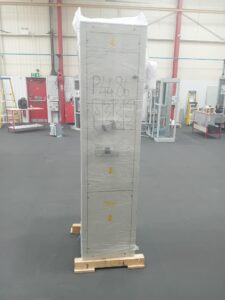
The switchboard equipment weighed more than 200kg

An investigation by the Health and Safety Executive (HSE) found that City Electrical Factors Limited failed to ensure that the lifting operation was properly planned by a competent person, appropriately supervised and carried out in a safe manner. There was no risk assessment or lift plan, and employees had not been provided with information or instructions about the lifting operation, despite this being a regular activity.

The investigation also found that the load could have been secured to the forklift truck using pre-existing anchor points. The load also had lifting eyes welded to it, which meant that the crane attached to the delivery lorry could have been used as a safer alternative to the forklift truck. Instead, employees were appointed as “spotters” and were expected to steady the loads whilst they were being moved and lifted. This was clearly an unsafe and unnecessary system of work.

HSE guidance states that lift plans should address the risks identified by the risk assessment and identify the resources required, the procedures and the responsibilities so that risks are managed, and any lifting operation is carried out safely. You can read more about our guidance here: Planning and organising lifting operations – HSE.

City Electrical Factors Limited pleaded guilty to breaching Section 2(1) of the Health and Safety at Work etc. Act 1974. The company was fined £4m and ordered to pay £6,304 in costs at Birmingham Magistrates Court on 16 October 2026.

HSE inspector Keeley Eves said:

“This incident had truly tragic consequences.

“To make matters worse it was completely avoidable and caused by a failure to properly plan for the job taking place.

“The company could have used safer alternative methods to lift the load, such as the lorry-mounted crane which was available, instead of using the forklift truck.

“Instead, the employee was placed at unnecessary risk and now has to live with his devastating injuries.

“Loading and unloading operations remain one of the most hazardous transport activities in the workplace. Employers must ensure that lifting operations are properly planned by competent persons, supervised and carried out safely.”

This HSE prosecution was brought by HSE enforcement lawyer Julian White and paralegal officer Lynne Thomas, while the investigation was supported by visiting officer Sarah Ough.


Further information:

  1. The Health and Safety Executive (HSE) is Britain’s national regulator for workplace health and safety. We are dedicated to protecting people and places, and helping everyone lead safer and healthier lives.
  2. More information about the legislation referred to in this case is available.
  3. Further details on the latest HSE news releases is available.
  4. Relevant guidance can be found here Planning and organising lifting operations – HSE
  5. HSE does not pass sentences, set guidelines or collect any fines imposed. Relevant sentencing guidelines must be followed unless the court is satisfied that it would be contrary to the interests of justice to do so.  The sentencing guidelines for health and safety offences can be found here.

Fishing fleet company fined following engine room fatality

One of Britain’s leading fishing industry firms has been fined £100,000 after an apprentice engineer died in the engine room of a trawler in Newlyn Harbour.

Conor Moseley, aged 20, died when fire extinguisher gases left him unable to escape the engine room of a trawler on 15 November 2019.

Conor and three other workers were carrying out work on the Resurgam, a fishing vessel owned and operated by W. Stevenson & Sons Limited, when a fire suppression system being installed by Ocean Engineering (Fire) Ltd unexpectedly activated. It filled the engine room with hot, toxic gases, creating dangerous conditions and making it difficult to see.

Conor Moseley was killed after being overcome by carbon monoxide and could not escape the engine room

The small, enclosed engine room had only one way in and out. Workers had to climb a ladder and pass through a hatch one at a time, passing through a gas jet in excess of 75°C. The other workers managed to climb out, but Conor was overcome by carbon monoxide and other substances, leaving him unable to escape.

His colleagues tried to rescue him, putting themselves at risk in the process, but they were unable to reach him. Cornwall Fire and Rescue Service later rescued Conor from the engine room, but he could not be revived.

Tracy Moseley, Conor’s mother, reflected on her son’s life and the impact his death has had on them.

“Growing up Conor loved nothing better than helping out on his dad’s boat.

“Conor always made himself available to help his father when he came in from sea and would be ready to help him land his catch even after a full day’s work. Now for Steve, my husband, there is just an empty place that cannot be filled.

“All we have now are his ashes which are kept in his bedroom.  Every morning I go in and say, ‘morning little man I love you’ and blow him a kiss.  I never say ‘good morning’ as it can never be a good morning without him.

“At night I blow him a kiss and say ‘night night little man, I love you’.”

An investigation by the Health and Safety Executive (HSE) found that the risks created by several contractors working in the cramped engine room had not been properly considered. One contractor described the room as a mess, with poor lighting and trip hazards, and said that at one point six or seven people were working in the space. One witness described it as chaos.

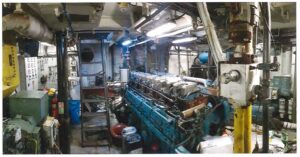
Inside the engine room on the trawler

There was no safe system of work for installing the fire suppression system and no effective emergency plan. A permit-to-work system could have been used to coordinate the different activities and ensure they were carried out safely. HSE’s Safety in Docks Approved Code of Practice highlights the need for parties to work together and have an overall written plan covering responsibilities, shared risks and emergency arrangements.

At Truro Crown Court on 15 October 2026, W. Stevenson & Sons Ltd entered guilty pleas to two charges under the Health and Safety at Work etc. Act 1974, sections 2(1) and 3(1). The company was fined £100,000 and ordered to pay full costs of £27,906.

HSE principal inspector Helena Allum said:

“This was a particularly complicated case requiring significant HSE specialist and scientific input. A number of duty holders played a part in the circumstances leading to the death of Conor; all were investigated.

“While W. Stevenson & Sons Ltd was not responsible for the fire suppression system going off unexpectedly, it was responsible for considering what could go wrong during the installation and maintenance activities, and coordinating them so that as few people as possible were put at risk.

“They had not considered how workers could be quickly rescued in an emergency and receive prompt medical attention. This should be a key consideration when people are working in a restricted space.

“Conor’s death was a tragedy. He need not have been in the engine room at the time. When the worst happened, they couldn’t get him out in time to save him.”

This HSE prosecution was brought by HSE senior enforcement lawyer Jon Mack and paralegal officer Mike Millman.


Further information:

  1. The Health and Safety Executive (HSE) is Britain’s national regulator for workplace health and safety. We are dedicated to protecting people and places, and helping everyone lead safer and healthier lives.
  2. More information about the legislation referred to in this case is available.
  3. Further details on the latest HSE news releases is available.
  4. HSE does not pass sentences, set guidelines or collect any fines imposed. Relevant sentencing guidelines must be followed unless the court is satisfied that it would be contrary to the interests of justice to do so.  The sentencing guidelines for health and safety offences can be found here.
Media company fined and director sentenced after employee suffers life-changing injuries after filming inside a moving vehicle

A media company has been fined and its director given a suspended custodial sentence after an employee suffered life-changing head and brain injuries when he fell from the back of a moving vehicle during filming in Devon .

The employee was working for Superhub Ltd on 14 May 2021 and was filming a video review of a new electric motorbike at Broadsands car park in Paignton.

After completing the planned filming using a drone, the decision was made to capture additional footage from a moving vehicle, with the motorbike following behind.

The employee climbed into the boot of a car driven by Superhub Ltd director James Foster, and they completed several laps of the car park. As the car began to move the boot liner slipped, causing the employee to fall onto the tarmac.

He sustained serious head and brain injuries requiring long-term care and has been unable to return to work since.

A joint investigation by Devon and Cornwall Police and the Health and Safety Executive (HSE) found that no risk assessment had been carried out for the filming activity. Investigators also found that the car was unsuitable for the task, as there was no provision to secure the employee or his filming equipment safely while the vehicle was moving.

HSE guidance states that camera operators should not film from footwells, sunroofs, open boots or side doors while a vehicle is moving unless suitable controls are in place to reduce the risk of injury or falling from the vehicle.

The guidance also states that tracking shots involving moving vehicles should only be carried out using suitable vehicles that maintain their structural integrity, with all crew members appropriately restrained.

Superhub Ltd, of Business Hub, Marine Parade, Paignton, pleaded guilty to breaching Section 2(1) of the Health and Safety at Work etc. Act 1974. Director James Foster pleaded guilty to breaching Section 37(1) of the Health and Safety at Work etc. Act 1974 and to causing injury by wanton and furious driving.

Superhub Ltd was fined £45,000 and ordered to pay £3000 in costs. The Judge combined the individual charges and James Foster was sentenced to 16 months imprisonment suspended for 2 years. He was also ordered to pay £2500 in costs at Exeter Crown Court on Wednesday 14 October.

HSE Inspector Emma O’Hara said:

“An employee suffered life-changing injuries as a result of an incident that should never have happened and could easily have been prevented.

“Those responsible for filming activities must properly assess the risks and ensure that suitable equipment and safety measures are in place before work begins. No film, photo, or piece of content is ever worth risking someone’s life. Safety must always come first, and no filming activity should put people in harm’s way.”

“The sentences imposed today should serve as a reminder that HSE will not hesitate to take action against companies and individuals who fail to meet their responsibilities to protect people from harm.”

The HSE prosecution was brought by HSE enforcement lawyer Rebecca Schwartz and paralegal officer Helen Jacob.

Notes to Editors

  1. The Health and Safety Executive (HSE) is Britain’s national regulator for workplace health and safety. We are dedicated to protecting people and places, and helping everyone lead safer and healthier lives.
  2. More information about the legislation referred to in this case is available.
  3. Further details on the latest HSE news releases is available.
  4. Relevant guidance can be found here Entertainment and leisure industry – HSE
  5. HSE does not pass sentences, set guidelines or collect any fines imposed. Relevant sentencing guidelines must be followed unless the court is satisfied that it would be contrary to the interests of justice to do so.  The sentencing guidelines for health and safety offences can be found here.
Noise and vibration: HSE warns employers not to wait until the damage is done 

New campaign highlights how employers can prevent permanent hearing loss, tinnitus and hand-arm vibration syndrome through effective workplace action 

Around 15,000 workers develop hearing problems caused or made worse by work every year, while an estimated one in five workers is exposed to harmful levels of noise at work. 

The effects can be permanent, with workers often unaware they are being harmed until symptoms begin to appear, by which time some damage may already be irreversible. 

The Health and Safety Executive (HSE) is today launching a new campaign urging employers to assess workplace noise and vibration risks, reduce exposure and protect workers from preventable ill health. 

Launched during Bone and Joint Health Week, and building on HSE’s wider work to reduce Hand-Arm Vibration Syndrome (HAVS), including the Prevention Programme’s HAVS Risk Reduction Pledge, the campaign highlights the importance of taking action before workers’ health is affected. 

Noise and vibration are common workplace hazards across sectors including construction, manufacturing, agriculture, utilities, waste management, engineering, maintenance and entertainment and events. Exposure often comes from tools, machinery and equipment used every day. 

Prolonged or excessive exposure to noise can cause permanent hearing loss and tinnitus. Hand-arm vibration can lead to HAVS and carpal tunnel syndrome, causing numbness, tingling, pain and reduced grip strength. These conditions can affect workers’ ability to do their jobs and carry out everyday activities, sometimes for the rest of their lives. 

Hearing loss can make it difficult to follow conversations with family and friends, while tinnitus can cause persistent ringing or buzzing in the ears, affecting concentration and sleep. For those living with HAVS, everyday tasks such as fastening buttons, holding a cup or using tools can become difficult. 

Chris Steel, Principal Specialist Inspector (Noise and Vibration), said: 

“Noise and vibration-related ill health is preventable, but the consequences can last a lifetime. 

“Workers may not realise they’re being harmed until their hearing is affected, or they begin to experience pain, numbness or tingling in their hands and arms. 

“Employers shouldn’t wait for symptoms to appear. They need to identify where workers are at risk, reduce exposure and make sure the right controls are in place. 

“We’ve already seen organisations demonstrate their commitment to tackling vibration risks through the HAVS Risk Reduction Pledge. This campaign helps employers turn that commitment into practical action. 

“Taking action early can protect workers’ health and prevent conditions that can affect their lives for years to come.” 

Employers have legal duties to assess and control workplace noise and vibration risks under the Control of Noise at Work Regulations 2005 and the Control of Vibration at Work Regulations 2005. 

HSE’s campaign encourages employers to follow three simple steps: 

Assess 

Identify who may be exposed to noise and vibration, understand the risks and carry out suitable and sufficient risk assessments. 

Control 

Reduce exposure at source by choosing quieter or lower-vibration equipment, maintaining tools and machinery, introducing engineering controls and adopting safer ways of working. 

Protect 

Where risks remain, provide suitable hearing protection, arrange health surveillance where required, and give workers the information, instruction and training they need to protect themselves. 

The campaign provides practical tools, guidance and resources to help employers assess workplace risks, put effective controls in place and prevent life-changing occupational ill health. 

The campaign complements HSE’s Prevention Programme to reduce vibration-related ill health, including the HAVS Risk Reduction Pledge. The pledge encourages organisations to commit to reducing vibration-related ill health through effective risk management, worker involvement and long-term prevention. Employers can find out more and sign the pledge at https://www.councilforworkandhealth.org.uk/news/havs-risk-reduction-pledge-get-involved-and-sign-the-pledge/ 

For advice and practical resources, visit HSE’s Noise and Vibration campaign website.

Further information:

  1. Around 15,000 workers experience hearing problems caused or made worse by work each year. 
  2. HSE estimates that around one in five workers is exposed to harmful levels of noise at work. 
  3. Exposure to excessive workplace noise can cause permanent hearing loss and tinnitus. 
  4. Hand-arm vibration can cause Hand-Arm Vibration Syndrome (HAVS) and carpal tunnel syndrome. 
  5. Workers may be exposed to noise and vibration in sectors including construction, manufacturing, agriculture, utilities, waste management, engineering, maintenance and entertainment and events. 
  6. Employers have legal duties under the Control of Noise at Work Regulations 2005 and the Control of Vibration at Work Regulations 2005 to assess and control risks. 
  7. HSE’s campaign promotes a simple approach: Assess. Control. Protect. 
  8. The campaign supports HSE’s Prevention Programme to reduce vibration-related ill health, including the HAVS Risk Reduction Pledge. 
  9. Campaign resources are available through HSE’s Work Right campaign: https://workright.campaign.gov.uk/noise-and-vibration/  
  10. For interview requests, case studies or further information, contact the HSE Press Office at [email protected].  

Landlord sentenced for leaving gas boiler unchecked for eight years

A landlord has been sentenced after failing to ensure gas safety checks were carried out at a rented property in Wirral.

An investigation by the Health and Safety Executive (HSE) found that property owner Adam Evans failed to have annual safety checks carried out for a period of eight years. The house, on Salisbury Drive in New Ferry, was occupied by a tenant who lived with her five children.

HSE began its investigation in October 2024 after receiving a concern from Wirral Borough Council. The woman had lived at the property since 2016 and reported that no annual gas safety checks had been carried out during her tenancy.

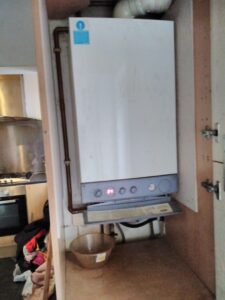
No gas safety checks had been carried out on the boiler for eight years

Following enquiries, HSE requested copies of gas safety records from Mr Evans. He provided a certificate dated November 2024 that had been completed following the concern, but was unable to supply any records covering the previous eight years.

Gas safety checks are a basic legal requirement for landlords and are essential to ensure that appliances and flues are safe. Failing to have these checks carried out places tenants at risk of serious harm, including carbon monoxide poisoning.

The sentencing comes after the HSE issued a warning to the public recently amid a surge in prosecutions against those carrying out illegal gas work – Families warned of risk to life from unregistered gas work amid surge in prosecutions of illegal traders – HSE Media Centre.

Adam Evans, of Brownlow Road, New Ferry, pleaded guilty to breaching Regulation 36(3) of the Gas Safety (Installation and Use) Regulations 1998. He was fined £2,400 and ordered to pay £5,000 in costs at Wirral Magistrates’ Court on 8 October 2025.

Members of the public are reminded that landlords must ensure that gas appliances are checked every 12 months by a Gas Safe registered engineer and that records of these checks are retained. Carbon monoxide alarms should also be installed to provide an early warning of danger.

HSE inspector Ian Betley said:

“Adam Evans showed a complete disregard for the law and put the lives of a mother and her children at risk.

“The case highlights a serious failure by him to comply with well-established gas safety requirements.

“Annual gas safety checks are a legal duty and are in place to protect tenants from very real and potentially fatal risks.

“Landlords must ensure that gas appliances and flues are properly maintained and inspected by a Gas Safe registered engineer. Failure to do so will not be tolerated and enforcement action will be taken.”

Gas engineers and consumers can contact the Gas Safe Register in any of these ways:

Website: www.gassaferegister.co.uk

Phone – Consumers: 0800 408 5500; Engineers: 0800 408 5577

Email – [email protected]

This prosecution was brought by HSE enforcement lawyer Chloe Ward and paralegal officer Sarah Thomas.


Further information:

  1. The Health and Safety Executive (HSE) is Britain’s national regulator for workplace health and safety. We are dedicated to protecting people and places, and helping everyone lead safer and healthier lives.
  2. More information about the legislation referred to in this case is available.
  3. Further details on the latest HSE news releases is available.
  4. Guidance on domestic gas health and safety is available.
  5. HSE does not pass sentences, set guidelines or collect any fines imposed. Relevant sentencing guidelines must be followed unless the court is satisfied that it would be contrary to the interests of justice to do so.  The sentencing guidelines for health and safety offences in England and Wales can be found here and for those in Scotland here.

World Mental Health Day: Listen, identify and act on work-related stress 

World Mental Health Day: Listen, identify and act on work-related stress 

The Health and Safety Executive (HSE) is urging employers to listen to workers, identify stress risks and take action this World Mental Health Day. 

An estimated 964,000 workers in Great Britain are suffering from work-related stress, depression or anxiety, resulting in 22.1 million working days lost. These conditions account for 52% of all work-related ill health and 62% of all working days lost due to work-related ill health. 

This year’s World Mental Health Day theme, “Lived experiences heard: real voices, real change,” highlights the importance of listening to people’s experiences. In the workplace, talking to workers about the pressures they face can help employers identify potential causes of work-related stress and where changes may be needed. 

But listening is only the first step. Employers have a legal duty to assess the risk of stress-related ill health arising from work activities and take measures to control that risk. 

Work-related stress can arise when the demands of work, and the way it is organised and managed, place excessive or difficult-to-manage pressures on people. 

Kayleigh Roberts, Work-Related Stress Policy Lead at HSE, said: 

“This World Mental Health Day, we’re encouraging employers to listen to their workers and take action on what they hear. 

“Having an open conversation can help employers understand the pressures people are experiencing at work and identify where stress risks may exist. Our Stress Talking Toolkit provides structured questions and prompts to help employers start those conversations.  

“But listening is only the first step. Preventing work-related stress means acting on what you hear, whether that’s reviewing workloads, improving communication, giving people more control over their work or providing better support. Employers should identify the risks, take action and review whether those actions are working.” 

HSE’s Working Minds campaign sets out five simple steps employers can take: 

HSE’s Working Minds campaign helps employers prevent work-related stress by taking a risk-management approach, using free tools, guidance and online learning built around HSE’s Management Standards for work design and management. 

Visit the Working Minds website to find out more, access free online learning and use HSE’s stress risk assessment tools. 

Listening matters. But preventing work-related stress means turning what you hear into action.  

Further information: 

  1. Figures are from HSE’s Labour Force Survey estimates, 2024/25. An estimated 964,000 workers in Great Britain are suffering from work-related stress, depression or anxiety, resulting in 22.1 million working days lost. These conditions account for 52% of all work-related ill health and 62% of all working days lost due to work-related ill health. 
  1. World Mental Health Day takes place on 10 October each year. The 2026 theme is “Lived experiences heard: real voices, real change.” 
  1. HSE’s Working Minds campaign helps employers prevent work-related stress by taking a risk-management approach, using free tools, guidance and online learning. Visit https://workright.campaign.gov.uk/working-minds/ for more information. 
  1. Employers have legal duties to assess and manage risks to their employees’ health arising from work activities, including the risk of stress-related ill health. The Management of Health and Safety at Work Regulations 1999 require employers to assess risks to employees’ health and safety arising from their work activities and put appropriate arrangements in place to control those risks. 
  1. HSE’s Stress Talking Toolkit provides structured questions and prompts to help managers talk with workers as part of their overall approach to preventing and managing work-related stress. The toolkit should not be used in isolation. Risks identified through conversations should still be managed. 
  1. For interview requests, case studies or further information, contact the HSE Press Office at [email protected].  

Sheet metal fabrication company fined £48,000 after employee suffers life-changing injury

Fitzpatrick Fabrications Ltd, a sheet metal fabrication company in Lancashire, has been fined £48,000 after an employee lost part of his right thumb and suffered a crush injury to his hand during a manual handling task.

On 24 October 2024, at around 11.30am, Mr Todd Marshall, a welder/fabricator, was working at the Fitzpatrick Fabrications factory at Malvern Mill, Nelson. The job involved welding and fabricating large pieces of stainless steel to form a finished hopper.

The hopper

The hopper consisted of five component parts, which needed to be welded together. When each side of the hopper was welded, it needed to be lifted and repositioned so the next side could be welded.

Mr Marshall was carrying out this task on his own, holding the larger side of the 133kg hopper in the air while the smaller side rested on a desk. The hopper slipped on the smooth desk and came down onto his hand, causing a crush injury and partial loss of his right thumb.

An investigation by the Health and Safety Executive (HSE) found that the company had not conducted a risk assessment for the task and no safe system of work was in place. As a result, workers had not been given clear instructions on how to perform the task safely.

Upon further investigation, HSE found that a near-identical incident had occurred in the days leading up to this one.

HSE guidance states that employers must assess the risks associated with manual handling and take appropriate steps to avoid hazardous manual handling operations where reasonably practicable, or reduce the risk of injury where they cannot be avoided. The Manual Handling Assessment Charts (MAC Tool) can also help employers assess the most common risk factors associated with lifting and carrying activities.

In a statement, Mr Marshall said:

“Things I used to do without thinking are now hard for me. I need two hands to do something as simple as pick up small things. I struggle fastening buttons or zips. I was an amateur boxer before my injury. Boxing was my whole life. It wasn’t just a pastime or hobby. I think I could have gone further with it, but now I’ll never know.”

Fitzpatrick Fabrications Ltd, of Malvern Mill, Waterford Street, Nelson, pleaded guilty to breaching Regulation 4(1) of the Manual Handling Operations Regulations 1992. The company was fined £48,000 and ordered to pay £10,089 in costs at Warrington Magistrates’ Court on 6 October 2026.

HSE Inspector Derek McLauchlan said:

“This was a wholly preventable incident which has had a profound and long-lasting impact on Todd Marshall’s life, made more shocking by the fact a near-identical incident had taken place just days before.

“Businesses should always give thought to the safest way to undertake manual handling operations; this means carrying out a robust assessment of the risks, and considering tools such as the Manual Handling Assessment Chart (MAC Tool) to help plan the task.

“The company failed in its duty to properly plan this task, and the fine imposed should serve as a clear reminder to everyone that HSE will hold to account those who fail to keep their workers safe.”

This HSE prosecution was brought by HSE enforcement lawyer Tom Ledden-Rocks and paralegal officer Stephen Grabe.


Further information:

  1. The Health and Safety Executive (HSE) is Britain’s national regulator for workplace health and safety. We are dedicated to protecting people and places, and helping everyone lead safer and healthier lives.
  1. More information about the legislation referred to in this case is available.
  2. Further details on the latest HSE news releases is available.
  3. Relevant guidance can be found here: Manual handling at work – HSE, Manual handling – HSE and Manual handling assessment charts (the MAC tool) – HSE
  4. HSE does not pass sentences, set guidelines or collect any fines imposed. Relevant sentencing guidelines must be followed unless the court is satisfied that it would be contrary to the interests of justice to do so.  The sentencing guidelines for health and safety offences can be found here.

Painter and decorator sentenced after stepson electrocuted on job

A sole trader has been sentenced after his stepson was fatally electrocuted while working on a domestic property in Chester.

Daniel Watton, 50, trading as Inside Out Painters and Decorators Property Maintenance, was given a suspended jail sentence in relation to the death of trainee painter Connor Lambert. The 24-year-old, from Market Drayton, died after coming into contact with electricity, when a ladder was being moved near overhead power lines. He had been working at the house in Farndon on 29 July 2024 when the incident occurred.

Connor had been expecting his first child with partner Megan McCann at the time, and she described him as having the ‘cheekiest grin’ and being someone who loved family life.

Connor Lambert was killed while working on a home near Chester

Connor’s partner Megan McCann said:

“Connor was amazing. He had the cheekiest grin and would light up any room he was in – he was so funny.

“He was a caring person who always put everyone else first. He was very ambitious and he was an avid Arsenal fan. He went to loads of matches with my father and brother.

“He was a happy person who loved family life.

“We had been trying for our own family for three years and he was over the moon when we found out I was pregnant. 

“He never missed a midwife appointment and was elated when we found out we were having a baby girl.

“We had been on the phone talking the morning he died – I had just taken delivery of a moses basket and I was heavily pregnant at 32 weeks.

“But within minutes I got another phone call to say there had been accident and Connor was dead.

“I never thought I would have buried the love of my life and then given birth to our daughter 23 days later.

“She knows daddy is in the sky and at night he shines as a star – I’m making sure she knows who Connor is, but at some point I will have to explain to her what happened.

“I will never get over Connor’s death – I still feel angry, numb and feel a massive part of my world has gone.”

An investigation by the Health and Safety Executive (HSE) found that Connor had been moving a fully extended ladder with a colleague at the gable end of the property. During this process, the ladder either came into contact with an overhead power line or came close enough for an electrical arc to form. While Connor was killed, his colleague suffered burns to his hands, feet, and stomach.

The investigation also found the work at height had not been properly planned, supervised, or carried out safely. The selected equipment and methods of work were unsuitable for the task and the risks associated with working near overhead power lines had not been adequately assessed or controlled. Additionally, the investigation identified issues in relation to the training and competence of those carrying out the work.

The work had not been properly planned

The original plan of work involved using a tower scaffold and ladders to paint the exterior of the property, including an area with a glass canopy; however, this approach was neither suitable nor safe. In practice, the work deviated from this plan, with ladders used throughout. This method was approved by Daniel Watton, but was also unsuitable and unsafe as demonstrated by the fatal incident.

Connor’s father Craig West, said the loss of his son had changed him, adding:

“This experience has changed me, my emotions, my temperament and my outlook on life.

“I’m agitated regularly and can become angry easily. I have lost the spring in my step and no longer have the drive I once had and work now has become a chore.

“After the findings of the inquest I find Connor’s accident even more tragic as it should have so easily been avoided.

“I do hold people responsible for this situation.”

HSE guidance states that where work at height cannot be avoided, it must be properly planned, appropriately supervised, and carried out safely. This includes using suitable equipment and work methods and ensuring those involved are competent. Where work near overhead power lines is unavoidable, measures must be taken to eliminate or reduce the risk, such as isolating the power supply, using appropriate equipment, and maintaining safe distances.

Daniel Watton, of Bean Bank, Wollerton, Market Drayton, pleaded guilty to breaching Regulation 4(1) of the Work at Height Regulations 2005 and was sentenced to 16 weeks imprisonment, suspended for 12 months and ordered to pay £10,645 in costs at Warrington Magistrates Court on 6 October 2026.

HSE inspector Keeley Eves said:

“This tragic incident meant a father never got to meet and hold his baby daughter.

“The fact it could and should have been prevented with proper planning and control measures, makes it all the more stark.

“Work at height and work near overhead power lines are both high-risk activities. Employers must ensure that suitable equipment is selected, risks are fully assessed, and workers are adequately trained and supervised.

“The very lives of those workers depend on these decisions.

“Our thoughts remain with all of Connor’s loved ones.”

This HSE prosecution was brought by HSE enforcement lawyer Jonathan Bambro and paralegal officer Lynne Thomas. The investigation was supported by Natalka Heath, HSE Visiting Officer.


Further information:

  1. The Health and Safety Executive (HSE) is Britain’s national regulator for workplace health and safety. We are dedicated to protecting people and places, and helping everyone lead safer and healthier lives.
  2. More information about the legislation referred to in this case is available.
  3. Further details on the latest HSE news releases is available.
  4. HSE does not pass sentences, set guidelines or collect any fines imposed. Relevant sentencing guidelines must be followed unless the court is satisfied that it would be contrary to the interests of justice to do so.  The sentencing guidelines for health and safety offences can be found here.