Press release

Company and director fined after public seriously injured by falling scaffold tower on busy high street

A London construction company and its sole director have been fined after a tower scaffold fell onto two members of the public on a busy high street in south-west London.

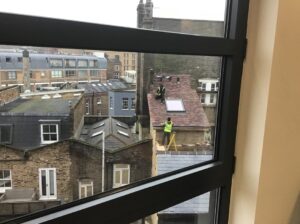
On 19 July 2023, operatives working for Add Prop Limited assembled a mobile tower scaffold on Putney High Street while under the supervision of the company’s sole director, Atif Riaz. The scaffold tower, which had been assembled incorrectly with inadequate measures to separate it from members of the public, was subsequently covered in sheeting.

The sheeting acted as a sail in windy conditions, causing the tower scaffold to overturn. The structure struck and trapped two members of the public, resulting in serious injuries.

The scaffold fell onto a busy high street and injured two people

Add Prop Limited was acting as principal contractor on a project to convert a commercial building into residential flats. Mr Riaz was both the project manager and site supervisor and was present overseeing the work on the day of the incident.

An investigation by the Health and Safety Executive (HSE) found that Add Prop Limited had failed to ensure the temporary structure was designed, installed and maintained so that it could withstand foreseeable loads, including those created by wind acting on the sheeting. The company had previously been served with a Prohibition Notice in relation to unsafe work involving a tower scaffold at another site.

The investigation also found that the tower scaffold had neither been assembled nor inspected by adequately trained and competent persons. It had not been erected in accordance with the manufacturer’s instructions or established industry guidance.

The tower scaffold had neither been assembled nor inspected by adequately trained and competent persons

HSE further found that Atif Riaz had been negligent in his role as both sole director and project manager. Despite the well-known risks associated with wind loading on scaffold structures, neither the company nor Mr Riaz took adequate account of those risks before deciding to sheet the scaffold.

HSE guidance states that tower scaffolds must be erected by trained and competent persons and in accordance with manufacturers’ instructions. Dutyholders must also ensure temporary structures are stable and capable of withstanding foreseeable environmental conditions, including wind loading. Further guidance can be found at: Tower scaffolds – HSE.

Following a hearing at Westminster Magistrates’ Court, Add Prop Limited was found guilty of breaching Regulation 19(2)(a) of the Construction (Design and Management) Regulations 2015. The company was fined £20,000 and ordered to pay £7,000 in costs.

Atif Riaz, the company’s sole director, was found guilty of an offence under Section 37 of the Health and Safety at Work etc. Act 1974. He was fined £1,730 and ordered to pay £1,730 in costs.

HSE Inspector Daniel Burton said:

“The public have a right to expect scaffolding they pass by is safe and has been properly installed – yet every year people are injured when scaffold towers overturn.

“In this case, two members of the public suffered serious injuries when a scaffold tower overturned on a busy high street. The risks associated with scaffold towers and wind loading are well known within the construction industry – this kind of incident simply should not happen.

“The fines imposed on Add Prop Limited and Atif Riaz should underline to everyone in the construction industry that the courts, and HSE, take failures to follow health and safety requirements extremely seriously.

“HSE will not hesitate to take action against companies and, where appropriate, directors who fail to do all that they should to keep workers and members of the public safe.”

The HSE prosecution was brought by enforcement lawyer Gemma Zakrzewski and paralegal officer Melissa Wardle.


Further information:

  1. The Health and Safety Executive (HSE) is Britain’s national regulator for workplace health and safety. We are dedicated to protecting people and places, and helping everyone lead safer and healthier lives.
  2. More information about the legislation referred to in this case is available.
  3. Further details on the latest HSE news releases is available.
  4. Relevant guidance can be found here Tower scaffolds – HSE.
  5. HSE does not pass sentences, set guidelines or collect any fines imposed. Relevant sentencing guidelines must be followed unless the court is satisfied that it would be contrary to the interests of justice to do so.  The sentencing guidelines for health and safety offences can be found here.
Property management company fined and managing director handed suspended sentence after death of ‘brave, strong, and determined’ teenage apprentice

A property management company has been fined and its director handed a suspended sentence after an 18-year-old apprentice was killed whilst working at a property in Bangor, North Wales.

Chloe Bidwell was working for Varcity Living Limited as a joiner apprentice at a residential property on Deiniol Road, Bangor, on 20 December 2023. The property was undergoing a full renovation when a stack of wooden board material fell, fatally injuring Miss Bidwell.

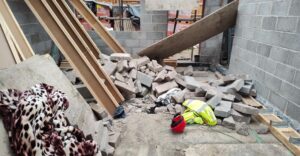
Miss Bidwell had been working alone at the time of the incident and was found deceased at the property after she failed to respond to messages or return home. A mixture of board materials had been stacked vertically and unsecured against a wall. It is believed she may have been attempting to retrieve a plywood board from the stack when some of the boards fell on her, crushing her neck and causing fatal injuries. There were 28 boards in total, of large dimensions and potentially weighing up to 30kg each. No attempt had been made to secure the boards in their upright position, and the risk of them falling had not been identified.

An investigation by the Health and Safety Executive (HSE) found that Varcity Living Limited failed to provide safe systems of work and failed to provide adequate information, instruction, training and supervision, so far as was reasonably practicable. The investigation also found that these failures were attributable to the neglect of director David Horrocks.

Specifically, investigators found there was inadequate site supervision, no suitable lone working policy or procedure, no suitable policy or procedure for the storage of board materials, and inadequate risk assessment prior to the incident.

HSE guidance on stacking materials states that building materials must be stored safely so they cannot topple or roll over. Boards should be stored horizontally on a level surface using suitable pallets or battens and must never be stacked on edge without adequate support. HSE guidance on lone working also states that where lone working is undertaken, there should be increased training, supervision and monitoring, including procedures to confirm a lone worker has returned safely once their task is complete.

Varcity Living Limited, of High Street, Bangor, pleaded guilty to breaching Sections 2(1) and 3(1) of the Health and Safety at Work etc. Act 1974. The company was fined £50,000 and ordered to pay £10,080 in costs at Llandudno Magistrates’ Court on 9 July 2026.

David Horrocks, of Felinheli, pleaded guilty to breaching Section 37 of the Health and Safety at Work etc. Act 1974. He was sentenced to 26 weeks imprisonment suspended for two years and ordered to pay £7,886 in costs.

Chloe’s mother, Clare Stephenson-Brown, speaking on behalf of the family, said:

“Chloe was only 18, full of life, energy, and determination. She had so many talents and dreams: a skilled joiner, a rugby player, a surfer, a skydiver, and a young woman who was about to travel the world and begin her journey towards becoming a firefighter. She was wise beyond her years, brave, and incredibly grounded.”

Mrs Stephenson-Brown described the devastating impact of losing Chloe in the way that she did:

“Chloe died instantly and alone. The fact that she was by herself in those final moments is something that causes us unbearable pain and something we will carry forever. Knowing how full of life she was and how much she had yet to experience makes her loss impossible to accept.”

She added:

“As a family we feel like Chloe was let down at work, and because of that, we have lost her forever. Our lives will never, ever be the same again. We just hope that those responsible truly understand the enormity of what has happened, not only the loss of Chloe’s life, but the devastation caused to her family, her friends, and her community.

As a family, we hope this case is not viewed simply in terms of the outcome in court, but as a stark reminder of the real human cost behind it. The impact of losing Chloe reaches far beyond any sentence and will stay with us forever. We urge employers to look beyond compliance and truly consider the responsibility they hold for the lives in their care. Safety must be meaningful in practice, ensuring risks are properly managed, lone working is safe, and that everyone who goes to work returns home.”

HSE inspector Rachael Newman said:

“Chloe Bidwell was a young apprentice joiner at the very beginning of her career. She had every right to expect that her employer would take the basic steps needed to keep her safe at work. Her family had every right to expect that when Chloe went to work, she would come home.

“The tragedy of Chloe’s death is made all the more jarring because it was so wholly avoidable. Apprentices should not be working alone on a construction site, and Chloe died in circumstances which should never have been able to happen.

“Chloe’s employer, Varcity Living Limited, had no safe storage system in place for the dangerously heavy boards which were stacked upright and completely unsecured. Furthermore, they had failed to provide the necessary information, instruction, training, and supervision for their young apprentice.

“Today’s result cannot bring Chloe back, but we hope the sentence handed down brings some solace to her family, whose lives carry on without her. They remain in our thoughts, and we offer them our deepest condolences.”

This prosecution was brought by HSE enforcement lawyer Arfaq Nabi and paralegal officer Lynne Thomas.

Further Information

  1. The Health and Safety Executive (HSE) is Britain’s national regulator for workplace health and safety. We are dedicated to protecting people and places, and helping everyone lead safer and healthier lives.
  2. More information about the legislation referred to in this case is available on the HSE website.
  3. Further details on the latest HSE news releases are available on the HSE website.
  4. Relevant guidance can be found at: https://www.hse.gov.uk/pubns/priced/hsg150.pdf, https://www.hse.gov.uk/pubns/wis2.pdf and https://www.hse.gov.uk/pubns/indg73.pdf.
  5. HSE does not pass sentences, set guidelines or collect any fines imposed. Relevant sentencing guidelines must be followed unless the court is satisfied that it would be contrary to the interests of justice to do so. The sentencing guidelines for health and safety offences are available on the Sentencing Council website.


Cwmni rheoli eiddo wedi’i ddirwyo a’i gyfarwyddwr rheoli wedi’i ddedfrydu i gyfnod o garchar wedi’i ohirio ar ôl marwolaeth prentis ‘dewr, cryf, a phenderfynol’ yn ei harddegau

Mae cwmni rheoli eiddo a’i gyfarwyddwr wedi cael dedfryd o garchar wedi’i ohirio, ar ôl i brentis 18 oed gael ei ladd wrth weithio mewn eiddo ym Mangor, Gogledd Cymru.

Roedd Chloe Bidwell yn gweithio i Varcity Living Limited fel prentis saer mewn eiddo preswyl ar Ffordd Deiniol, Bangor, ar 20 Rhagfyr 2023. Roedd yr eiddo yn cael ei adnewyddu’n llwyr pan syrthiodd pentwr o ddeunydd bwrdd pren, gan anafu Miss Bidwell yn angheuol.

Roedd Miss Bidwell wedi bod yn gweithio ar ei phen ei hun ar adeg y digwyddiad a chafodd ei darganfod yn farw yn yr eiddo ar ôl iddi fethu ag ymateb i negeseuon na dychwelyd adref. Roedd cymysgedd o ddeunyddiau bwrdd wedi’u pentyrru’n fertigol ac heb eu sicrhau yn erbyn wal. Credir ei bod hi o bosibl wedi bod yn ceisio nôl bwrdd pren haenog o’r pentwr pan syrthiodd rhai o’r byrddau arni, gan falu ei gwddf ac achosi anafiadau angheuol. Roedd 28 o fyrddau i gyd, o ddimensiynau mawr ac o bosibl yn pwyso hyd at 30kg yr un. Ni wnaed unrhyw ymgais i sicrhau’r byrddau yn eu safle unionsyth, ac nid oedd y risg y byddent yn cwympo wedi’i nodi.

Canfu ymchwiliad gan yr Awdurdod Gweithredol Iechyd a Diogelwch (HSE) fod Varcity Living Limited wedi methu â darparu systemau gwaith diogel ac wedi methu â darparu gwybodaeth, cyfarwyddyd, hyfforddiant a goruchwyliaeth ddigonol, cyn belled ag yr oedd yn rhesymol ymarferol. Canfu’r ymchwiliad hefyd fod y methiannau hyn yn ganlyniad i esgeulustod y cyfarwyddwr David Horrocks.

Yn benodol, canfu ymchwilwyr nad oedd goruchwyliaeth ddigonol ar y safle, nad oedd polisi na gweithdrefn addas ar gyfer gweithio ar ei phen eich hun, nad oedd polisi na gweithdrefn addas ar gyfer storio deunyddiau bwrdd, ac nad oedd asesiad risg digonol cyn y digwyddiad.

Mae canllawiau’r HSE ar bentyrru deunyddiau yn nodi bod rhaid storio deunyddiau adeiladu yn ddiogel fel na allant ddymchwel na rholio drosodd. Dylid storio byrddau’n llorweddol ar arwyneb gwastad gan ddefnyddio paledi neu estyll addas a rhaid peidio byth â’u pentyrru ar eu hymyl heb gefnogaeth ddigonol. Mae canllawiau’r HSE ar weithio ar eich pen eich hun hefyd yn nodi, lle mae gweithio ar eich pen eich hun yn digwydd, y dylid cael mwy o hyfforddiant, goruchwyliaeth a monitro, gan gynnwys gweithdrefnau i gadarnhau bod gweithiwr sy’n gweithio ar ei ben ei hun wedi dychwelyd yn ddiogel ar ôl i’w dasg gael ei chwblhau.

Plediodd Varcity Living Limited, o Stryd Fawr, Bangor, yn euog i dorri Adrannau 2(1) a 3(1) o Ddeddf Iechyd a Diogelwch yn y Gwaith ac ati 1974. Dirwywyd y cwmni £50,000 a gorchmynnwyd iddo dalu £10,080 mewn costau yn Llys Ynadon Llandudno ar 9 Gorffennaf 2026.

Plediodd David Horrocks, o Felinheli, yn euog i dorri Adran 37 o Ddeddf Iechyd a Diogelwch yn y Gwaith ac ati 1974. Dedfrydwyd ef i 26 wythnos o garchar, wedi’i ohirio am ddwy flynedd, a gorchmynnwyd iddo dalu £7886 mewn costau.

Dywedodd mam Chloe, Clare Stephenson-Brown, yn siarad ar ran y teulu:

“Dim ond 18 oed oedd Chloe, yn llawn bywyd, egni, a phenderfyniad. Roedd ganddi gymaint o dalentau a breuddwydion: saer coed medrus, chwaraewr rygbi, syrffiwr, neidiwr awyr, a menyw ifanc a oedd ar fin teithio’r byd a dechrau ei thaith tuag at fod yn ddiffoddwr tân. Roedd hi’n ddoeth y tu hwnt i’w hoedran, yn ddewr, ac yn hynod o gadarn.”

Disgrifiodd Mrs Stephenson-Brown effaith ddinistriol colli Chloe yn y ffordd y gwnaeth:

“Bu farw Chloe ar unwaith ac ar ei phen ei hun. Mae’r ffaith ei bod ar ei phen ei hun yn yr eiliadau olaf hynny yn rhywbeth sy’n achosi poen annioddefol i ni a rhywbeth y byddwn ni’n ei gario am byth. Mae gwybod pa mor llawn bywyd oedd hi a faint nad oedd hi wedi’i brofi eto yn gwneud ei cholled yn amhosibl i’w derbyn.”

Ychwanegodd: “Fel teulu, rydym yn teimlo fel pe bai Chloe wedi cael ei siomi yn y gwaith, ac oherwydd hynny, rydym wedi ei cholli am byth. Ni fydd ein bywydau byth yr un fath eto. Rydym yn gobeithio y bydd y rhai sy’n gyfrifol yn deall maint yr hyn sydd wedi digwydd yn wirioneddol, nid yn unig colli bywyd Chloe, ond y dinistr a achoswyd i’w theulu, ei ffrindiau, a’i chymuned.

 Fel teulu, rydym yn gobeithio na chaiff yr achos hwn ei ystyried o ran y canlyniad yn y llys yn unig, ond fel atgof llym o’r gost ddynol wirioneddol y tu ôl iddo. Mae effaith colli Chloe yn ymestyn ymhell y tu hwnt i unrhyw ddedfryd a bydd yn aros gyda ni am byth. Rydym yn annog cyflogwyr i edrych y tu hwnt i gydymffurfiaeth ac ystyried yn wirioneddol y cyfrifoldeb sydd ganddynt am y bywydau yn eu gofal. Rhaid i ddiogelwch fod yn ystyrlon yn ymarferol, gan sicrhau bod risgiau’n cael eu rheoli’n iawn, bod gweithio ar eich pen eich hun yn ddiogel, a bod pawb sy’n mynd i’r gwaith yn dychwelyd adref.”

Dywedodd arolygydd HSE, Rachael Newman:

“Roedd Chloe Bidwell yn brentis saer ifanc ar ddechrau ei gyrfa. Roedd ganddi bob hawl i ddisgwyl y byddai ei chyflogwr yn cymryd y camau sylfaenol oedd eu hangen i’w chadw’n ddiogel yn y gwaith. Roedd gan ei theulu bob hawl i ddisgwyl, pan fyddai Chloe yn mynd i’r gwaith, y byddai hi’n dod adref.

“Mae trychineb marwolaeth Chloe yn cael ei gwneud hyd yn oed yn fwy ysgytwol oherwydd ei bod mor gwbl osgoadwy. Ni ddylai prentisiaid fod yn gweithio ar eu pen eu hunain ar safle adeiladu, a bu farw Chloe mewn amgylchiadau na ddylent fod wedi gallu digwydd byth.

“Nid oedd gan gyflogwr Chloe, Varcity Living Limited, system storio ddiogel ar waith ar gyfer y byrddau peryglus o drwm a oedd wedi’u pentyrru’n unionsyth ac yn gwbl heb eu diogelu. Ar ben hynny, roeddent wedi methu â darparu’r wybodaeth, y cyfarwyddyd, yr hyfforddiant a’r oruchwyliaeth angenrheidiol i’w prentis ifanc.

“Ni all canlyniad heddiw ddod â Chloe yn ôl, ond rydym yn gobeithio y bydd y ddedfryd a roddwyd yn dod â rhywfaint o gysur i’w theulu, y mae eu bywydau’n parhau hebddi. Maent yn parhau yn ein meddyliau, ac rydym yn cynnig ein cydymdeimlad dwysaf iddynt.”

Dygwyd yr erlyniad hwn gan y cyfreithiwr gorfodi HSE Arfaq Nabi a’r swyddog paragyfreithiol Lynne Thomas.

Nodiadau i Olygyddion

  1. Yr Awdurdod Gweithredol Iechyd a Diogelwch (HSE) yw rheoleiddiwr cenedlaethol Prydain ar gyfer iechyd a diogelwch yn y gweithle. Rydym wedi ymrwymo i amddiffyn pobl a lleoedd, a helpu pawb i fyw bywydau mwy diogel ac iachach.
  2. Mae rhagor o wybodaeth am y ddeddfwriaeth y cyfeirir ati yn yr achos hwn ar gael ar wefan yr HSE.
  3. Mae rhagor o fanylion am y datganiadau newyddion diweddaraf gan yr HSE ar gael ar wefan yr HSE.
  4. Gellir dod o hyd i ganllawiau perthnasol yn: https://www.hse.gov.uk/pubns/priced/hsg150.pdf, https://www.hse.gov.uk/pubns/wis2.pdf and https://www.hse.gov.uk/pubns/indg73.pdf.
  5. Nid yw’r HSE yn rhoi dedfrydau, yn gosod canllawiau nac yn casglu unrhyw ddirwyon a osodir. Rhaid dilyn canllawiau dedfrydu perthnasol oni bai bod y llys yn fodlon y byddai’n groes i fuddiannau cyfiawnder gwneud hynny. Mae’r canllawiau dedfrydu ar gyfer troseddau iechyd a diogelwch ar gael ar wefan y Cyngor Dedfrydu.

North Wales waste and recycling company fined over welfare facilities and repeated site failures

A waste and recycling company has been fined £36,000 for repeatedly failing to provide appropriate welfare facilities and asbestos awareness training for employees at a site in North Wales.  

Llandudno Magistrates’ Court heard how workers at World Care (Wales) Limited, were tasked with sorting waste and recyclable materials by hand without having facilities to wash dry themselves afterwards.  

At the World Care site, it was identified through a routine inspection that the company had failed to make warm running water and soap available to employees as well as a means to dry themselves. There had been at least one occasion where asbestos had been brought onto the site, yet they continued to not provide asbestos awareness training to employees.  

An investigation by the Health and Safety Executive (HSE) found that World Care (Wales) had received previous enforcement on several occasions over an 11year periodOn each occasion, inspectors found that the company failed to maintain the minimum health and safety standards required. These enforcement notices were in relation to welfare provisions and training. 

HSE Inspector James Benton said: “The health risks from exposure to material containing asbestos is well known yet this company wasn’t providing the appropriate facilities for workers to protect themselves.  

“Basic welfare provision is essential to ensure that employees can clean themselves at work, to help prevent exposure to harmful microorganisms. After being told of the risks, this company  repeatedly failed to provide adequate welfare facilities such as soap and running water, and failed to provide asbestos awareness training to employees.”   

World Care (Wales) Limited of Tre Marl Industrial Estate, North Wales, pleaded guilty to breaching Section 2(1) of the Health and Safety at Work etc. Act 1974. The company was fined £36,000 and £8,867 in costs at Llandudno Magistrates’ Court on 6 July 2026. The company opted to make the payments over a 16-month period. 

This HSE prosecution was brought by HSE enforcement lawyer Alan Hughes and paralegal officer Lynne Thomas. 

More information

  1. The Health and Safety Executive (HSE) is Britain’s national regulator for workplace health and safety. We are dedicated to protecting people and places, and helping everyone lead safer and healthier lives.  
  2. More information about the legislation referred to in this case is available. 
  3. Further details on the latest HSE news releases is available.  
  4. Relevant guidance can be found here  The Control of Asbestos Regulations 2012 and The Workplace (Health, Safety and Welfare) Regulations 1992 
  5. Workers in skilled trades are at particular risk of discovering and disturbing asbestos during their work. Make sure you know what to look for, and what to do to protect yourself when you come across asbestos with our Asbestos & You quick guide for trades. 
  6. HSE does not pass sentences, set guidelines or collect any fines imposed. Relevant sentencing guidelines must be followed unless the court is satisfied that it would be contrary to the interests of justice to do so.  The sentencing guidelines for health and safety offences can be found here.
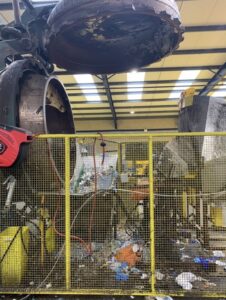
Dirwywyd cwmni gwastraff ac ailgylchu yng Ngogledd Cymru oherwydd diffyg cyfleusterau lles a methiannau parhaus ar y safle

Mae cwmni gwastraff ac ailgylchu wedi cael dirwy o £36,000 am fethu dro ar ôl tro â darparu cyfleusterau lles priodol ac hyfforddiant ymwybyddiaeth asbestos i weithwyr ar safle yng Ngogledd Cymru.

Clywodd Llys Ynadon Llandudno sut yr oedd gweithwyr yn World Care (Wales) Limited yn cael y dasg o ddidoli gwastraff a deunyddiau y gellir eu hailgylchu â llaw heb fod ganddynt gyfleusterau i ymolchi a sychu eu hunain wedyn.

Ar safle World Care, canfuwyd drwy archwiliad arferol fod y cwmni wedi methu â darparu dŵr rhedegog cynnes a sebon i weithwyr, yn ogystal â dull o sychu eu hunain. Bu o leiaf un achlysur lle daethpwyd ag asbestos i’r safle, ac eto parhaodd y cwmni i beidio â darparu hyfforddiant ymwybyddiaeth asbestos i weithwyr.

Canfu ymchwiliad gan yr Awdurdod Gweithredol Iechyd a Diogelwch (HSE) fod World Care (Wales) wedi derbyn camau gorfodi ar sawl achlysur dros gyfnod o 11 mlynedd. Ar bob achlysur, canfu’r arolygwyr fod y cwmni wedi methu â chynnal y safonau iechyd a diogelwch lleiaf gofynnol. Roedd y rhybuddion gorfodi hyn yn ymwneud â darpariaethau lles a hyfforddiant.

Dywedodd yr Arolygydd HSE James Benton: “Mae’r risgiau iechyd sy’n deillio o ddod i gysylltiad â deunydd sy’n cynnwys asbestos yn hysbys iawn, ac eto nid oedd y cwmni hwn yn darparu’r cyfleusterau priodol i weithwyr amddiffyn eu hunain.

“Mae darpariaeth lles sylfaenol yn hanfodol i sicrhau bod gweithwyr yn gallu glanhau eu hunain yn y gwaith, er mwyn helpu i atal dod i gysylltiad â micro-organebau niweidiol. Ar ôl cael gwybod am y risgiau, methodd y cwmni hwn dro ar ôl tro â darparu cyfleusterau lles digonol, fel sebon a dŵr rhedegog, a methodd â darparu hyfforddiant ymwybyddiaeth o asbestos i weithwyr.”

Plediodd World Care (Wales) Limited, o Ystad Ddiwydiannol Tre Marl yng Ngogledd Cymru, yn euog i dorri Adran 2(1) o Ddeddf Iechyd a Diogelwch yn y Gwaith ac ati 1974. Cafodd y cwmni ddirwy o £36,000 a gorchymyn i dalu costau o £8,867 yn Llys Ynadon Llandudno ar 6 Gorffennaf 2026. Dewisodd y cwmni wneud y taliadau dros gyfnod o 16 mis.

Cafodd yr achos erlyn hwn gan yr HSE ei gyflwyno gan y cyfreithiwr gorfodi Alan Hughes a’r swyddog paragyfreithiol Lynne Thomas.

Nodiadau i Olygyddion

  1. Yr Awdurdod gweithredol Iechyd a Diogelwch (HSE) yw rheoleiddiwr cenedlaethol Prydain ar gyfer iechyd a diogelwch yn y gweithle. Rydym wedi ymrwymo i ddiogelu pobl a lleoedd, ac i helpu pawb i fyw bywydau mwy diogel ac iachach.
  2. Mae rhagor o wybodaeth am y ddeddfwriaeth y cyfeirir ati yn yr achos hwn ar gael.
  3. Mae manylion pellach am ddatganiadau newyddion diweddaraf yr HSE ar gael.
  4. Gellir dod o hyd i ganllawiau perthnasol yma: Rheoliadau Rheoli Asbestos 2012 a Rheoliadau’r Gweithle (Iechyd, Diogelwch a Lles) 1992.
  5. Mae gweithwyr mewn crefftau medrus mewn perygl arbennig o ddod ar draws ac aflonyddu ar asbestos yn ystod eu gwaith. Sicrhewch eich bod yn gwybod beth i edrych amdano, a beth i’w wneud i amddiffyn eich hun pan fyddwch yn dod ar draws asbestos, drwy ddefnyddio ein canllaw cyflym ‘Asbestos a Chi’ ar gyfer crefftau.
  6. Nid yw’r HSE yn pasio dedfrydau, yn gosod canllawiau nac yn casglu unrhyw ddirwyon a roddir. Rhaid dilyn y canllawiau dedfrydu perthnasol oni bai bod y llys yn fodlon y byddai gwneud hynny yn groes i fuddiannau cyfiawnder. Gellir dod o hyd i’r canllawiau dedfrydu ar gyfer troseddau iechyd a diogelwch

Worker killed after wall panels collapsed during cleanroom dismantling

A Hamilton-based company has been fined after a worker died when a series of wall panels collapsed and ejected him from a scissor lift.

Steven Tervit had been carrying out a dismantling operation at a specialist technology centre in Renfrew on 9 November 2022 when the incident happened. The 32-year-old was employed as a labourer by Food Process Engineering Limited and had worked for the company for approximately 15 years.

Mr Tervit had been working at a height of around four metres on a scissor lift, removing wall panels from a cleanroom at the National Manufacturing Institute Scotland (NMIS) at Westway Business Park, Porterfield Road, when the remaining panels fell and struck the platform. Mr Tervit was thrown from the lift onto the concrete floor of the warehouse.

The cleanroom before being dismantled

He was taken to the Queen Elizabeth University Hospital where he was found to have suffered a traumatic brain injury, rib fractures, lung contusions and fractures to his right thigh bone and left shin bone. He died in hospital the following day.

The cleanroom, which had been used to house a welding robot, was a steel-framed structure with walls and roof constructed of polyurethane panels measuring 6.1 metres in height. Food Process Engineering Limited had been subcontracted to remove the panels as part of the wider dismantling operation.

An investigation by the Health and Safety Executive (HSE) found that the company had failed to adequately assess and manage the risks associated with dismantling a structure it had not originally installed.

The wall panels, once the roof had been removed, had insufficient lateral support to maintain their structural stability. HSE found that the company’s risk assessment and method statement did not adequately address the risk of unplanned collapse due to structural instability. Although the company’s own method statement specified that ‘A-frame’ props or supports should be installed where necessary, no such props were present or in use on site at the time of the accident.

The company had carried out visual inspections of the exterior of the cleanroom prior to commencing work and proceeded on the assumption that it had been constructed to industry standard. HSE established that this assumption was unsafe, as the disassembly of a structure built by a third party carried an inherent risk of latent defects that could elevate the risk of structural failure.

The company also failed to communicate its risk assessment and method statement to the employees carrying out the work, meaning workers on site were not adequately informed of the risks involved.

Falls while working at height remain the leading cause of workplace injury and death. New data published by HSE for 2025/26 revealed that 31 people died – representing around a quarter of all work-related deaths for the year.

Food Process Engineering Limited, of Unit 17, Whistleberry Industrial Estate, Hamilton, pleaded guilty to breaching sections 2(1), 2(a) and (c) and 33(1)(a) and (c) of the Health and Safety at Work Act etc 1974. The company was fined £50,000 with a victim surcharge of £3,750 at Paisley Sheriff Court on 6 July 2026.

HSE inspector Amna Doherty said:

“The failings of this company cost a much-loved husband, father and son his life.

“Falls from height remain the leading cause of workplace death and injury.

“There was a lack of planning in terms of the risk and those being tasked with the job were not aware of the dangers posed to them.

“We will not hesitate to take action against those who fail to protect their workers.”


Further information:

  1. The Health and Safety Executive (HSE) is Britain’s national regulator for workplace health and safety. We are dedicated to protecting people and places, and helping everyone lead safer and healthier lives.
  2. More information about the legislation referred to in this case is available.
  3. Further details on the latest HSE news releases is available.
  4. HSE does not pass sentences, set guidelines or collect any fines imposed. Relevant sentencing guidelines must be followed unless the court is satisfied that it would be contrary to the interests of justice to do so.  The sentencing guidelines for health and safety offences in Scotland can be found here.

Emma Bridgewater fined £266,666 after falling shard of glass injures child

Ceramics manufacturer Emma Bridgewater has been handed a £266,666 fine after a young girl was injured by falling broken glass during a Christmas lights switch-on event at its premises in Hanley.

The sentence was imposed after a Health & Safety Executive investigation found the company had failed to properly secure a snow machine which fell from a window above.

The gift shop and window from which the snow machine fell.

On 23 November 2024, the 12-year-old victim attended an annual Christmas lights switch-on event with her family at the Emma Bridgewater gift shop in Hanley. During the event, an artificial snow machine, which was in a window opening above the gift shop, fell out of the building and to the ground below. The machine hit a light on the way, sending a shard of broken glass towards the girl’s head, she suffered a deep cut which required hospital treatment.

An investigation by the Health and Safety Executive (HSE) found that Emma Bridgewater Limited had not properly assessed the risks associated with the use of the snow machine and had failed to ensure that it was properly secured to prevent it from falling out of the window, despite the manufacturer’s instructions demonstrating clearly how to safely install it.

The snow machine.

The Work at Height Regulations 2005 require employers to ensure that suitable steps are taken to prevent the fall of any material or objects where there is a risk of injury to employees or members of the public.

At Birmingham Magistrates’ Court on 6th July 2026, Emma Bridgewater Limited of Lichfield Street, Hanley, Stoke-on-Trent, pleaded guilty to breaching Regulation 10(1) of the Work at Height Regulations 2005 and Section 3(1) of the Health and Safety at Work etc. Act 1974 and was fined £266,666 and ordered to pay costs of £4931 along with a victim surcharge of £2000.

Health & Safety Executive Inspector Rob Gidman said:

“What should have been a festive event was marred by haphazard planning which left a young girl needing hospital treatment.

“Had the positioning of the snow machine been properly planned and the machine itself been properly secured, this incident could have been avoided entirely – and it’s fortunate the victim did not sustain more serious injuries.

“Christmas gatherings are a happy occasion, but it’s vital organisers thoroughly assess the risks and put in place measures to minimise the risk of harm to the public.”

The HSE investigation was supported by Visiting Officer, Sarah Ough, and the prosecution was brought by enforcement lawyer Samantha Tiger.

Further Information

  1. The Health and Safety Executive (HSE) is Britain’s national regulator for workplace health and safety. We are dedicated to protecting people and places, and helping everyone lead safer and healthier lives.
  2. More information about the legislation referred to in this case is available.
  3. Further details on the latest HSE news releases is available.
  4. Relevant guidance can be found here Working at height: A brief guide.
  5. HSE does not pass sentences, set guidelines or collect any fines imposed. Relevant sentencing guidelines must be followed unless the court is satisfied that it would be contrary to the interests of justice to do so.  The sentencing guidelines for health and safety offences can be found here.

 

HSE takes landmark enforcement action against occupational health service provider

The Health and Safety Executive (HSE) has issued its first ever Prohibition Notice against an occupational health service provider, following findings that inadequate health surveillance was putting workers at risk of serious and irreversible harm.

The action marks a significant milestone in HSE’s regulation of occupational health provision and is evidence of the regulator’s focus on the prevention of ill-health. This enforcement sends a clear signal that substandard occupational health services will not be tolerated where they create real risks to workers’ health.

HSE inspectors found that the provider was delivering health surveillance through personnel who were inadequately trained, unqualified, and unsupervised. The ineffective surveillance meant that early signs of serious occupational diseases — including occupational asthma, dermatitis, and noise-induced hearing loss — were at risk of going undetected, leaving workers exposed to wood dust and noise without appropriate intervention.

A Prohibition Notice was issued to stop this activity on the grounds that it created a risk of serious personal injury.

HSE subsequently issued an Improvement Notice after finding that the provider’s health surveillance arrangements were fundamentally unsuitable. Inspectors identified a lack of competent occupational health oversight, inadequate clinical governance, no quality assurance processes, and no clear procedures for escalating adverse findings or reviewing workplace controls.

HSE Occupational Health Inspector Julie Wood said: “This is the first time HSE has taken enforcement action of this kind against an occupational health service provider, and we have not done so lightly. It reflects the seriousness with which we view the quality of occupational health provision and our determination to act where substandard services are putting people in harm’s way.

“Health surveillance exists to protect workers from work-related health conditions that can cause permanent, life-changing harm. When it is carried out poorly, employers are given false assurance and workers are left unknowingly at risk.

“We expect occupational health providers to demonstrate genuine competence, proper clinical governance, and clear processes for acting on what they find. Anything less is a failure of the workers these services are meant to protect.”

Health surveillance is a legal requirement for many employers and exists to identify occupational diseases early so that appropriate action can then be taken to protect the affected worker and their colleagues. When health surveillance is carried out poorly, it creates a false sense of assurance for employers while leaving workers unknowingly at risk.

This case underlines the importance of occupational health services being delivered by competent, appropriately qualified professionals with robust clinical governance in place. Supporting employers to access competent occupational health services is a key part of HSE’s strategy to reduce work-related ill health, alongside ensuring that where health surveillance is legally required it is carried out effectively. HSE expects employers to satisfy themselves that the occupational health providers they appoint are capable of delivering services that meet legal requirements and help protect workers from preventable occupational disease.

Further information:

  1. The HSE public enforcement register can be found at www.hse.gov.uk.
  2. To account for the appeals process and internal quality assurance, enforcement notices are published 5 weeks after they are served
  3. A Prohibition Notice requires an activity to stop immediately where HSE believes it involves a risk of serious personal injury or ill health.
  4. An Improvement Notice requires specific remedial action to be taken within a set timeframe to address a contravention of health and safety law.
  5. Health surveillance is required under a range of regulations including the Control of Substances Hazardous to Health Regulations 2002 (COSHH) and the Control of Noise at Work Regulations 2005.

HSE authorises Crown Censure of MoD and prosecution of defence contractor over fatal tank explosion

The Health and Safety Executive (HSE) has authorised a Crown Censure of the Ministry of Defence, and the prosecution of defence contractor Rheinmetall BAE Systems Land Ltd.

This action follows an investigation into a fatal tank explosion in Pembrokeshire in 2017 which killed two soldiers and left a third seriously injured.

Corporal Darren Neilson, 31, and Corporal Matthew Hatfield, 27, died when an L30 gun exploded on a Challenger 2 tank at Castlemartin Range in Pembrokeshire on 14 June 2017 and injured two other soldiers, leaving one with life changing injuries.

Rheinmetall BAE Systems Land Ltd was responsible for producing the Safety Case for the tank and gun, while the Ministry of Defence held ultimate responsibility for the health, safety and welfare of its soldiers, and for the suitability and sufficiency of the Safety Case.

Following an investigation by HSE inspectors, a file was passed to HSE’s legal services division for review, which in accordance with the Code for Crown Prosecutors has authorised:

  1. A Crown Censure against the Ministry of Defence for failing to ensure the health, safety and welfare of soldiers, under Section 2 of the Health & Safety at Work etc Act (1974)
  2. A charge against Rheinmetall BAE Systems Land Ltd (formerly BAE Systems Global Combat Systems Ltd) for failing to ensure the health and safety of persons not in its employment, under Section 3 of the Health & Safety at Work etc Act (1974)

Neither the authorisation of criminal charges nor a Crown Censure represents a finding of guilt. No other organisations or individuals have been charged in connection with this incident.


Further information:

Crown Censure 

A Crown Censure is the maximum sanction available to HSE against a Crown body. A decision to authorise a Crown Censure is not a formal finding of guilt – it is equivalent to a decision to authorise criminal charges, in line with the Code for Crown Prosecutors.

Following the decision to issue a Crown Censure, a formal hearing will take place to confirm the censure.

If a censure is confirmed at a hearing, it acts as an official reprimand and provides a lasting, public record of a Crown body’s failure to comply with the law. There is no financial penalty.

A record of Crown Censures issued by HSE is available at: Crown Censures taken by HSE since 1 April 1999

Timelines

The Crown Censure of MoD and criminal charges against Rheinmetall BAE Systems Land Ltd are separate proceedings and run on different timelines.

Media are encouraged to seek legal advice before publishing any story which could prejudice any future trial of Rheinmetall BAE Systems Land Ltd.

The Contempt of Court Act 1981 strict liability rule applies.

Latest annual work-related fatalities published

Great Britain continues to be one of the safest places in the world to work, according to new analysis published today (1 July) by the Health and Safety Executive (HSE).

The analysis comes alongside the annual release of HSE’s statistics for work-related fatalities for 2025/26, which show that 126 workers were killed in work-related incidents in Great Britain (GB).

HSE has this year developed new analysis comparing the level and trend of fatal injuries to workers in GB with a selection of 35 other countries from around the world, meaning for the first time the results can be compared with countries outside Europe. This analysis provides further supporting evidence that GB is maintaining its position as one of the safest places to work.

Excluding the years affected by the coronavirus pandemic (2019/20-2021/22), the number of worker deaths in 2025/26 is provisionally the lowest number recorded in a single year, comparing to 217 fatalities twenty years ago (2005/06) and 495 in 1981.

The industries with the highest number of deaths continue to be construction (25) and agriculture, forestry and fishing (22). Of all main industry sectors, agriculture, forestry and fishing continues to have the highest rate of fatal injury per 100,000  workers (8.09) followed by waste and recycling (5.47). This compares to an average 0.37 fatal injuries per 100,000 workers across all industries combined.

The most common cause of fatal injuries continues to be falls from a height (31), representing around a quarter of worker deaths in 2025/26.

Workers aged 60 and over accounted for around a third of all fatalities during the year (40) despite that age group accounting for just 12 per cent of the workforce.

A further 104 people who were not at work were killed as a result of work-related incidents in 2025/26. This refers to members of the public who were not directly working themselves at the time of the incident.

HSE’s Chief Executive Sarah Albon said:

“Every one of these numbers represents a loved one lost; serving as a powerful reminder of the importance of the work we do.

“We can be proud that Great Britain remains one of the safest places in the world to work, and the new analysis we have developed this year, for the first time, allows us to compare our safety record with a wide range of other advanced economies.”

The figures relate to work-related accidents and do not include deaths arising from occupational diseases or diseases which arise from certain occupational exposures.

The HSE has also published the annual figures for mesothelioma, a cancer caused by past exposure to asbestos. These show that 2,146 people died from the disease in Great Britain in 2024, representing a fall of 109 compared with 2023 and substantially lower than the average of 2,508 deaths per year over the ten-year period 2011-2020.

Many current mesothelioma deaths still reflect exposure to asbestos that often occurred before the 1980s and annual deaths are expected to continue declining during the next decade.


Further information:

“His best years have been taken away from him”; Wife pays tribute to husband left with life-changing injuries after fall at Leamington Spa property, as construction firm fined for health and safety breaches

A construction company has been fined after a worker sustained life-changing injuries when he fell more than two metres while replacing steps at a residential property in Leamington Spa.

On 16 July 2024, 65-year-old Nicholas Crow, a bricklayer employed by Sibbasbridge Limited, was working at a domestic property on Binswood Avenue in Leamington Spa when he fell through a gap in a balustrade into a basement lightwell approximately 2.6 metres below.

The gap had been created the previous day when railings were removed to allow the old steps to be taken out. While helping to install new steps, Mr Crow fell through the opening and landed on the floor below.

Mr Crow suffered serious injuries, including head trauma and a stroke. He now experiences difficulty writing and holding objects, has mobility issues requiring the occasional use of a wheelchair, and has been left with speech and memory impairments.

In a victim personal statement, Nick’s wife Sarah said:

“My children feel that his best years have been taken away from him – what he worked for, for nearly 50 years of his working life. To have these taken away at such a late stage is deeply regrettable, especially as he deserves more.

“Nick was quiet, reliable, and the heart of our very close, extended family. The loss of his steadfast, constant love and support for all of us just cannot be measured.

“I experience living grief for the loss of my Nick every single day and I always will. I know Nick is grieving too – he suffers the same desolation and despair that engulf and overwhelm me on bad days. It is deeply painful to both experience and witness.”

(photos from the scene)

An investigation by the Health and Safety Executive (HSE) found that Sibbasbridge Limited failed to put in place suitable and sufficient measures to prevent a fall from height. The company did not produce a task-specific risk assessment or method statement for the work, and failed to ensure that scaffolding or other protective measures were in place before employees began replacing the steps at the property.

HSE guidance states that employers must take suitable and sufficient measures to prevent falls when working at height. This includes properly planning the work, carrying out task-specific risk assessments, and putting in place physical safeguards such as scaffolding, guardrails or coverings to prevent falls.

Further guidance can be found here: Work at Height – HSE.

Sibbasbridge Limited, of 175a Evesham Road, Stratford-upon-Avon, Warwickshire, pleaded guilty to breaching Regulation 6(3) of The Work at Height Regulations 2005.

The company was fined £16,000 and ordered to pay £7,638 in costs at Birmingham Magistrates’ Court on 29 June 2026.

HSE Inspector Zach Morris said:

“This incident was entirely preventable. Sibbasbridge failed to properly plan the works and put suitable measures in place to prevent a fall.

“Falls from height are one of the leading causes of workplace injury, and companies must ensure that all work at height is properly planned, risk-assessed and carried out using appropriate control measures to protect workers. HSE will not hesitate to take enforcement action against duty holders which fail to protect their employees while working at height.

“My thoughts remain with Mr Crow and his family, as he continues to live with the lasting effects of the serious injuries he sustained that day.”

This HSE prosecution was brought by HSE enforcement lawyer Edward Parton and paralegal officer Thomas Smith.


Further information:

  1. The Health and Safety Executive (HSE) is Britain’s national regulator for workplace health and safety. We are dedicated to protecting people and places, and helping everyone lead safer and healthier lives.
  2. More information about the legislation referred to in this case is available.
  3. Further details on the latest HSE news releases is available.
  4. Relevant guidance can be found here: https://www.hse.gov.uk/work-at-height/
  5. HSE does not pass sentences, set guidelines or collect any fines imposed. Relevant sentencing guidelines must be followed unless the court is satisfied that it would be contrary to the interests of justice to do so.  The sentencing guidelines for health and safety offences can be found here.
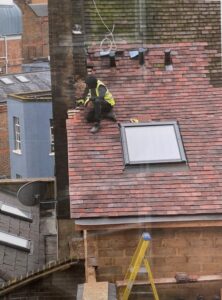
HS2 contractor fined £400,000 after tipper truck driver injured

A joint venture working on the HS2 rail project has been fined after the driver of a 20-tonne tipper truck was injured when his vehicle fell off the edge of an excavation ramp.

The incident happened on 27 July 2021, at a site in Copthall North near Uxbridge, West London. The site was being run by SCS Railways, a venture set up by three major construction companies – Skanska Construction UK Limited, Costain Limited and Strabag AG.

The tipper truck fell approximately two metres and landed on the driver’s side. The man behind the wheel suffered a broken nose, cut hand, and a shoulder injury.

The 20-tonne truck ended up on its side after falling off excavation edge

Inspectors from the Health and Safety Executive (HSE) visited the site after the incident and found that there were no signs on the haulage routes being used. They also identified that there was no edge protection in place to prevent vehicles going over the edge of the ramp, and that excavations adjacent to some of the vehicle routes had unsupported, vertical faces which were at risk of collapse.

The incident occurred in an area where SCS Railways was building a ‘cut and cover tunnel’. These are shallow tunnels built on the surface before being buried, with trees, plants, and shrubs planted on top. Material from the excavation was to be reused, removing the need for it to be taken off site.

SCS Railways had contracted another company – ACE Grab Hire and Haulage Limited (ACE) – to transport excavation material via 20-tonne tipper trucks to an area under the control of another joint venture working on HS2, Align JV.  ACE drivers had been operating at the site for about two weeks by the time the incident occurred.

The subsequent HSE investigation found that on the morning of the incident, the SCS earthworks team changed their working area after an Align JV representative found the original material could not be used. This meant moving the excavator’s loading position and creating a new traffic route – but the change inadvertently left an unprotected edge on the bank above.

The suffered several injuries in the incident

When the first ACE tipper truck driver used the higher-level bank instead of the intended new route, his vehicle slipped on the ramp. The next ACE driver followed the same path – and his vehicle veered off the edge of the bank.

HSE guidance on the management of vehicle movements on construction sites can be found in the HSE publication HSG 144, The safe use of vehicles on construction sites. This states that physical barriers, such as safety banks, should be provided at the edges of excavations. Guidance on excavations can also be found at Excavations – HSE. Haul roads on construction sites are also classed as temporary works and guidance can be found at Temporary Works – HSE.

SCS Railways, of 1 Hercules Way, Leavesden, Watford, pleaded guilty to contravening section 3(1) of the Health and Safety at Work etc Act 1974. It was fined £400,000 and ordered to pay costs of £8,974 at Uxbridge Magistrates’ Court on 16 June 2026.

HSE Inspector Gordon Carson said:

“SCS had detailed procedures in place for much of the work at the site, including temporary works schemes for excavations.

“However, its failure to properly plan and promptly communicate changes in vehicle routes created unsafe conditions for the drivers of tipper trucks.

“The consequences of this could have been even more serious than they were for the driver involved in this incident.”

The investigation was carried out by HM inspectors Saif Deen and Gordon Carson, and the prosecution brought by HSE lawyer Andrew Siddall and paralegal Benjamin Stobbart.


Further information:

  1. The Health and Safety Executive (HSE) is Britain’s national regulator for workplace health and safety. We are dedicated to protecting people and places, and helping everyone lead safer and healthier lives.
  2. More information about the legislation referred to in this case is available.
  3. Further details on the latest HSE news releases is available.
  4. Guidance on the management of vehicle movements on construction sites can be found in the HSE publication HSG 144, The safe use of vehicles on construction sites. Guidance on excavations can be found at Excavations – HSE
  5. HSE does not pass sentences, set guidelines or collect any fines imposed. Relevant sentencing guidelines must be followed unless the court is satisfied that it would be contrary to the interests of justice to do so. The sentencing guidelines for health and safety offences in England and Wales can be found here and for those in Scotland here.